The routes to export oil out of the Middle East are diminishing. The price of energy is soaring. And Iran’s neighbors could be about to endorse some measure of its authority over the Strait of Hormuz.
In the past week, Iran and its allies have used military escalation to upend any minimal sense of stability in the region, most dramatically in Yemen. That is shifting the momentum in Iran’s war with the United States to its advantage.
The shift may not be decisive. The Islamic republic remains under immense economic pressure, with the ongoing U.S. naval blockade of its southern ports and escalating rounds of sanctions cutting it off from the world.
And yet, a series of attacks in recent days by Iran and its allies have expanded the scope of the conflict. That, analysts said, may have given Tehran greater leverage, at least at this moment.
The Iranian-allied Houthis of Yemen captured a Red Sea island on Friday, giving them a perch to disrupt shipping in another critical waterway for shipping oil out of the Middle East.
“The Houthi success in Yemen has swung the pendulum back in Iran’s favor,” said Gregory Brew, a senior analyst at Eurasia Group. Iran, he said, had managed to shift “the status quo without bringing back a return to full-scale war, which the regime likely doesn’t want at this time.”
While Iran backs the Houthis with weapons, cash and logistics, analysts say the Shiite militant group is neither a direct conduit for Iranian interests in Yemen nor fully independent of Tehran’s influence.
The price of oil briefly jumped to about $110 per barrel on Friday, roughly 50 percent above prewar levels. That gives Iran further leverage, as high energy prices pose a political risk for President Trump as his party heads into elections in the fall.
Saudi Arabia, the world’s largest oil exporter, has become increasingly reliant on the Red Sea, since Iran effectively closed the Strait of Hormuz early in the war. But the Houthis announced a blockade on Saudi ships in July, firing on passing vessels in the Red Sea and attacking oil facilities in the kingdom.
Oil exports from Saudi Arabia plunged last month to their lowest level in at least 13 years. Compounding its problems, a pipeline that carries oil to the kingdom’s Red Sea ports was temporarily shut down on Friday after a drone attack from inside Iraqi territory, the Saudi energy ministry said.
While it was unclear who was behind the attack, Saudi Arabia has in the past accused Iran-backed militias in Iraq of attacking its energy infrastructure, and Mr. Trump said on Saturday that Iran was “probably” responsible.
Since the U.S.-Israeli war with Iran began in February, the longstanding U.S. security guarantee for its Gulf allies has looked less assured, with those countries coming under missile and drone attacks from Iranian forces.
Crown Prince Mohammed bin Salman of Saudi Arabia urged Mr. Trump to take military action against the Houthis, but the president said he was not willing to do so, according to officials with knowledge of the conversations. Mr. Trump said Saturday that the Houthis had conveyed to his administration that they do not want a fight with the United States.
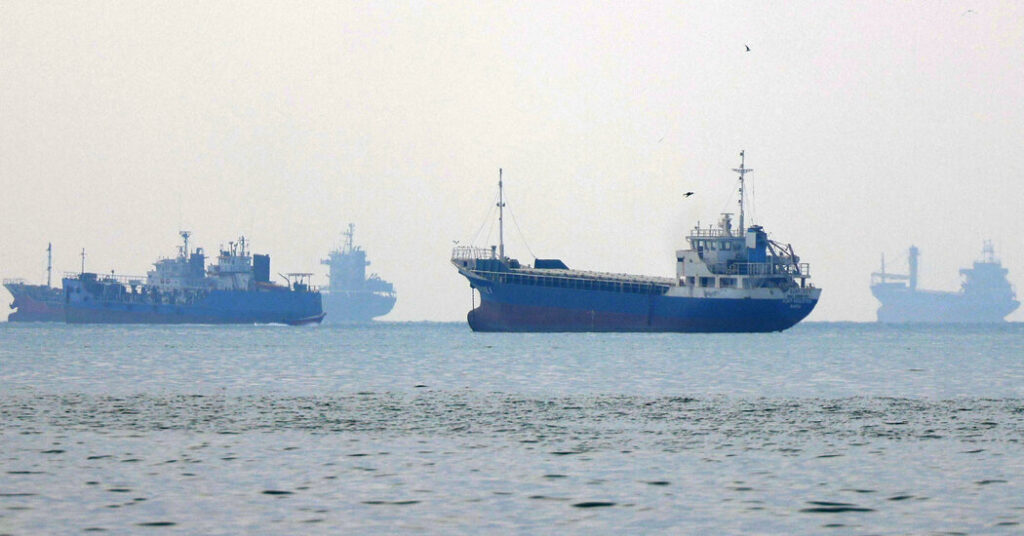
Shipping traffic through the Strait of Hormuz remains far below what it was before the war, though a limited number of ships had been getting through with the help of U.S. naval escorts.
That meant Iran was losing some leverage in the Strait of Hormuz, said Behnam Ben Taleblu, an expert on Iran at the Foundation for Defense of Democracies, a Washington think tank that is hawkish on Iran. “The regime is now clawing it back elsewhere,” he said, with its allies staging attacks in Saudi Arabia and Yemen.
“Iran’s military strategy is both escalatory and predictable,” Mr. Taleblu said. “It’s all about cross-domain escalation for an increasingly risk-tolerant Tehran.”
Iran has also been stepping up attacks against U.S. warships patrolling the Persian Gulf. Mohsen Rezaei, Iran’s top national security official, said that Iran had tested what he called its first anti-ship missile against a U.S. ship. The U.S. military responded to Iranian attacks on its warships by destroying several Iranian crude oil carriers.
Iran’s attacks were highly risky, Mr. Taleblu said.
“These high and fast-flying systems can be fired from further inland and, if they strike a U.S. vessel, could cause a significant loss of life,” he said.
Iran’s actions in the region complicated the BRICS summit of emerging economies in New Delhi this weekend, with Prime Minister Narendra Modi of India urging Iran’s president, Masoud Pezeshkian, to safeguard “freedom of navigation and commerce.” India’s own fuel imports are threatened by the ongoing conflict.
Mr. Pezeshkian used his speech at one of the summit’s events to criticize American power.
“Who said it should decide for the entire world, that others have no rights, and that whatever they want everyone else has to obey?” he said. “This is something we will not accept.”
In what could be a potentially powerfully symbolic image of how Tehran’s asymmetric military strategy has resulted in concrete wins, Iran and Oman are set to meet on Monday with other Persian Gulf states to discuss the Strait of Hormuz, Iran’s foreign ministry spokesman said on Friday.
Omani officials did not respond on Friday to a request for comment about the meeting. For weeks, Iranian and Omani officials have been discussing a shared agreement for managing the strait, though Iran has insisted that even such an agreement would not mean that the strait is fully reopen for shipping traffic.
It was still unclear what may come out of the meeting, if it takes place at all. Bahrain, a Gulf country that has been attacked by Iran and hosts a major U.S. military base, said on Saturday that it would not take part. Other Gulf countries do not appear to have immediately commented publicly.
The meeting, if it goes ahead, is “a reflection of the profound disappointment across the Gulf with Washington and with U.S. policy in the region,” Danny Citrinowicz, a retired Israeli intelligence officer who specializes in Iran, said on social media.
They were being forced to choose, Mr. Citrinowicz said, “between an open-ended confrontation with no clear political endgame, one that is destabilizing the region and inflicting enormous economic costs,” and some degree of recognition of Iran’s authority over the strait in hopes of restoring stability.
Iran’s diplomacy with the Gulf countries is “a textbook case of a knife in the back and a handshake in the front,” Mr. Taleblu said. “Tehran spent months attacking these nations directly and indirectly and creating the conditions that led to a major loss of revenue and inability to export oil.”
Now, he said, it is trying to “lock in a more favorable posture of deference to Tehran from elements of the American order in the region.”
The post Iran Finds Escalation Is a Fruitful Path to Leverage in War With U.S. appeared first on New York Times.