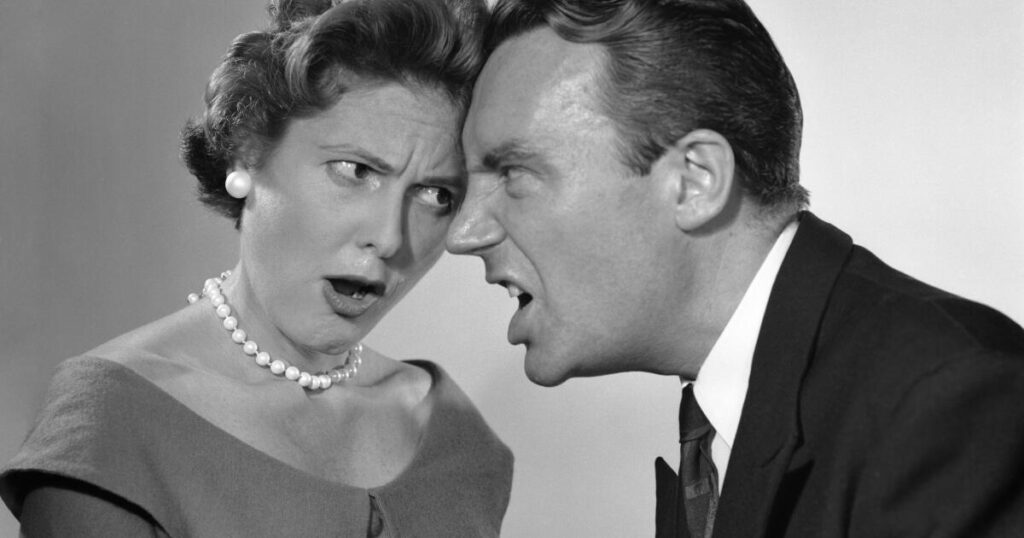
There is a peculiar feature of contemporary life: We all have become very good at being right.
We each know which side is right about politics, about religion, about parenting, about language, about history. We know which opinions are enlightened and which are backward. We know which people deserve our admiration and which deserve our contempt. We know, often with remarkable certainty, what other people should think.
What we seem to have become less adept at is asking a harder question: What if I am wrong?
Rosh Hashanah arrives each year with an almost unfashionable proposition. It asks us not merely to examine the world, or the people who have disappointed us, or the institutions that have failed us, but to examine ourselves.
The Jewish tradition calls this process teshuvah, usually translated as repentance, though the Hebrew means something closer to return. We return to ourselves. We return to our values. We return to the person we might have been before fear, anger, pride, habit or self-interest pulled us away.
At the heart of this process is a willingness to reconsider. That willingness is not weakness. It is a form of moral courage.
We often imagine conviction as the opposite of uncertainty. The person with strong principles is the person who knows exactly what is true and right and refuses to budge. But Jewish tradition offers a more complicated picture. The Talmud preserves arguments between rabbis for generation after generation, sometimes over questions so intricate that the reader wonders how anyone could have cared so much. And yet these disagreements are preserved, not because one side always won, but because the argument itself mattered.
The rabbis famously recorded the disputes of the schools of Hillel and Shammai. Even when the law followed Hillel, the opinions of Shammai were not erased. Both were taught. Both were remembered. The tradition understood that truth can be pursued through disagreement without requiring the annihilation of the person who disagrees.
There is a remarkable phrase the rabbis use about these arguments: elu v’elu divrei Elohim chayim, “these and these are the words of the living God.”
Not everything can be true. But our tradition is telling us something profound about the pursuit of truth: Human beings can encounter something real even when they do not arrive at the same conclusion. That is a difficult idea in an age organized around certainty.
Our public conversations increasingly encourage us to treat changing our minds as a humiliation. We archive people’s old statements and use them as evidence that they are hypocrites. We reward the person who never concedes an inch. We mistake consistency for integrity, even when consistency means refusing to learn.
But there is another way to understand integrity, which might mean caring more about truth than about appearing to have been right all along.
That requires humility, and humility is one of the great themes of the Jewish New Year. On Rosh Hashanah, we encounter the shofar, an ancient instrument made from an animal’s horn, producing a sound that is raw, imperfect and impossible to ignore. The shofar does not offer an argument. It interrupts us. It asks us to stop. To listen. To wake up.
Perhaps that is what we need this year. Not another argument, but an interruption.
What would happen if, before explaining why we are right, we asked what we might be missing? What if, before judging another person, we tried to understand what experience brought them to their position? What if we could say, without embarrassment, “I used to think that, but I have learned something since then”? There is a particular kind of freedom in being able to change.
It does not mean abandoning our principles. Quite the opposite. Sometimes we change our minds because our principles have become clearer. We realize that the belief we defended was inconsistent with the values we claimed to hold. We discover that someone we once dismissed was right. We recognize that our certainty was partly fear.
Jewish tradition does not ask us to become people without convictions. It asks us to become people capable of self-examination. That distinction matters.
The High Holidays are not an annual exercise in self-hatred. They are an assertion that we are not finished products. The person we were yesterday does not have absolute authority over the person we can become tomorrow.
That may be one of the most hopeful ideas Judaism has to offer.
We are living through a moment when many people feel exhausted by conflict and distrustful of one another. We cannot solve every disagreement by becoming less certain. Some questions demand moral clarity. Some injustices require us to speak plainly. There are times when refusing to compromise is itself a virtue. But moral clarity and intellectual humility can coexist.
We can believe something deeply and still remain curious. We can defend what matters to us and still listen. We can disagree without turning disagreement into a verdict on another person’s humanity.
So perhaps this Rosh Hashanah, the question is not simply, “What do I believe?” Perhaps it is: “What am I willing to reconsider?” It is a small question with enormous possibilities. Because the opposite of certainty is not confusion. Sometimes, it is wisdom.
Rabbi Shmuly Yanklowitz is the author of over 30 books on Jewish ethics.
The post What if we stopped trying to be right? appeared first on Los Angeles Times.