On Sept. 11, 2001, I was in an airplane at Kennedy International Airport bound for Europe, scheduled to leave at 8:30 a.m. For some reason, we were removed from the rotation and sat on the tarmac as other planes took off.
As I glanced over the shoulder of my seatmate, I saw a dark gray wafer-shaped explosion, two or three floors thick, violently thrust forward from one of the World Trade Center’s two towers. Some minutes later, as I watched intently, a huge golden sunburst erupted from the second tower.
I knew what had happened. Sept. 11 was not only predictable; it had been predicted.
When I drafted my final memo to the president’s national security adviser, Sandy Berger, at the end of the summer of 1999, I wrote, among many other observations, that the United States would be struck on the American homeland by Al Qaeda within two years. I wrote this not because I was a specialist in counterterrorism; on the contrary, I was simply repeating the convictions of my colleagues at the White House who had tried desperately to mobilize the government against this threat. As the principal leader of that group later testified, we failed.
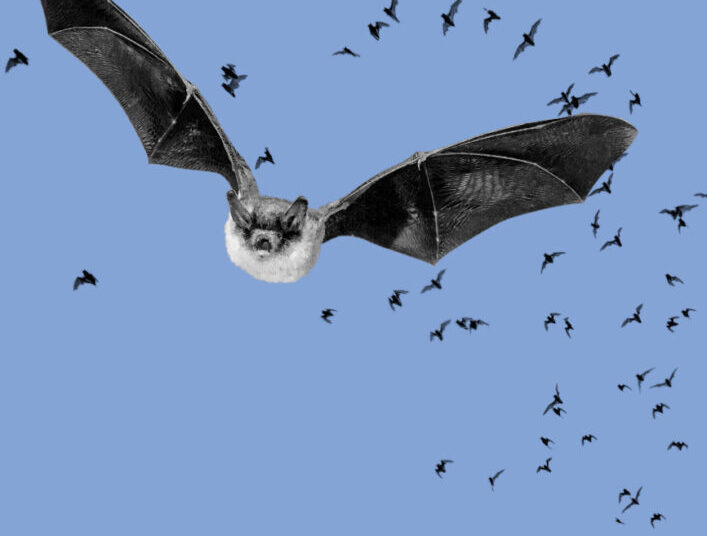
Now America faces another set of predictable attacks from two looming perils. Both stem from the emergence of artificial intelligence and its widespread availability to those who would harm the country. The first is an A.I.-designed cyberattack on U.S. critical infrastructure that could imperil the financial and health care systems, or any other internet-connected network on which we rely for our national well-being. The second is a biological attack mounted by small groups or even nihilistic individuals using A.I. to design and deploy a deadly and highly contagious pathogen.
Once again, we are failing to take the steps that can prevent or preclude the effects of such atrocities. At the same time, the democratic cohesion on which our defenses ultimately depend is eroding. And as the reaction to the Covid pandemic tragically suggests, disinformation and conspiracy theories could undermine the ability of experts to limit the damage from an A.I.-driven biological attack. They also increase the possibility, present at the attacks 25 years ago, that not only American lives, but also the continued functioning of American government itself, could be at risk.
Osama bin Laden’s revolution was enabled by the globalizing internet. He transformed the recruiting, financing and sheer reach of terrorism, moving from the narrowly vertical, nationalistic structures of terrorist groups like Northern Ireland’s I.R.A., Turkey’s P.K.K., Algeria’s F.L.N. and others to a decentralized, horizontal model. This greatly increased the potential for attacks. Radicalized Muslim communities were well suited to such innovations because they were global, but there was no reason that the threat of global terrorism would end with the demise of Bin Laden and the defeat of his movement.
Diffuse networks, now with access to even more powerful technological tools, remain a threat. If Flight 93 had hit its target — likely the United States Capitol — instead of being brought down by heroic passengers over Pennsylvania, it would have struck during a business session of the House of Representatives. Countless members of Congress would have been killed or disabled and, unlike the Senate, the House could not have been reconstituted without new elections. Months would have passed without a functioning federal legislative branch. The possibility that only the executive would rule after a catastrophe is a threat to our constitutional order and remains with us today.
The challenge of taking the steps necessary to limit the damage of an attack has only grown in the 25 years since Sept. 11. We have been lulled into thinking that another attack will not occur. As misinformation, disinformation and the denigration of expert opinion make preparation far more challenging, the environment of confusion, division and fear, as much as any potential attacker, is an equally insidious danger.
The interrogation of Dr. Anthony Fauci by a Senate committee in July is just the latest example of the dangerous attack on expert opinions. Dr. Fauci’s heroic efforts to prepare for a potential pandemic at the National Institute of Allergy and Infectious Diseases from 1984 through 2022 were crucial to our enduring the Covid crisis. The contemptuous — and contemptible — harrowing of him on Capitol Hill is bound to have a paralyzing effect on taking the kinds of precautionary steps that can minimize the consequences of cyber and biological attacks.
Those who want to limit the potential damage of an attack nevertheless have a place to start. After the carnage in 2001, the independent Continuity of Government Commission, led by Lloyd Cutler and Alan Simpson, created a road map for enduring another terrorist attack. One of the proposals of the commission, on which I served, would speed the replacement of members in an emergency. Another was to reconstitute a devastated Supreme Court by enlisting the chief judges of the 13 federal circuit courts. But in the period following the defeat of Al Qaeda, a sense of urgency for preparedness faded. Congress failed to act on these proposals.
After the shock of the Covid pandemic, a second Continuity of Government Commission was constituted in 2021. It restated the case for congressional action to protect against a mass attack. It also made recommendations about the continuity of government during a pandemic, including protecting the succession to the presidency in the event of a mass attack on the cabinet and congressional leaders. The commission, on which I also served, also explicitly identified infectious disease as a continuity of government problem and devised constitutional machinery to cope with the inability of officials to assemble in person. Lawmakers should urgently revisit these recommendations, and they should be stockpiling laws and protocols to anticipate these crises as well as sharply increasing the funding of research.
Seven years after the Sept. 11, 2001, attacks I wrote that “the developments that empower terror are gaining — as markets increase, as weapons technologies diffuse, as clandestine communications become more effective and infrastructures more fragile — at a faster pace than our defenses, our pre-emptive strategies and our legal institutions are adapting.” Now, 18 years later, the same indictment has become even more critical. On the anniversary of the attack, Congress should determine to anticipate the tragically predictable.
Philip Bobbitt is a professor of law at Columbia University specializing in constitutional law and strategy and worked in the federal government during seven presidential administrations.
Source photographs by David Surowiecki and eyewave/Getty Images
The Times is committed to publishing a diversity of letters to the editor. We’d like to hear what you think about this or any of our articles. Here are some tips. And here’s our email: [email protected].
Follow the New York Times Opinion section on Facebook, Instagram, TikTok, Bluesky, WhatsApp and Threads.
The post We Missed the First 9/11. Let’s Not Miss the Next One. appeared first on New York Times.