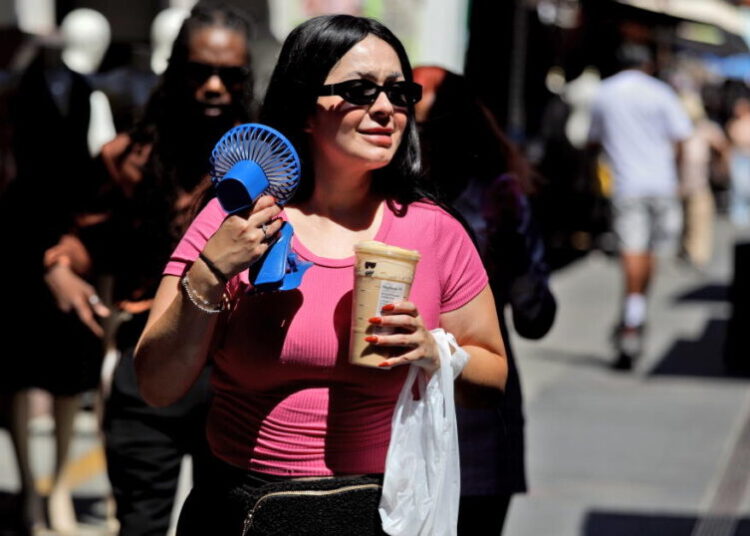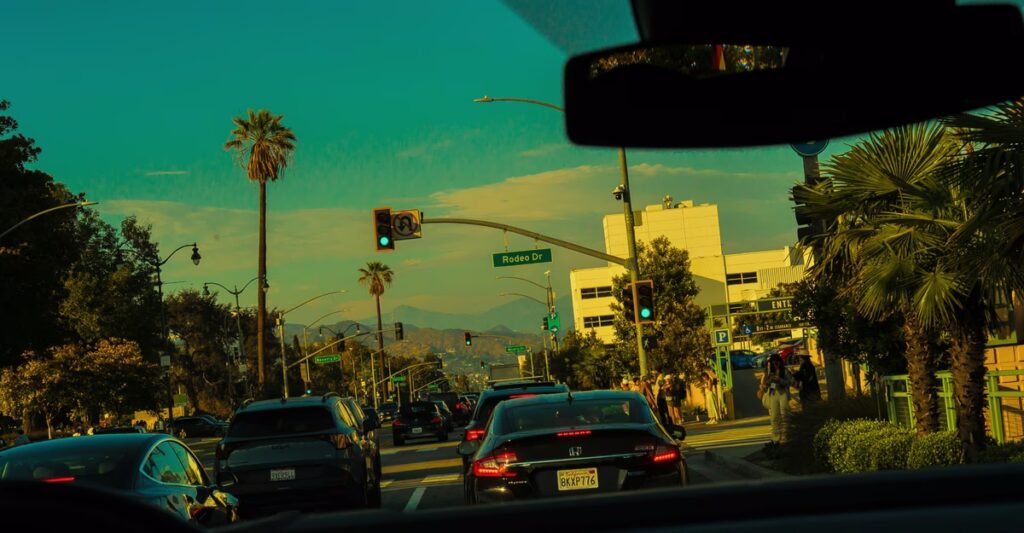
Photographs by Dina Litovsky
Once, when I was 15 years old and as awkward and skinny-legged as a baby giraffe, I was idling in a department store in central London when I saw the novelist Jackie Collins standing at the register.
Can you imagine the aura emanating from her, like Hermès-scented magnetic waves? She was wearing animal print and a tailored jacket and had the kind of steely composure I’ve never managed to pull off in adulthood without straining something. Faced with one of my true idols, all I could do was gawk.
I learned about sex when I was 8, but it wasn’t until several years later, when my best friend yanked me upstairs to show me a particularly juicy paragraph from her mother’s neon-pink copy of Hollywood Kids, that I learned about pleasure. Jackie—with apologies, I will call her Jackie throughout, because “Collins” feels just too formal for a woman who impressed upon me the existence of the clitoris—once told The New York Times that she published her first novel “in 1968, when no one was writing about sex but Philip Roth.” Which wasn’t strictly true, but at a moment when second-wave feminism and sexual liberation were uneasy bedfellows, Jackie simply wrote her own revolution. The World Is Full of Married Men, her debut, was a caustic social satire in which a wronged wife emerges triumphant; The Stud, out the following year, was a flashy potboiler about a trophy wife and nightclub owner with a rapacious sexual appetite who treats men like toys and exalts in her social and financial clout.
Jackie wrote 32 books in total, sold more than half a billion copies, and gained an indelible reputation as an airport novelist, the kind of writer whose books are equally devoured and disdained. But oh, what they did for me! In retrospect, I gained a slightly deluded understanding of what adulthood actually entailed. Jackie was a devoted Mickey Spillane fan, and her books tend to be stuffed with gangsters, serial killers, pornographers, and even freelance journalists who get paid in advance. But as an anatomist of Hollywood gender dynamics, no writer was sharper or more aspirational. Jackie’s heroines, as she wrote in an introduction to The World Is Full of Divorced Women (1975), “demand equality—sexual and otherwise.” She wrote about creative, ferocious women striving for power and getting it. Lucky Santangelo, a recurring character and a kind of alter ego, starts out as the neglected daughter of a crime boss and works her way up to become the head of a movie studio in 1990’s Lady Boss.
Her characters carry on being fascinating and sexually active well past the age when other writers would have them tucked in bed with a crocheted blanket and a crossword puzzle. “In Jackie’s world, women’s real lives begin after forty,” the writer Helen Ellis observed of Hollywood Wives, the book that Jackie published at the age of 45, and that established her as a celebrity in her own right.
Even if you hate women (many people do), hate explicit sex scenes, hate the kind of pulpy storytelling that has you still reading in a cold bath at midnight, you cannot help but admit that Jackie captured the entertainment industry like no one else. She seemed equally drawn to the business of movie production—the seedy dealmaking and kickbacks—as well as the rampant abuses of power embedded in the Hollywood system, both of which she exposed without hesitation. Writing in the heady 1980s, when movies were becoming brasher, dumber, and unrepentantly commercial, she scrutinized a creative industry at a notable low point, less in thrall to art than to profit.
Although her novels made her a star, Jackie never considered herself fully part of Hollywood. Like a Reagan-era Margaret Mead, she took an anthropological approach. “I don’t live the Hollywood lifestyle,” she told Vanity Fair in 1995. “I move in it. I’m an observer.” At parties, she would stalk the room listening for interesting tidbits, taking copious mental notes that she’d jot down later. Describing an A-list event in Hollywood Wives, Jackie drops in fragments of what one character calls “Hollywood conversation,” dialogue that evokes a world where money and desire meld: “ ‘He pays me, I think it turns him on,’ said the redhead in the mink-trimmed cape.” So accurate was her portrayal that when Hollywood Wives was published, Jackie noted, “The ladies of Hollywood had their drivers and housekeepers lining up at the bookstores to get an early copy,” both furious that their gilded sanctum had been breached and desperate to pinpoint which character was based on which real person.
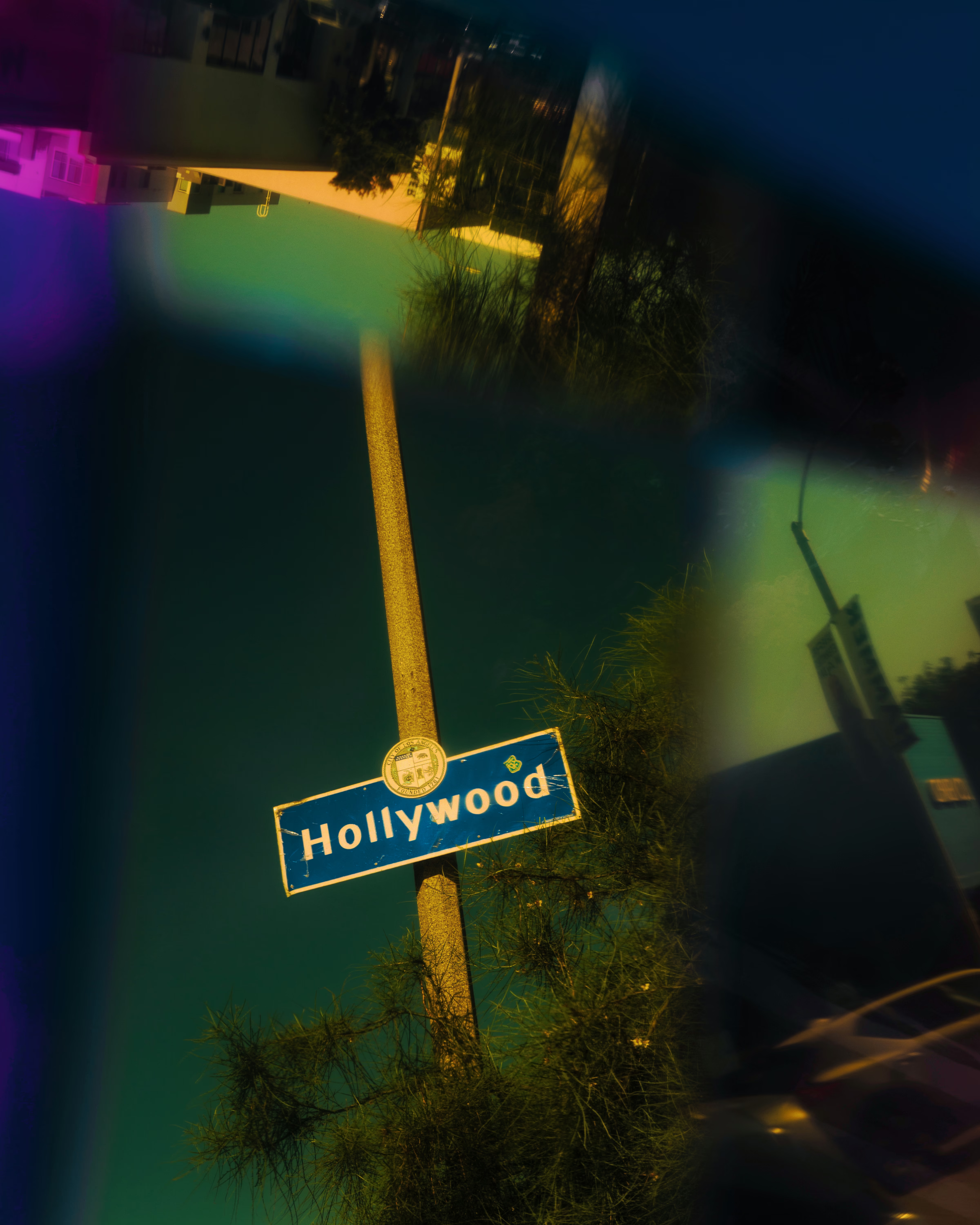
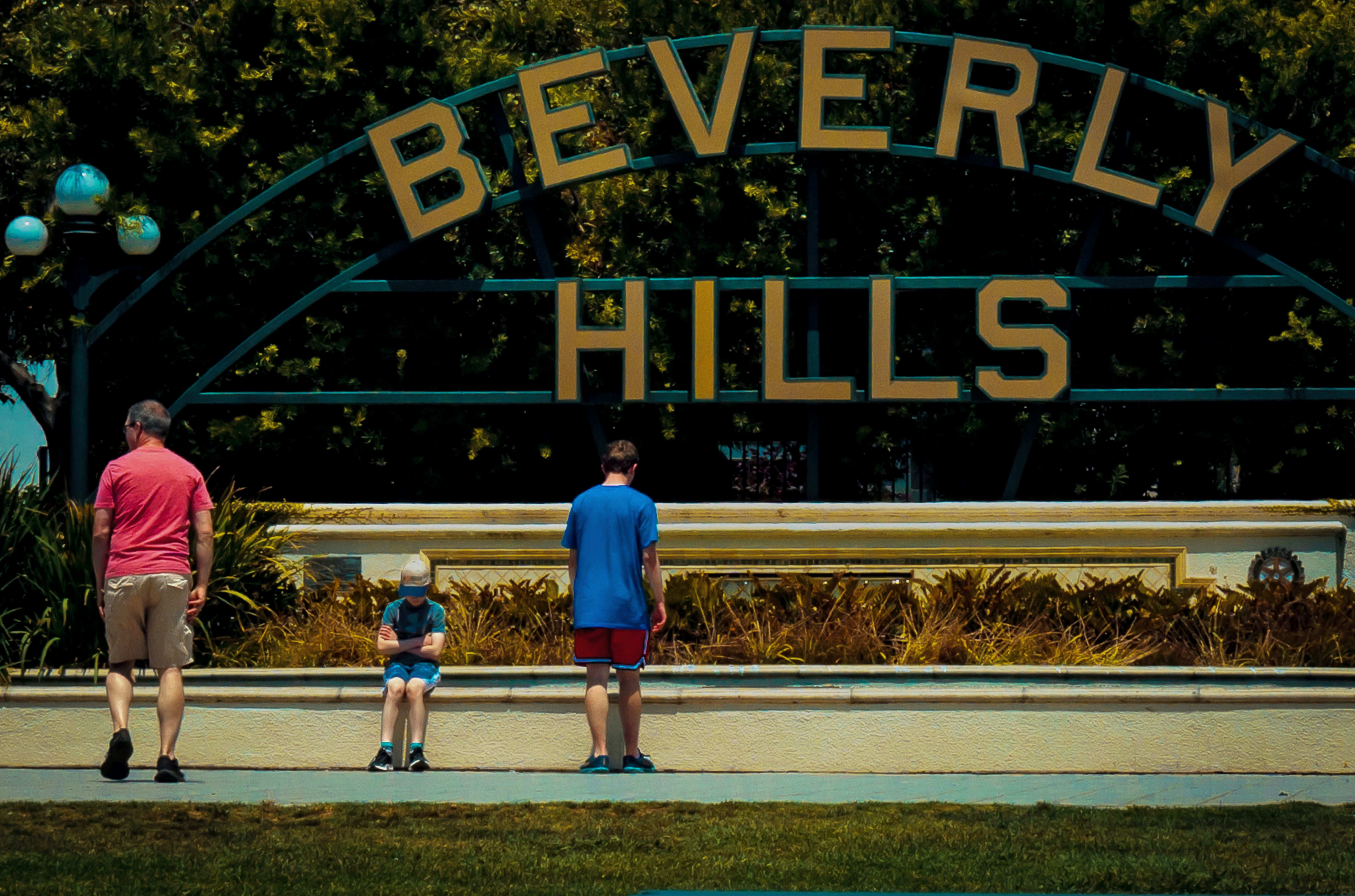
Hollywood, as a geographical term at least, is misleading: Jackie’s characters mostly work and play in Beverly Hills, a city of 30,000 or so extremely wealthy residents enclosed by Los Angeles. Formerly a lima-bean farm, then a failed oil field, Beverly Hills was developed into lots for housing around the same time that the movie industry headed west, in the early 20th century. When the silent-film stars Mary Pickford and Douglas Fairbanks moved into a spectacular former hunting lodge on Summit Drive in 1920—the press immediately named it “Pickfair”—they helped establish Beverly Hills as a nexus of celebrity glamour and industry cachet. Jackie genuinely loved the neighborhood for its clean white lines and endless sky, but she was also drawn to everything it contained beneath the surface: its roiling currents of fame, power, and degradation.
Early this summer, I traveled from London, where Jackie was born, to the enclave where she made her name. As a child of the ’80s, I was nostalgic for the maximalist era of shoulder pads, Giorgio perfume, and animal print. (Jackie loved big cats for their beauty and power, was convinced she’d been a panther in a previous life, and decorated her house and herself in leopard spots.) But as a cultural critic, I also wanted to revisit the era of moviemaking that Jackie had described in her novels. The ’80s saw a wave of corporate consolidation; venerable studios were gobbled up by behemoths from other industries. (Columbia Pictures was briefly a division of Coca-Cola.) This led to sillier, more crowd-pleasing movies. Even so, Hollywood was at the apex of its power, the global influence of filmmaking more potent than ever. Today, the center of cultural power and attention is shifting away from Los Angeles. Traditional storytelling has lost ground to what the consulting firm McKinsey calls “user-generated content”—TikTok and YouTube videos in which people talk enthusiastically about peptides and skinny-maxxing and the cruel feminization of the male life force.
As a teenager, I had learned from Jackie’s books to expect that adulthood for women would be a series of hard-won triumphs that lead toward power. (She also suggested that midlife would involve a lot of stalking around restaurants while wearing crepe Halston jumpsuits and enough gold jewelry to sink a yacht, but I have long since made peace with neutral basics.) I am 43, roughly the age when Jackie’s heroines enter their prime, and when she herself did. I am very tired, having spent the past 14 months working, raising two 5-year-olds, promoting a book, and falling into existential mires of despair over the degenerating state of world affairs. A small, quiet part of my brain wondered whether tracing Jackie’s literary footsteps might reinvigorate my sense of what’s possible. Or at least demonstrate that her dreams for women—that they can have creative fulfillment, families, and happiness, as she did—might be somewhat more realistic now than they were 40 years ago.
Hollywood Wives was published in 1983, a good two decades before reality television turned exposing the lives of the wealthy, married, and highly maintained into a Bravo gold mine. We’re accustomed to such excess now, but back then, Jackie’s gossipy revelations—$50 panties, discreet plastic surgeons in Palm Springs, society grandes dames who used to be French call girls—seemed otherworldly.
The primary antiheroine in the book is the delightfully unlikable Elaine Conti (imagine a hornier, more desperate Becky Sharp), the 39-year-old wife of a movie star, Ross, whose last film bombed at the box office. There’s also a former gigolo on the brink of movie stardom, a buxom man-eater who wants to be taken seriously as an actress, and a serial killer who calls himself the “Keeper of the Order.” But for me at least, the book stands out for its portrayal of early-’80s Beverly Hills as a high-society Thunderdome, where everyone is scratching and clawing for status. In addition to the titular wives, who are drawn with both humanity and mild disdain, Jackie offers up a number of female characters operating in what she describes as the “Big Boys’ Club” of the movie industry: Sadie LaSalle, one of the most powerful and fearsome agents in town, and Montana Gray, a writer trying to save her screenplay from the clutches of a ruthless producer.
This is a world where power-lunching demands tactical precision. Elaine’s mission throughout the book is to restore Ross’s A-list status, with buzzy parties the couple can’t afford and a standing Friday lunch reservation at Ma Maison, where “anybody who was anybody and in town invariably showed up.” Ma Maison closed in 1985, and so the first place I went to test out the current state of power-dining was the Polo Lounge, a clubby salon situated toward the back of the spectacularly retro Beverly Hills Hotel. In Hollywood Husbands, Jackie’s 1986 follow-up, the handsome and promiscuous talk-show host Jack Python regularly meets his best friends for breakfast there, where they occupy Table One, “a cosy leather booth directly facing the entrance.” Table placement, Jackie emphasizes, is everything—“The back of this restaurant is Siberia,” one model tells another late in the book. “Land of the underachievers. Don’t even glance in that direction.”
I was not placed at Table One. I was seated just outside what seemed to be the main dining room, next to an elderly couple and a 12-year-old wearing a World Cup hoodie having pancakes by himself. Through the doorway, I could see men in button-downs and golf shirts conversing chummily; I started to feel slightly psychotic glimmers of envy and shame at being shut out from whatever they were brokering. The server’s eyes expressed gentle but unmistakable pity. A handsome Englishman was seated at a nearby table but immediately sensed defeat and asked to be moved to the terrace, where the sun shines regardless of a diner’s Variety profile, stock portfolio, or follower count.
Failure is galvanizing, I tried to remember from Jackie’s books, as long as you don’t let it break you. For much of her early life, Jackie wasn’t known for her writing or her feline fixation. (A plaque engraved with a panther marks her place in the celebrity crypt at Westwood Village Memorial Park Cemetery, where she was interred after her death, in 2015; the image is accompanied by the words SHE GAVE A GREAT DEAL OF PEOPLE A GREAT DEAL OF PLEASURE.) She came of age as the taller, ungainly younger sister of Joan, an almond-eyed, preternaturally composed actress who made her Hollywood debut starring alongside Bette Davis in 1955’s The Virgin Queen. Joan and Jackie had grown up together in a basement apartment in dingy postwar London, the daughters of a dance teacher and a talent agent whose parties, Jackie once said, were where she first became aware of how men talk about women when they think no one’s listening. “I get an awful inferiority complex when I’m with Joan,” the teenage Jackie wrote in her diary. In a photo of the pair together from 1955, Joan stands front and center, insouciant in a fur coat, while Jackie looks at the camera semi-apologetically from behind her.
Jackie was, however, entrepreneurial; by the age of 13, inspired by Harold Robbins and Henry Miller, she had a sideline writing sex scenes longhand and charging her classmates to read them. When Joan’s career took her to Hollywood, Jackie followed, moving with her sister to an apartment in the Chateau Marmont hotel, and having a brief fling—at 15—with the 29-year-old Marlon Brando. (He was “only my height, and kind of fat,” she noted in her journal, and also recorded that he called her “sincere, sweet, and luscious.”) But Jackie couldn’t get a work permit and so reluctantly returned to England, where she appeared in a handful of schlocky B movies before marrying the businessman Wallace Austin at 22. Four years later, Austin’s drug addiction had led the couple to divorce, and he died of an overdose shortly after.
It was Jackie’s second husband, the producer and nightclub owner Oscar Lerman, who encouraged her to pursue writing, and to draw inspiration from the vivid social scenes the couple mixed in. (At one of her husband’s clubs, she told The Hollywood Reporter, Lerman had to put a guard outside the men’s room because teenage girls kept following movie stars in to offer them sexual favors.) At 31, she published The World Is Full of Married Men, which was an immediate best seller in the United Kingdom and promptly banned in Australia for its inventive array of four-letter words; the next year, the romance novelist Barbara Cartland lambasted her new novel, The Stud, as “awful, terrible, it’s evil really.”
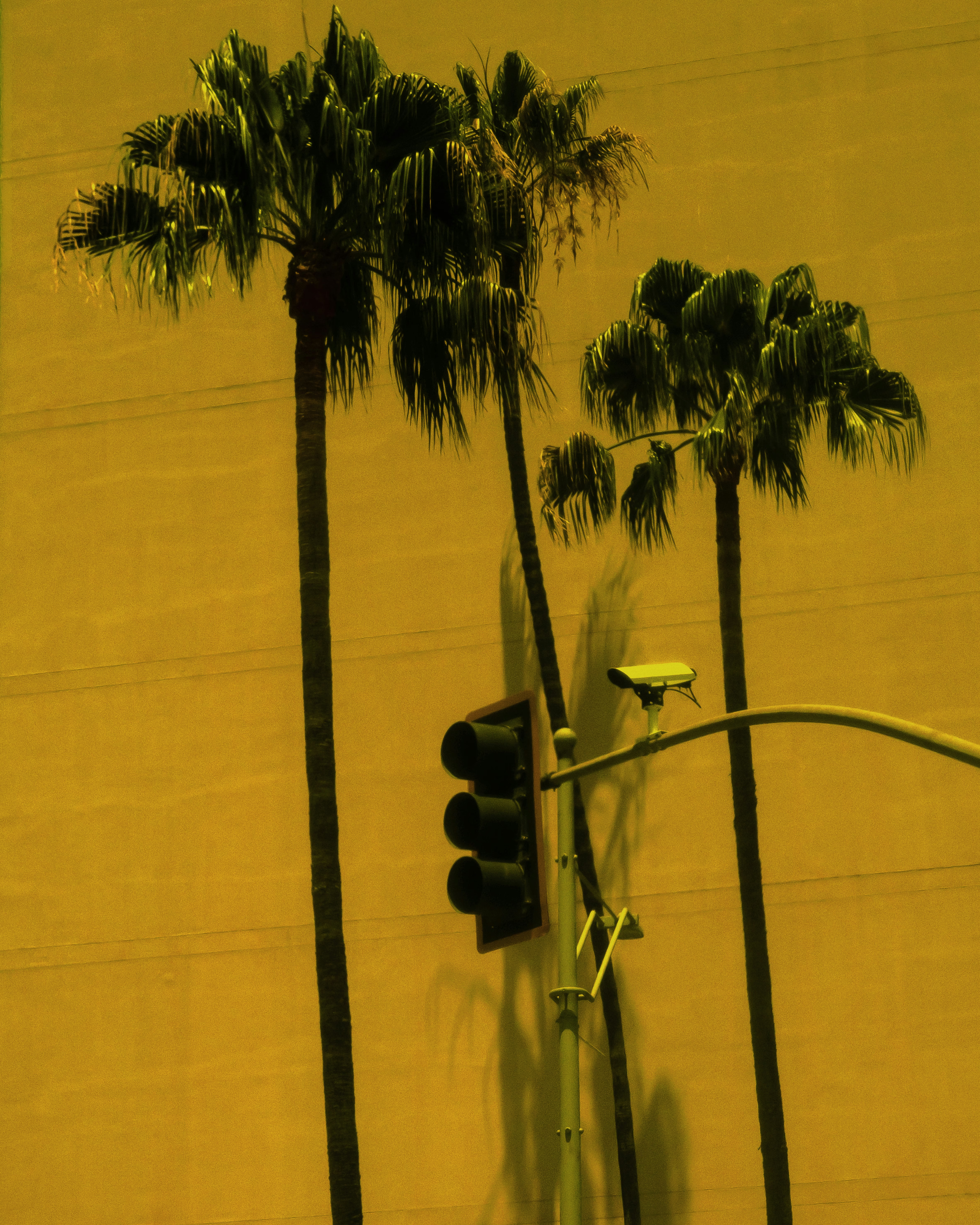
Jackie and Lerman relocated to Los Angeles in 1980, and if you walk down the Beverly Hills Hotel’s unabashedly red-carpeted stairs and under a gloriously cinematic green-and-white striped awning, then stroll to the bottom of the hill, and wander for about 10 minutes beneath towering palm trees, you will arrive at the house that Jackie’s “awful, terrible” books built. Only a modest-seeming driveway was visible from the street. The place is now available for rent (for the trivial sum of $175,000 a month), and when I say that I begged the real-estate agent to let me view it, please know that I really and truly groveled. I spent months emailing a man who assured me that he was entreating the owners (real-estate developers who’d bought it after her death, gutted it, remodeled all the interiors) on my behalf—but to no avail. So instead I examined the signs affixed to palm trees warning me that I was on camera, to ensure the security of the neighborhood’s current residents, who—unlike the movie stars and moguls of Jackie’s day—are apparently financiers, minor Middle Eastern royals, and crypto magnates. (The current owner of the Pickfair mansion, I later learned, is the technology corporation Unicom Global, which uses it for conferences and events.)
But based on the listing, archival photographs, and the author photo on Jackie’s many hardcovers, I can tell you that it’s a 22,000-square-foot museum of a mansion, a defiant middle finger to the critics who belittled her for writing “bonkbusters,” and a visual testament to her success. The interiors are now predominantly beige, but in Jackie’s day, the pillows were all animal print. She designed the house around a huge rectangular swimming pool after seeing David Hockney’s A Bigger Splash in London. On her book jackets, she stands, radiant and shoulder-padded, next to the cool blue water and her imposing white box of a home. But she also took great pride in being a hands-on mother, cooking at home for her three daughters, doing school drop-offs in her silver Mustang, and keeping her children away from the sleazy Hollywood scenes she chronicled.
Right as Jackie’s writing started appearing on the best-seller list, Joan’s acting career was floundering—in 1977, she appeared in the dismal sci-fi horror Empire of the Ants, playing a land developer set on by giant irradiated insects. It was Jackie who revived her sister’s reputation, after Joan was cast as the lead in the movie adaptation of The Stud. (A hit in Britain, the movie paved the way for Joan to get her most indelible American role, as Alexis Colby in Dynasty.) The charged sense of competition between the pair continued apace; in a 1988 Vanity Fair profile of both sisters, Dominick Dunne noted that a publicist had instructed him to dedicate equal copy to each woman, while also citing the rumors that Silver Anderson, the prickly 47-year-old TV star in Hollywood Husbands, was based on Joan.
Mindful of the security cameras, I walked quickly past Jackie’s house to a restaurant in downtown Beverly Hills called Bacari, where I took out my notebook and tried my hand at Jackie-style anthropology. At the table next to me, a talent agent was trying to lure another agent away from a major conglomerate, where she was unhappy. “They keep trying to buy us off with ice-cream socials,” she said to him plaintively. “Everyone is on a diet!” The conversation turned to her stable of clients, who all seemed to be social-media stars. She spoke proudly about one woman she represented who, under her mentorship, went from having 700,000 followers to more than 1 million. “That’s the kind of nurturing I bring to my job,” she said. The man asked her if she might be able to double her client list in the first three months; to help her in the effort, he could offer her a “digital assistant—no person.” He paid the bill. “Let’s get those wheels turning,” he said, ushering her out, and I wondered what Jackie would make of this version of Hollywood, with its brand-activation opportunities and AI-drafted emails, where celebrity is its own art form and product is paramount.
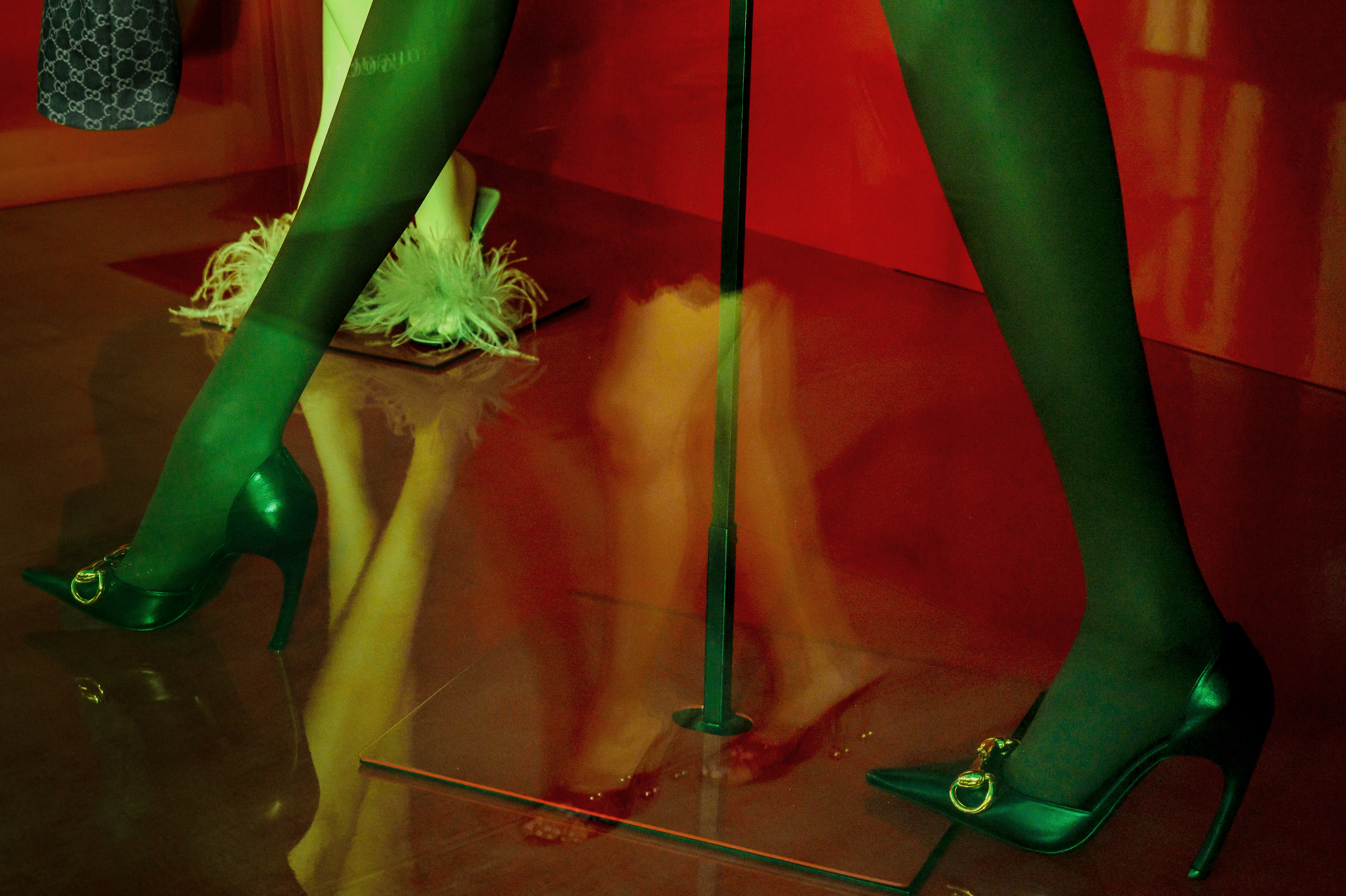
In Jackie’s Hollywood novels, Rodeo Drive—my next stop—is where the women of Beverly Hills go to arm themselves for the soft warfare of self-presentation. When every outfit, every hairdo, is minutely studied for signs of decline, keeping up appearances is essential. In Hollywood Husbands, Poppy Solomon, the secretary turned fourth wife of a studio head, gets ready for parties in much the same way General Patton commanded the Third Army: with ostentatious and pleasurable aggression. (“She wore a turquoise frilled, strapless dress, and many real diamonds. Her new tits protruded nicely.”)
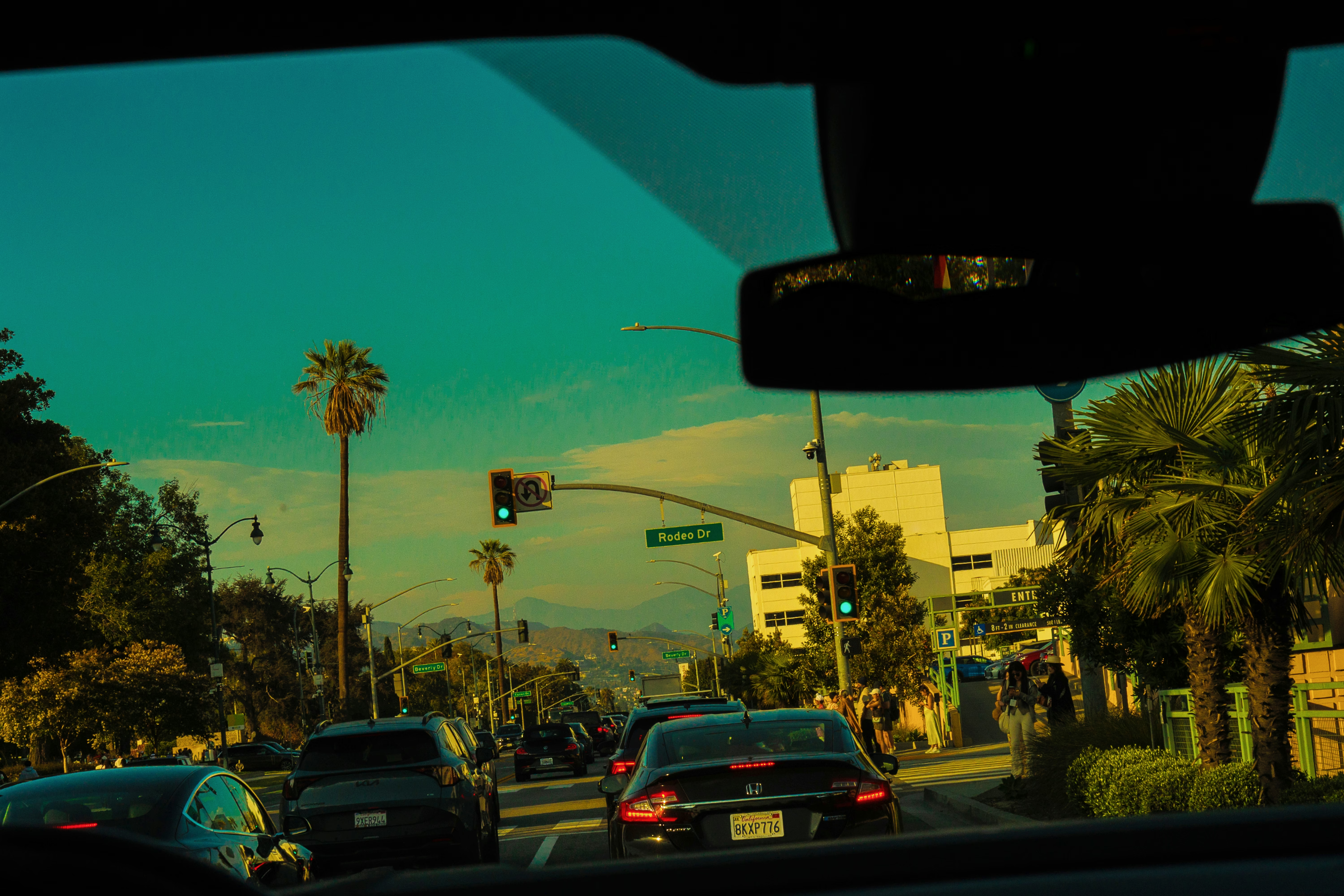
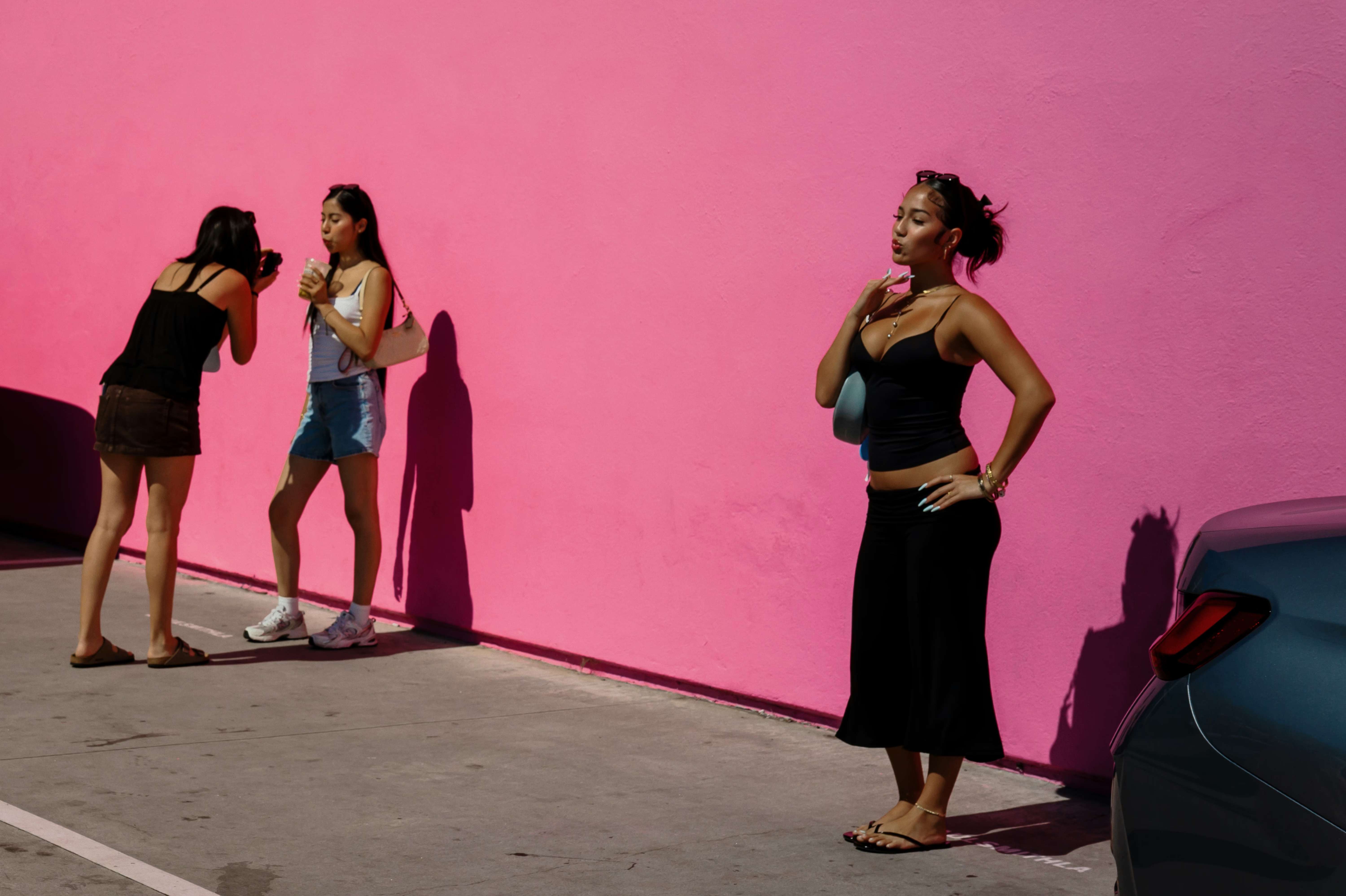
The day I was there, the picture-perfect palms gently fluttering down Rodeo bore signs for an upcoming car show, which seemed unnecessary given that every day brings a parade of tricked-out vehicles: I watched a procession of Porsches, G-Wagons, two separate Maybachs with hydraulic suspension systems that had them bouncing up and down like sugared-up toddlers. No one was actually shopping, despite the lavish window displays. Instead, everyone was posing for pictures, wearing outfits they’d put together for this exact purpose and drafting husbands and friends to play photographer. A slender blond woman clutching a tan Birkin pouted while reclining against a lamppost outside Stefano Ricci. Someone whispered that she was a Russian influencer with a superstar-athlete partner, which seemed perfectly plausible, but outside the subset of her followers, how would the rest of us know?
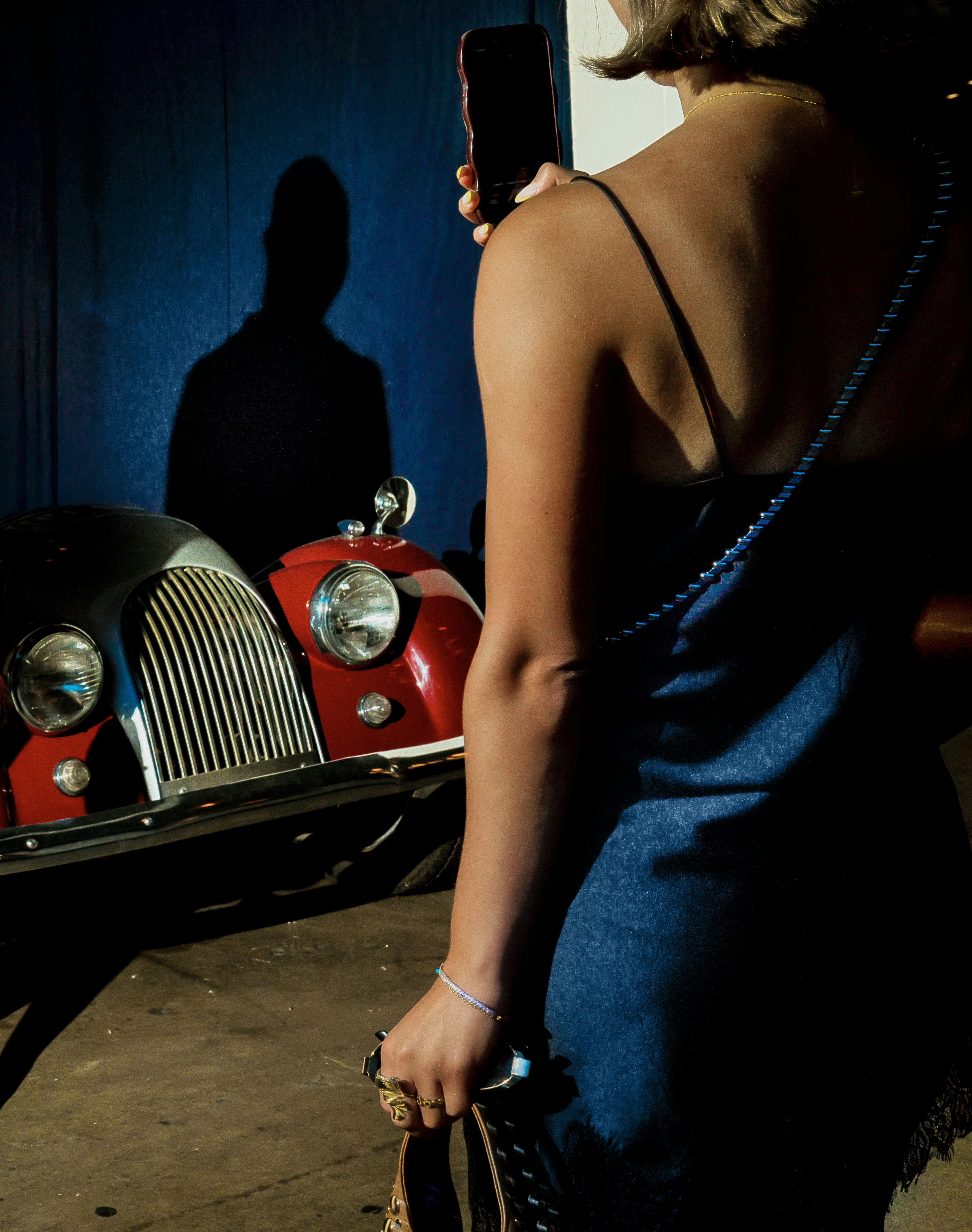
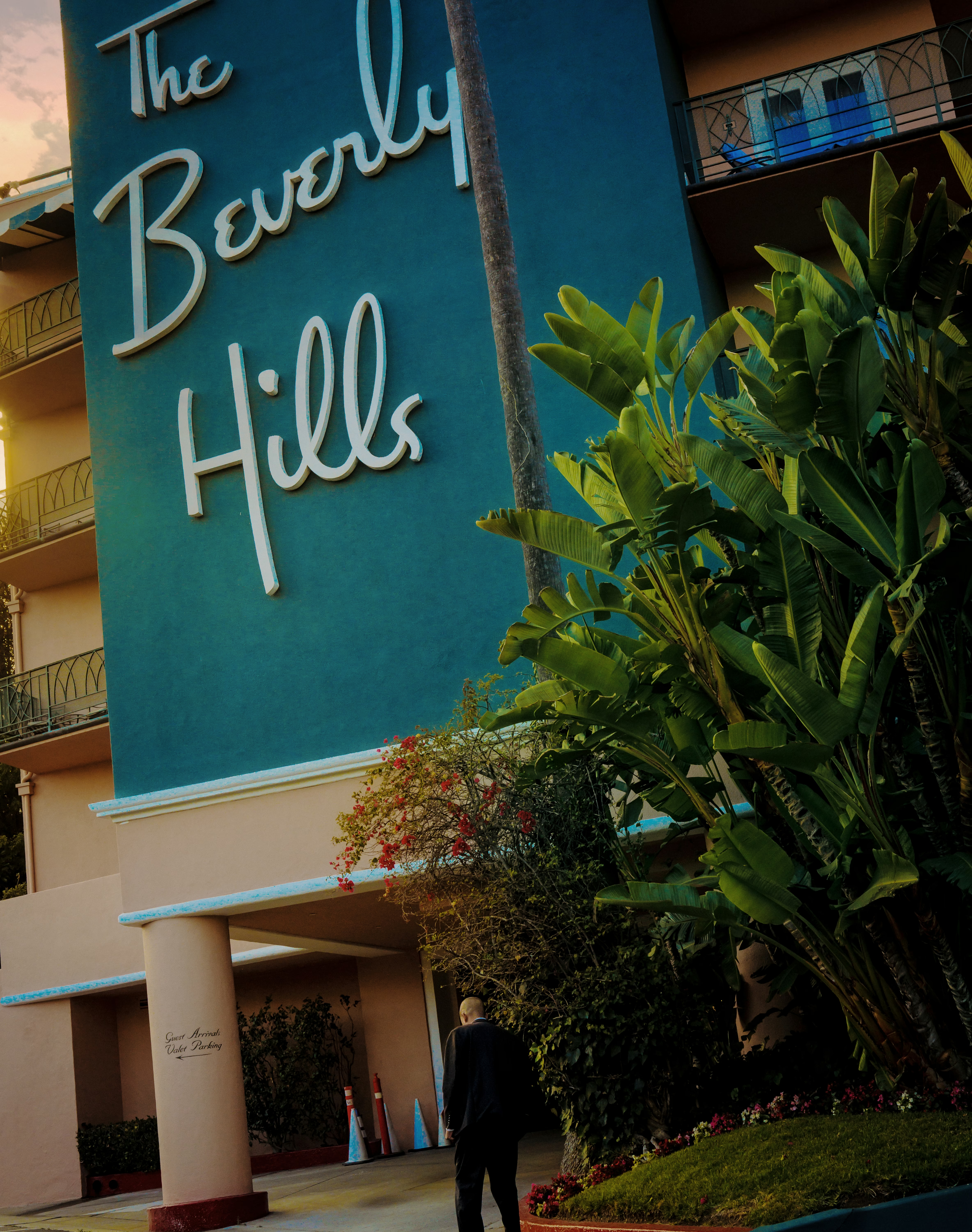
I was accompanied by a photographer, Dina, who approached the influencer to take her picture, but the woman scuttled away like a cartoon mouse. Something odd was happening, we quickly realized: Everyone was out posing in public, but no one wanted to cede control of how they might be perceived. When Dina tried to take photos of the Beverly Hills Hotel from a public sidewalk, a voice instantly came over a loudspeaker warning her to stop.
In a weak attempt to consider some of the box-office excess of 1980s Hollywood (Footloose, Top Gun, Beverly Hills Cop), I booked us a Paramount Pictures studio tour, but when I asked a publicist about Dina bringing her camera, I was told approval would be required, a studio representative would accompany us, and anything said on the tour could not be quoted. (All that’s worth saying about what followed is that while being driven around the lot where Citizen Kane, Breakfast at Tiffany’s, and Chinatown were shot, the most enthralling thing we saw was the plasticky interior set from the CBS reboot of Matlock.)
Jackie would find Hollywood’s new power dynamics perplexing: Many of her female characters are writers and reporters on the movie-celebrity beat, who see their job as pushing past the sanitized narratives that publicists try to present. But as media jobs have dwindled, influencers have stepped in to fill a void. Why would you trust a possibly unfriendly reporter with access to an actor or a director or a TV set when you can invite a photogenic social-media star to a premiere and be assured that they’ll rave about whatever they see to their hundreds of thousands of followers? In Hollywood Husbands, Silver, the soap star possibly based on Joan, is interviewed by an English journalist, “a middle-aged woman with brittle looks and dyed yellow hair” who sucks up to her subjects as energetically in person as she tears them apart in print. “So what?” Silver thinks. “Someone had once said As long as they spell your name right.” The internet has long since retooled this bargain.
And what are celebrities now, anyway? During my four days in Beverly Hills, which Jackie portrays as a superstar playground—Clint Eastwood, Jack Lemmon, Richard Gere, and Tom Selleck all feature in one lunch scene at Ma Maison—I saw not a single recognizably famous person. A dozen or so women looked similar enough to Kim Kardashian to stop me short; they were clearly modeled after her, but the image fell apart on second glance. One night I went to dinner at Funke, a purported newish hot spot for stars (Gwyneth Paltrow is a fan) where the chef used to have his own show on the disastrous short-form streaming platform Quibi. No sightings.
My L.A.-based friends advised heading east, to Los Feliz and Silver Lake, or west, to Venice and Santa Monica. Beverly Hills today is a bastion of the über-wealthy—Jeff Bezos owns the estate built by Jack Warner of Warner Bros.—and a drop-by for people who come to pose for Instagram. Like SoHo in New York and Notting Hill in London, the place feels like a simulacrum of a film set, where everyone is perpetually performing for unseen audiences and nothing feels quite real.
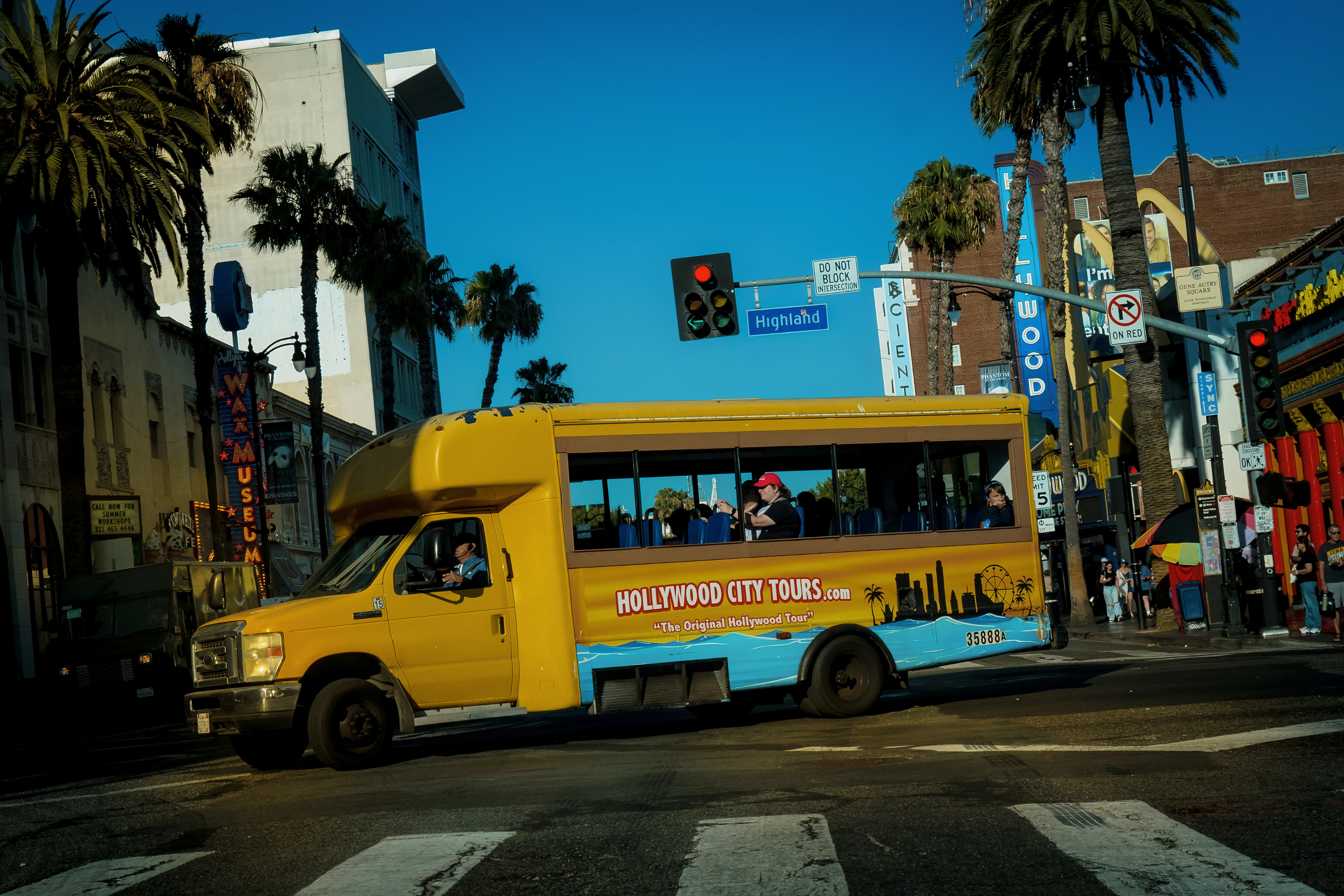
In her books, Jackie is unsentimental about creative work. Her characters tend to hustle for money and power, not self-indulgent awards or critical acclaim. When good movies get made, it’s largely by accident, because someone took their eye off the ball. But one character in Hollywood Wives seems to genuinely care about the integrity of the work she makes: Montana Gray, the tall, raven-haired, strikingly offbeat writer who—coincidentally—has a biography that seems a lot like Jackie’s own. By 15, Montana is a worldly soul who’s traveled the globe, learned French and Italian, and had two affairs. After spending a few years in bohemian circles, she meets the much older film director Neil Gray in Paris and falls in love with him. She helps him get sober and working again; he encourages her to write. At the start of the novel, her gritty screenplay, Street People, is the talk of Hollywood, with actors and agents fighting for copies.
And, because Montana is the wife of a major director, no one can accept that she actually wrote it. “Good-looking women had roles in life and they were supposed to stick to them,” Jackie writes. “They could be movie stars, models, housewives, hookers, but God forbid they should skirt onto what was strictly regarded as Big Boys’ Territory. Writing a major movie for a major director was Big Boys’ Territory. And in their own petty little way everyone wanted to let her know that.” When Neil pushes to cast the craggy movie star George Lancaster in a leading role in the film, Montana acquiesces reluctantly—he can’t act—only for George to assume that she’s a secretary the very first time they meet. “I’m Montana Gray,” she tells him. “I wrote Street People.” “You did?” he replies. “My, my, things sure are changing around here. I could still use that coffee, little lady.”
You might wonder whether things are actually different for women in Hollywood today. The statistics are still dismal: 8.1 percent of the 100 highest-grossing movies in 2025 were directed by women, a seven-year low, and the percentage of movies with any major female characters at all fell from 39 percent the previous year to 36 percent. But TV is faring better: More than a third of all streaming shows now have at least one female creator. One of those women is Lisa Joy, formerly a writer and co-creator of HBO’s adaptation of Westworld, a futuristic sci-fi show with a notably feminist question at its core: What might men do to women if those women didn’t seem fully human and the men thought they could get away with it? In 2019, Joy and her husband, the screenwriter and producer Jonathan Nolan, signed a reported $150 million deal to create shows for Amazon, including the acclaimed video-game adaptation Fallout and an upcoming TV version of Rebecca Yarros’s blockbuster romantasy series, Fourth Wing.
Jackie would have liked the all-caps plaque on Joy’s desk—I’M CEO, BITCH—that greeted me in the Hollywood offices of her production company, a glass-walled room facing the Capitol Records building. Like Montana, Joy is impossibly glamorous and all too familiar with having people presume that her accomplishments are secretly a man’s. So much of Westworld, she told me, came from her experiences being the lone woman in what felt like male playgrounds. But, like Jackie, she’s convinced that writing a different world gets us one step closer to manifesting it.
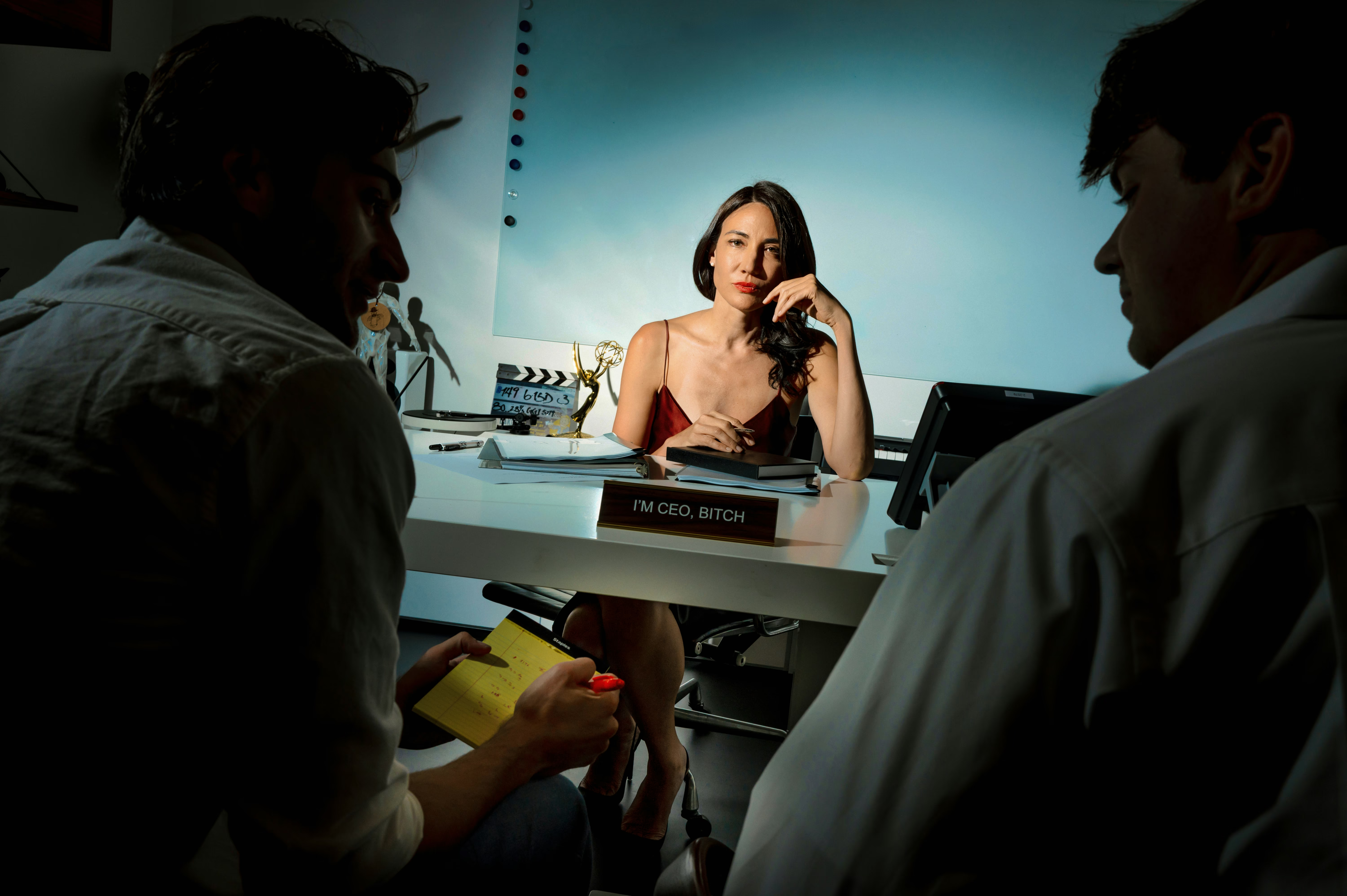
Post-MeToo, Joy said, she’s noticed some really positive changes, such as a junior writer she knows speaking out against a serial harasser whom no one had ever dared confront before, and who was subsequently fired. But reminders abound of all the ways in which things have stayed the same. “There are so many yacht trips I’ve heard about for male directors and writers,” she said. “I don’t know why they all get yachts, but there doesn’t ever seem to be a woman invited. But fuck the yachts, you know? They make you seasick. They’re no fun. Let’s make the reality we want.” I left Joy’s office feeling energized by her work, by her enthusiasm, by her determination. And then, as I was crossing Hollywood Boulevard, the universe gave me a palpable reality check: a 50-foot billboard advertising Louis C.K.’s upcoming comedy special for Netflix.
On my last morning in L.A., I went downstairs to get breakfast in my hotel, and ended up sitting near two men who were discussing potential merchandising deals for one of their clients. “Makeup is really splintered; it’s a challenging category for sure,” one said. “But fragrance is booming. What about hair?” The client has a personal connection to hair, the other said excitedly. (Who among us? I thought.) The first man proceeded to expound on how hair brands are working quickly to address the issues—thinning, shedding—that can come from GLP‑1 use. The other circled back to his client, whom he talked about with such reverence that I leaned closer, convinced she was a huge household name. “Her pull on her community is so strong,” he said. “What feeds her passion is serving her community and improving people’s lives. She’s built for this.” Only by the end of the conversation, and after much furtive Googling on my part, did it become clear whom they were talking about: a Goth-makeup influencer on TikTok who has more than 6 million followers.
You could argue that the content-creator model has democratized entertainment and broken down conventional gatekeeping, enabling anyone with a ring light, a front-facing camera, and a compelling personality to find their following. I don’t disagree. But it’s also restored youth and overconfidence as the preeminent characteristics for women on camera. Whereas what I’ve always loved about Jackie’s books is how they enshrine success and power as being hard-won and worth the hustle—and the wait. Midlife is when things get interesting for her characters, because they know the stakes they’re playing for, and they’ve accrued enough wisdom and battle scars to rival and even occasionally best the Big Boys.
But the waning public interest in traditional storytelling (because you’re reading this, I’ll diplomatically ignore the even gloomier fate of the written word) has other consequences too. If you’re someone who doesn’t just love movies and TV shows but has felt genuinely changed by some of them, it’s hard not to mourn what we lose when our mass culture has all the bells and whistles of entertainment—hair, makeup, stars, product placement—but none of the curiosity about human predicaments underpinning it. Jackie’s work was berated during her lifetime by critics (“It starts off as nothing and ends as nothing” — Clive James) and high-school English teachers like mine (“trash”), but it graphically exposed a Hollywood full of sexual harassment and gender inequity. Not least, it imagined alternative paths for women to pursue.
Now her books are mostly out of fashion; when I stopped by the Barnes & Noble inside the Grove, where Jackie liked to shop before going to the movies, the store had not a single copy of any of her novels. I was feeling despondent when I went for a last outing, to Mariposa: one of Jackie’s favorite restaurants, where she met for lunch each week with her closest friends, an elegant dining room tucked into the basement of the Neiman Marcus Beverly Hills. I had learned in emailing beforehand that Jackie was still a much-loved figure there. I was met by the store’s manager of brand experience, Mary Kate Steinmiller, who looks exactly like the actress Malin Akerman and used to be a fashion editor at Teen Vogue. She took me downstairs to Jackie’s favorite blue booth.
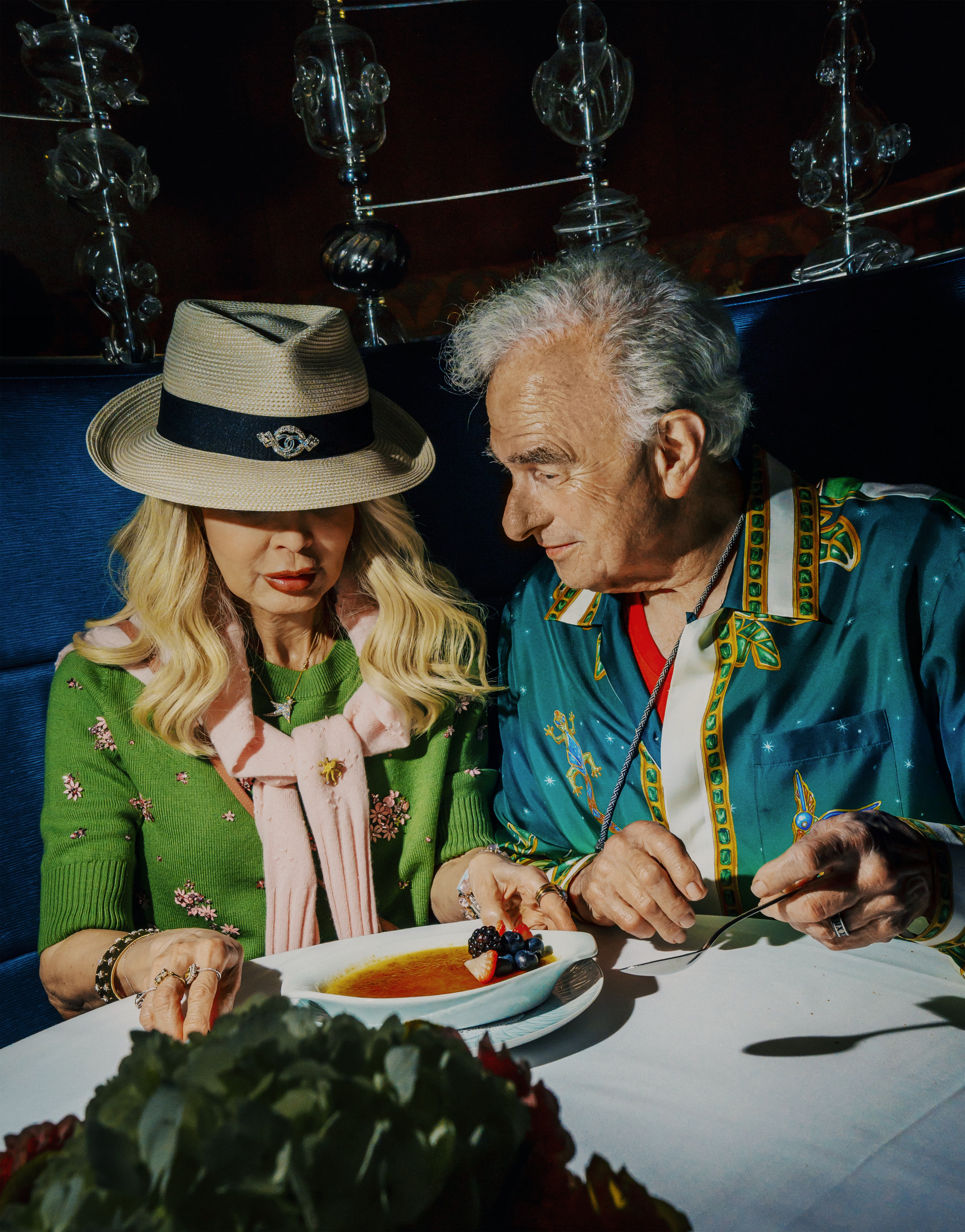
For days, I’d been traipsing through Beverly Hills trying to find a little spiritual proximity to Jackie, and here it was, on the lower floor, by the beauty counters. Groups of women wearing Christian Dior tennis whites and Pucci wrap dresses chatted ebulliently over cocktails (it was 12:15 p.m.). Every table featured floral arrangements nicer than the ones at my wedding. Over in a corner, an older couple wearing acid-green designer outfits sat absorbed in each other. A table of women told me that Mariposa was their country club. They had known and liked Jackie, but quickly pushed back against the lingering stereotype of the Hollywood Wife. One was a high-powered divorce attorney. Another was a sports photographer. The restaurant was gorgeous (and don’t sleep on the lobster salad), but it was also clear what it meant to these women: community, affirmation, a clubby dining room of their own. Watching them, I felt as though what Jackie’s novels had promised might actually be true: If you can muster enough ambition and persistence to keep pushing through, the payoff could well be worth the wait.
Travel Notes
Spago
Ma Maison, immortalized in Hollywood Wives, is long gone, but in 1982 its star chef, a telegenic Austrian named Wolfgang Puck, left to open Spago on the Sunset Strip, redefining L.A. dining in the process. The original location closed decades ago, but Spago Beverly Hills lives on, with its twinkly lit courtyard, casual-luxe menu (Jackie loved the smoked-salmon pizza and wrote it into multiple books), and luxe-luxe prices. If you never get to go to the Academy Awards’ Governors Ball, which Puck has catered for more than three decades, this is at least a chance to eat stardust by association.
Bob’s Coffee and Doughnuts
Doughnuts and Hollywood physiques go together like deep-dish and Ozempic. Don’t let that keep you away from Bob’s, a 56-year-old stand inside the historic Los Angeles Farmers Market, where writers have come to eat and procrastinate since the 1930s. According to legend, Robert Altman used to have breakfast here, scribbling away under the slatted awnings. And the doughnuts really are great—pillowy and sugar-sprinkled. Fun fact: A branded Farmers Market tote bag costs $2, compared with $50 for one at the nearby Erewhon.
Hollywood Books
Is this tiny spot on Melrose a bookstore in the conventional sense? Not really, at least not if you’re looking for a popular novel or Belle Burden’s monster-hit memoir, Strangers. At Hollywood Books, the shelves are stacked with secondhand art volumes and reissued classics. Despite—because of?—its unfussed approach to business, the store has become extremely chic among the literary girlies of Los Angeles; at one point it hosted an event for the supermodel Kaia Gerber’s book club, Library Science. I left with a copy of Picture, Lillian Ross’s 1952 analysis of the clash between art and corporate interests in moviemaking, just to remember that things were ever thus.
Wrapstar
I can’t endorse the wraps or salads here, because I had only a sparkling water. But for eavesdropping like Jackie, you can’t beat the location—across the street from William Morris Endeavor’s boxy Beverly Hills headquarters, and next door to Cipriani. Sit, snoop, rubberneck. (Yes, wraps are passé, but power agents sometimes need sad-desk lunches that you can eat with one hand while scrolling through social media, just like the rest of us.)
Bar Funke
Funke regrettably did not provide any celebrity sightings, but it did furnish a gorgeous twist on a margarita, made with Sicilian-blood-orange bitters and prickly pear. The rooftop, after you enter through a jasmine-strewn trellis, looks out over the palms and offices of Beverly Hills, but from my spot at the bar, all I wanted to stare at were the pink quartzite counters and Chef Evan Funke’s elaborate collection of Amaro aperitifs. Jackie’s literary alter ego, the glamorous and hot-blooded Italian businesswoman Lucky Santangelo, would have appreciated both.
Mariposa
Here’s to the ladies who lunch, and to playing one in this delightful department-store-basement restaurant, with its velvety blue booths and popovers accompanied by strawberry butter. The waitstaff are lovely, the diners’ outfits are extraordinary, and the food—lobster salad, crab cakes, tuna tartare—is opulent and calorie-conscious, and so good you’ll be wondering why the guests aren’t eating more of it. If I ever die and get to (at least) purgatory, I hope it’s a little like Mariposa.
This article appears in the October 2026 print edition with the headline “Jackie Oh!” When you buy a book using a link on this page, we receive a commission. Thank you for supporting The Atlantic.
The post Jackie Oh! appeared first on The Atlantic.