Thaddeus L. Johnson, a former police officer, is a senior fellow at the Council on Criminal Justice and an associate professor at Georgia State University. Natasha N. Johnson is an assistant professor of educational studies and research at Augusta University.
Vincent Hawkins had just finished an emergency room shift when he stopped at a protest outside an Immigration and Customs Enforcement facility in Portland, Oregon, in June 2025. As he raised a megaphone, an ICE agent fired a tear-gas canister through a closed gate. It tore his brow and struck his eye.
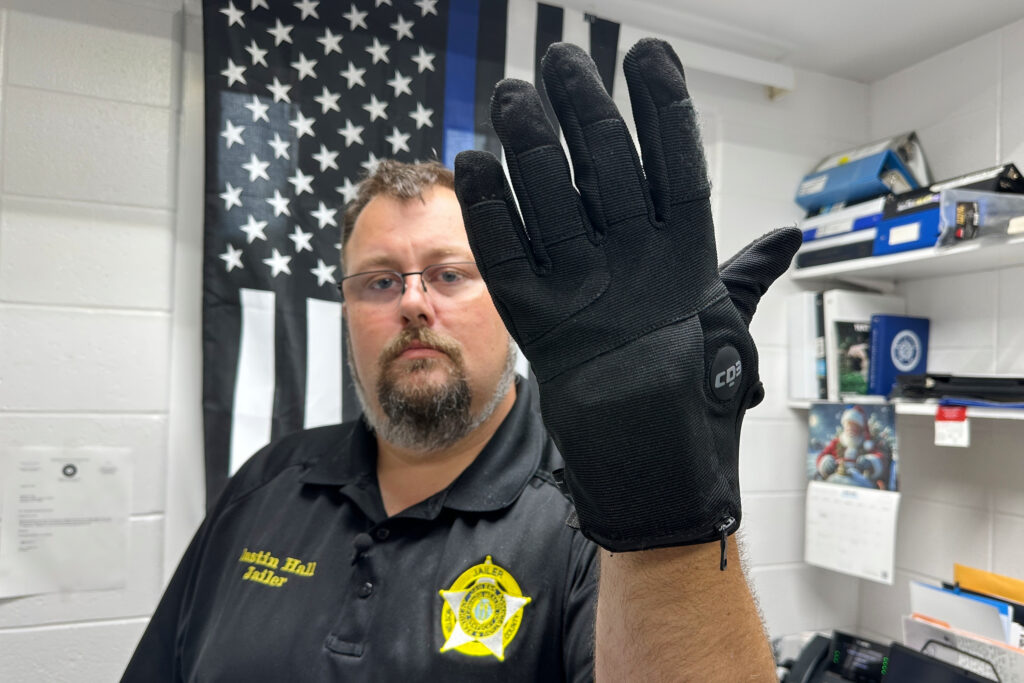
The weapon was supposed to give officers a safer way to use force. Now ICE is spending $16.7 million on 6,000 pairs of electric stun gloves, built around the same promise. An officer turns on the Generated Low Output Voltage Emitters (GLOVE) by pressing a button. Once activated, the gloves deliver a painful shock when they touch bare skin.
Before the devices become routine, ICE should show that they replace Tasers or more forceful options rather than make force easier to use in encounters that might end without it. Critics have expressed concerns that the gloves could be abused by agents equipped with a new tool capable of inflicting pain on civilians.
The Department of Homeland Security says ICE and Customs and Border Protection officers receive de-escalation and ongoing use-of-force training. But written policy does not always govern field practice. A review by ProPublica and Frontline of about 50 recorded incidents in 2025 found more than two dozen cases in which federal immigration officers appeared to violate less-lethal-force guidelines, including by aiming at heads or using chemical agents near children.
A safer force option is a legitimate goal. Violence against law enforcement remains unusually high, and DHS says assaults on ICE personnel have risen sharply, though underlying data remain limited. ICE also faces scrutiny over its own use of force. In July, the agency briefly paused most vehicle stops after agents fatally shot two men six days apart in Texas and Maine. Neither was the intended target.
That tension matters because much of ICE’s work is civil immigration enforcement. The Associated Press found that more than half of people arrested by ICE in July had neither a criminal conviction nor pending charges. Civil encounters can turn dangerous, but a pain-compliance device should be used based on demonstrated risk and behavior, not immigration status.
That makes it especially important to reserve the gloves for encounters involving actual resistance or danger.
The uneven early record shows why ICE should set firm limits before broader use. The Cape Girardeau Police Department in Missouri says its officers have used the gloves about 50 times without reported injuries. But in South Carolina, a jail officer was charged after video showed him repeatedly using the device to shock an inmate in custody.
Such examples show why testing should come before expansion. A pilot program should measure how often the gloves shorten struggles. The program could flag uses in encounters that might have ended with more time or communication. Because the device works through touch, ICE should also track accidental contact with officers and bystanders.
Vulnerable people need extra safeguards. Omaha school resource officers used the gloves twice on students last school year before the district asked police to stop carrying them in schools. The manufacturer advises against use on small children, older adults and people with severe disabilities. Depending on the model, a glove delivers up to 362 volts. The user guide recommends limiting each use to 15 seconds, warning that longer exposure can increase serious health risks, including changes in blood pressure and heart rhythm that might contribute to sudden death.
ICE should move cautiously as it rolls out the gloves by limiting who can carry them and defining when their use must stop. Start by providing them to specially trained officers on operations where violent resistance is anticipated. Routine civil enforcement, especially in schools and hospitals, should not be the proving ground.
DHS already has a framework. Its policy requires law enforcement units to review use-of-force data and adjust training and equipment as needed. ICE says the gloves will be used under approved standards.
Those safeguards should be specific to the glove and tested before expansion. Officers should show they can safely perform core arrest and defensive tasks while wearing them.
For every activation, ICE should record injuries, complaints and unintended contact. Most importantly, officials should record what is likely to have happened without the glove — for example, physical restraint or no force. That shows whether the glove replaces force or expands it.
ICE is not alone in confronting this problem. As new technologies spread, law enforcement agencies should judge them by what they change in practice, not what they promise.
The post ICE is arming agents with shock gloves. What are the rules? appeared first on Washington Post.