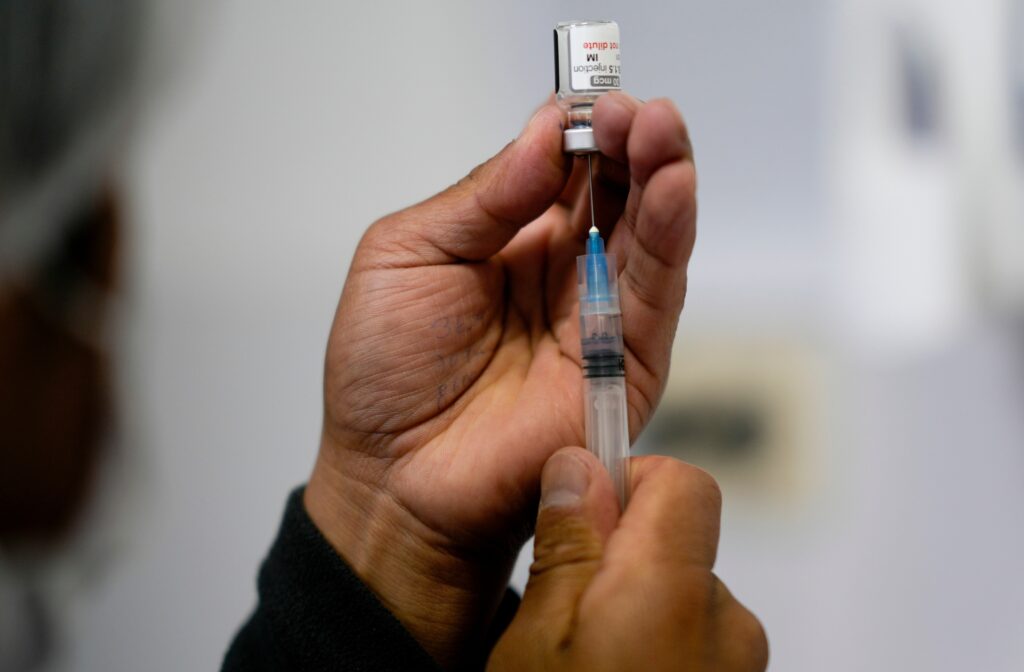
Fall vaccines against three common respiratory viruses — coronavirus, influenza and respiratory syncytial virus — are now available. In the absence of federal guidance, major medical organizations including the American Academy of Pediatrics, American College of Obstetricians and Gynecologists, American Medical Association and American Academy of Family Physicians have issued recommendations for the shots.
I’m dedicating this edition of The Checkup to explaining that guidance and answering reader questions about who should be vaccinated this fall and when.
“Is there much difference between this year’s covid vaccine and last year’s?” asked Jenni from Virginia. “I’ve gotten all the covid shots. My last one was in November 2025. If this year’s isn’t that different, should I skip it? I’m 76; my husband is 83.”
This year’s covid-19 vaccine is a bit different from last year’s. The updated shots target the XFG subvariant of the JN.1 lineage. Last year’s vaccines targeted P.8.1, the variant that was expected to dominate at the time.
The updated vaccine may offer more specific protection against the strains now circulating, but that is not the main reason to get it. The more important reason is that vaccine effectiveness wanes over time.
JAMA recently published a review of the covid vaccine’s safety and effectiveness, which concluded that last year’s shot reduced the risk of hospitalization by more than 53 percent. Previous studies have shown that protection against infection peaks at about four weeks after vaccination and declines thereafter. Protection against severe disease lasts longer, but that, too, falls significantly after six months.
That’s why Jenni and her husband should get this year’s covid vaccines: Protection from their shots last November have waned by now. The Food and Drug Administration has approved three vaccines with the updated formulation: two mRNA-based vaccines from Pfizer and Moderna, and a protein-based vaccine from Sanofi (previously licensed by Novavax). People 65 and older, as well as those with at least one health condition that increases their risk of severe covid, are eligible. The medical groups are also recommending a second dose of the 2026-27 covid vaccine six months after the first.
“I am a 75-year-old woman who has received the covid vaccine twice a year since it was first made available,” wrote Charlotte from Massachusetts. “Over the summer, there were questions about whether an updated vaccine would be issued this fall. Following advice from epidemiologists suggesting that people over 65 should get the 2025-2026 vaccine if it was available, I got last year’s shot in August. Now that it appears that there will be a 2026-2027 vaccine released, I’m wondering how long I might have to wait to receive the updated shot.”
The 2025-26 formulation should still provide good protection. I recommend that Charlotte wait about three months after her August shot before getting the updated vaccine. She could receive the latest formulation in November just in time for peak effectiveness during the winter holidays, and then another dose in May. That would also leave her on track to receive next year’s updated formulation in the late fall or early winter of 2027.
Deborah from Pennsylvania wanted to know if she can wait to receive the covid booster. “I will be on a cruise in November and I want to be as protected as I can be, since I’ll be in close quarters with a lot of people,” she wrote. “Should I get the covid vaccine now or get it nearer my departure date?”
This depends on her risk and what she wants to prioritize. Covid infections are currently “growing” or “likely growing” in 47 states, according to the Centers for Disease Control and Prevention. If Deborah has not received a shot in more than six months and is older or immunocompromised, I would lean toward getting vaccinated now — especially if she is frequently exposed to other people in her work or social activities.
But if she had her last vaccine or recovered from covid within the last six months, or if her exposure is generally low and she wants to maximize protection for the cruise, waiting until about two weeks before departure is also reasonable.
Flu vaccination is a little different: The best timing depends less on a particular high-exposure event and more on the time of year. Unlike covid, which can surge at different times, influenza activity typically peaks between December and February. I recommend getting the flu shot in mid-to-late October, before the season gets underway but late enough for protection to last through the winter.
Recommendations for that shot remain the same as in previous years: Everyone 6 months and older should receive the flu vaccine, with few exceptions. Most people need just one dose. Children between the ages of 6 months and 8 years who are receiving the flu vaccine for the first time or whose vaccination history is incomplete or unknown should receive two doses. Adults 65 and older should receive the enhanced version of the flu vaccine that affords additional protection.
“Please explain what the new flu shot is, which caused some controversy, and how it differs from previous ones,” asked Robert from Missouri. “Will it be as effective as the old ones?”
Sarah from Maryland had a similar question: “Now that the new flu vaccine from Moderna is available, do you advise that we get this or the old one?”
For the first time this year, Americans will have two good options for flu vaccination: The first is the traditional flu vaccines, which is made by growing influenza viruses in chicken eggs and then inactivating them so they cannot cause flu. The second, which the FDA recently approved, is an mRNA-based flu vaccine made by Moderna for people 50 and older.
Initial studies suggest that the mRNA vaccine may be slightly more effective than traditional flu vaccines, but we do not yet have enough real-world data to know whether it provides sustained improvement in protection. People who have tolerated mRNA vaccines well may wish to consider this option, though sticking with the traditional flu vaccine is a sound decision, too.
The biggest potential benefit is at the population level. The mRNA technology allows vaccines to be produced more quickly because manufacturers can update the genetic instructions without having to depend on growing large quantities of virus in eggs. Theoretically, this will allow scientists and public health agencies to respond faster to changes in circulating flu strains.
What about the RSV vaccine? Dante from Michigan is among those who asked about this. “My wife and I got the RSV shot last year. Do we need another one this year?”
No. At the moment, the RSV vaccine is recommended as a one-time dose for eligible adults. Those who should receive it include adults 75 and older, people 50 to 74 at increased risk of severe RSV and younger adults with certain conditions that weaken their immune systems. A booster dose may be recommended in the future, but there is not yet enough evidence to support one.
RSV vaccination is also recommended for pregnant women whose babies will be born during RSV seasons, specifically during weeks 32 through 36 of pregnancy. Infants younger than 8 months should receive protective monoclonal antibodies during their first RSV season unless their mother received the vaccine during pregnancy.
Together, these recommendations give patients and clinicians a clear path forward despite uncertainty at the federal level. After all, viruses are still circulating. Clinicians still need to advise patients, and they can now point to consensus guidelines from medical societies. States issuing their own guidance can do the same, and insurers that previously tied coverage to CDC recommendations can and should use these evidence-based recommendations instead.
It’s a shame that federal health agencies can no longer be counted on to provide evidence-based guidance on something as crucial as vaccines, but these recommendations provide a necessary stopgap.
Do you have more questions about fall respiratory viruses and vaccines? Please write to me. I will respond to your questions in future editions of The Checkup.
The post Fall vaccines are now available. Here are your questions, answered. appeared first on Washington Post.