Six weeks after the terrorist attacks of Sept. 11, 2001, Congress passed the Patriot Act. The vote was 357-66 in the House, and 98-1 in the Senate. Sen. Russ Feingold (D., Wis.), the chamber’s lone dissenter, said later that many of his colleagues hadn’t bothered to read it.
The law granted sweeping powers to the federal government. It gave agents new authority to use secret search warrants on Americans and made it easier to monitor them around the clock. It authorized the widespread collection of citizens’ digital information without any warrant at all, and made it a crime for service providers to tell anyone what the federal government was doing. It also allowed the government to detain some foreigners indefinitely without ever giving them a trial.
Civil libertarians questioned these new powers’ connection to 9/11. Some provisions had long been on the wish lists of federal law enforcement agencies, and it was not clear that the new powers would have prevented the attacks. They also cautioned that if history was any indication, the government would use the new powers primarily for routine law enforcement. They urged Americans to imagine those powers in the hands not of an altruistic and conscientious president, but one with little respect for norms, institutions or democratic principles.
The civil libertarians were mostly ignored, and as one new threat followed another — Iraq, ISIS, “lone wolves” — the president’s reach continued to grow. Across the Bush and Obama administrations, the commander in chief was given, or simply took, new powers to prosecute, shut down and seize the assets of alleged terrorist groups and their supporters. With the arrival of armed drones, the president assumed the right to remotely assassinate anyone, anywhere outside U.S. borders, at any time, including American citizens.
Congress showed little resistance, regularly renewing Patriot Act provisions when they expired. The Supreme Court granted sweeping immunity to the president, the executive branch officials who worked for him and local police officers who worked on federal task forces. Both branches built loopholes into restrictions on executive power so that presidents could act decisively during national emergencies. The Supreme Court instructed lower courts to defer to the president in determining what would qualify as an emergency. Abuses of the new powers were often ignored or explained away, and the only category of federal employees to be prosecuted consistently for their crimes since Sept. 11 have been whistle blowers who have drawn attention to government abuses.
The faith we put in government over the past 25 years was, in a way, understandable. In the days after 9/11, as the country grappled with an unimaginable tragedy, the moment demanded patriotism, unity and camaraderie. As cases of alleged terrorists being killed or captured grew, and no major foreign attacks occurred at home, hawks claimed the civil liberties sacrifices were worth it. It was easy to miss the slow, steady erosion of our freedoms. When abuses did make news, we were reassured that while our presidents might make mistakes or skirt the Constitution, they did so in good faith. Our democratic process simply wasn’t capable of producing a head of state who could rule with the ambition of a tyrant.
Well, welcome to the worst-case scenario. We now have a president who is using the post-9/11 counterterrorism powers for his own ends. He is declaring national emergencies where none exist and is targeting his political enemies as if they were terrorists. He is carrying out reckless, extrajudicial executions on the high seas, while members of his administration joke about the possibility that some of those killed were innocent. He and his administration have encouraged officers from the Department of Homeland Security, created after 9/11 to stop attacks by foreigners, to engage in racial profiling and harassment of Americans. In the name of national security, he conflates criticism with treason, protest with terrorism, dissent with sedition.
Faced with this power grab, America has been reduced to the most basic democratic backstops established by the country’s founders. Grand juries, once practically a rubber stamp for prosecutors, have had to block politically motivated abuses of power by the executive branch. In Minneapolis, it took the organized resistance of everyday people to stop the extrajudicial and illegal behavior of Mr. Trump’s militarized federal forces.
The powers previous presidents amassed are now being turned against us. We’re here now because we were too arrogant, or naïve, to think that was possible. We’re here because we thought the Oval Office was too revered and stately — that we were too exceptional — to be co-opted by authoritarianism.
We’re here because we didn’t listen to the civil libertarians. It’s not too late to start.
War, financial crises and traumatic events such as the Sept. 11 attacks tend to create a ratchet effect on civil liberties in the United States. The government demands new powers to respond, often promising they will be temporary, invoked only in emergencies, or limited in scope. As the economic historian Robert Higgs has documented, however, new powers often become permanent, broadly applied and unmoored from the crises used to justify them.
In America, that ratcheting process began almost from the start. In 1798, less than seven years after the adoption of the Bill of Rights, amid fears of the new democracy’s vulnerability to enemies, Congress passed the Alien and Sedition Acts. The John Adams administration promptly set about using the laws to target newspaper editors, immigrants and members of Adams’s political opposition. World War I brought the Espionage Act, which remains in force today. It has been used to prosecute whistleblowers who leak information about government abuses to journalists.
The 1995 Oklahoma City bombing, which killed 168 people and was the worst terrorist attack on American soil at the time, triggered the enactment of the Antiterrorism and Effective Death Penalty Act. Like the Patriot Act, the Antiterrorism and Effective Death Penalty Act was a grab bag of powers that law-and-order politicians had been demanding for decades. It gave the federal government authority to target and detain immigrants, to designate “foreign terrorist organizations” and to prosecute people for providing material support to those groups. That the bombing had been planned and carried out by U.S. citizens seeking to start a race war with no help from any foreign entity didn’t seem to matter.
Five years after supporters of the Antiterrorism and Effective Death Penalty Act told the country that the law was critical to prevent future terrorist attacks, terrorists struck the Pentagon, 1 World Trade Center and 2 World Trade Center.
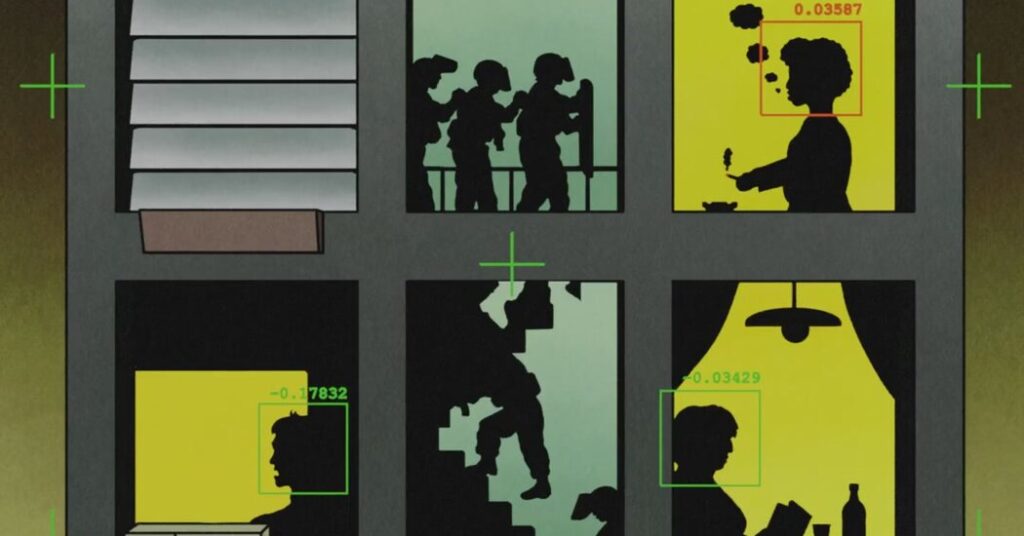
The Patriot Act accelerated the steady erosion of America’s civil liberties. “Sneak and peek” warrants let agents delay notifying the targets of searches until long after the warrants are executed. The expanded the use of roving wiretaps permitted agents to surveil a person instead of a device. Looser rules for National Security Letters broadened authority to collect digital information without a warrant while prohibiting both the target of the warrant and the parties who provided the information from telling anyone about it.
It didn’t take long for federal law enforcement agencies to use their post-9/11 powers to investigate mundane, everyday crimes. A 2007 Justice Department Inspector General’s report found that between 2003 and 2005, the Federal Bureau of Investigation made well over 143,000 National Security Letter requests. The reported result: just 153 criminal proceedings, only one of which was related to terrorism. The “sneak and peek” provision was used more sporadically at first — just 23 times in 2002. It soared in the years that followed and was used 5,601 times in 2012 alone. Almost eight in 10 of those were for drug investigations. Just 34, or 0.6 percent, were related to terrorism.
After Watergate, Congress exposed how the F.B.I. had surveilled, blackmailed and intimidated activists, celebrities and politicians. To prevent such abuse, President Gerald Ford’s administration prohibited the agency from opening investigations without reasonable suspicion of a crime. In 2008, Attorney General Michael Mukasey and his Justice Department worked around that reform by creating a new category of F.B.I. investigations called “assessments.” Under the new policy, agents could use physical surveillance and interview acquaintances, as well as informants, to gather information, even in the absence of a demonstrably high level of suspicion.
Again, civil libertarians warned that this policy would be abused to target activists, marginalized groups and immigrants. A 2010 Justice Department Inspector General’s report found that even before the new rule, the F.B.I. had opened investigations into antiwar groups (including a Quaker peace activist), environmental groups like Greenpeace and animal rights groups like People for the Ethical Treatment of Animals on very little evidence. The new rule made it even easier. Again, politicians and security experts accused the civil libertarians of overreacting. And again, the civil libertarians were right. In 2011, The New York Times reported that of the 82,325 assessments the F.B.I. opened over a two-year period, about half were unrelated to national security. Just over 4.5 percent of the national security assessments and a little over 3 percent of the other assessments led to broader investigations. Subsequent reports found that those assessments disproportionately targeted Muslims, what the F.B.I. came to call “Black identity extremist” and “Black separatist” movements (including Black Lives Matter), and groups protesting the Keystone XL Pipeline.
The most ominous, if less obvious, change since the Sept. 11 attacks has been the extent to which Congress and the courts have retreated in the face of this 25-year executive-branch power grab. Congress has all but abdicated its authority to declare war and seems to have accepted a drastically diminished oversight role over American intelligence operations. The Supreme Court’s expansion of criminal and civil liability immunity was in itself a concession of its power to the executive.
President George W. Bush started his encroachment on the other branches of government immediately after the 9/11 attacks, claiming in one court case after another near-limitless powers to wage war, weaponize the classification of information and detain alleged terrorists indefinitely without due process. Mr. Bush and then President Barack Obama also claimed the power to carry out extrajudicial executions in countries with whom we were not at war. Congress stood by. The courts largely acquiesced.
Mr. Bush invoked the State Secrets Privilege, which gives the government the power to dismiss lawsuits that could harm national security, more than any other president, taking even more presidential actions beyond the reach of the federal courts. Those courts happily let him, dismissing cases over illegal warrantless domestic wiretapping, racial discrimination at federal agencies, abuse of F.B.I. informants, the rendition of terrorism suspects to Central Intelligence Agency black sites and torture.
With its expansion of executive privilege after the attacks, the Bush administration argued that presidential aides should be beyond the reach of the courts when they discuss and recommend even clearly illegal policies. The Office of Legal Counsel, an elite section of the Department of Justice, gave cover. An attorney from that office, John Yoo, infamously suggested that executive branch employees could have the power to crush a child’s testicles if doing so could extract national security intelligence from the child’s parent. The Justice Department later found that Mr. Yoo had committed “intentional professional misconduct” but the courts granted him and other policymakers broad protection from civil liability.
If the ratcheting diminishment of our liberties came slowly and sometimes without much outcry under Presidents Bush, Obama and Joe Biden, the consequences of all those years of expanded presidential power are plainly visible now. Mr. Trump is using every authority we have given the president since Sept. 11, 2001, and some we haven’t, in ways the civil libertarians had tried to warn us about at the start.
Mr. Trump has used the president’s post-9/11 “national emergency” loopholes more than any president. He claimed the country faced an emergency caused by crime to justify sending National Guard troops to Washington, D.C., and he used a 1903 law concerning “a rebellion or danger of a rebellion” to deploy them to Chicago, Portland , Ore., and Los Angeles. (He also sent active-duty Marines to Los Angeles.) It was the first time since the civil rights era that a president had sent troops over the objections of a state governor. When Mr. Trump tried to invoke the 1798 Alien Enemies Act to deport immigrants to a notoriously inhumane prison in El Salvador, a federal judge asked for information about deportation flights and Mr. Trump invoked the State Secrets Privilege.
Mr. Trump has tried to categorize leftist activist, as well as advocacy and funding groups, as terrorism supporters in an effort to use antiterror tools to shut them down, despite no evidence that those groups have any ties to terrorism. The administration has called Americans protesting against the deployment of militarized ICE officers, “domestic terrorists.” It has claimed that activities protected by the First Amendment, including criticizing, naming and recording ICE officers, comprise acts of terrorism.
Mr. Trump and his team are taking full advantage of the immunity granted by the courts. The administration’s summary executions of suspected drug smugglers in the Caribbean have been denounced by legal scholars as illegal under both domestic and international law, and as likely crimes against humanity. The strikes have not only continued; the administration celebrates them. Mr. Trump’s deputy chief of staff, Stephen Miller, according to multiple reports, has openly encouraged immigration officers to use more violence and force more confrontation with protesters while regularly reminding them of their “immunity,” even after the killing of Renee Good in Minneapolis. After Ms. Good’s death the “border czar,” Tom Homan, went on Fox News to warn that “there’s still gonna be more bloodshed” unless ICE critics “shut their mouth,” a threat that’s likely a First Amendment violation in and of itself.
These are the abuses of post-9/11 powers we know about; there are almost certainly more that we don’t. The expanded surveillance authorities have such restrictive rules for disclosure that only a handful of people will know if they are being deployed against Americans. Mr. Trump’s handpicked prosecutors are going after the kinds of leaks that helped reveal abuses in prior administrations, which means more disclosure today is even less likely. And under Mr. Trump, the intelligence agencies have at times abandoned the post-Watergate practice of telling Congress what secret powers it is using.
It can get worse. The past 19 months have shown just how unprepared our system is for an administration that doesn’t even pretend to respect basic democratic norms, and has openly vowed to purge those in the federal government who do. Even Mr. Trump’s defeats in court have come only after he was permitted to inflict damage with the policies that were later struck down. Our system no longer provides effective sanction or punishment for attempting those illegal policies in the first place. Between Mr. Trump’s promise of a blanket pardon for senior administration officials and the Supreme Court’s ruling on presidential immunity, it seems unlikely there ever will be.
Barring once-in-a-generation reform, this and any future administration with an authoritarian bent now know they’re free to at least try even egregiously illegal policies and police actions — seizing ballots and voting equipment, sending ICE officers to the polls, deporting people over protected speech, sending immigrants to foreign prisons, openly defying Congress or arresting political enemies. Mr. Trump and his administration have openly threatened, or pursued, all of these steps. Months or years later, a federal court might tell them to stop, after the damage is done.
The threat to fundamental civil liberties is grave. Mr. Trump is taking aim at voting rights and free elections. He has brazenly and unapologetically weaponized the Justice Department. And he continues to use police actions and military-like occupation to punish cities and their leaders that he feels have offended him. The alarms are now coming not just from groups like the A.C.L.U., Human Rights Watch and the Electronic Frontier Foundation, but from legal organizations, academic groups and religious organizations. It’s time to heed their call. There’s no better time than the 25th anniversary of the attack on America to vote in representatives who will reclaim the country’s core values.
In the years after Sept. 11, 2011, national security hawks were fond of the phrase “the Constitution is not a suicide pact.” That warning was always a canard. History teems with great states destroyed by autocrats and dictators. The threat to free societies has never been too much freedom. It has always been authoritarianism — and always will be.
Radley Balko is a journalist and the author of the book “Rise of the Warrior Cop: The Militarization of America’s Police Forces.” He writes the newsletter The Watch.
The Times is committed to publishing a diversity of letters to the editor. We’d like to hear what you think about this or any of our articles. Here are some tips. And here’s our email: [email protected].
Follow the New York Times Opinion section on Facebook, Instagram, TikTok, Bluesky, WhatsApp and Threads.
The post Civil Libertarians Knew This Would Happen. We Should Have Listened. appeared first on New York Times.