Trump officials said Wednesday that they expect to submit President Donald Trump’s planned triumphal arch for final approval from a federal panel in November, according to two people who spoke on the condition of anonymity to describe the remarks.
Tammy Stidham, a National Park Service official who helps oversee the Washington region, told historic preservationists in a meeting that administration officials expect to submit final arch plans ahead of the Nov. 5 hearing of the National Capital Planning Commission.
The commission, which reviews major federal construction projects, is led by Trump officials and is expected to swiftly approve the proposal. The commission earlier this year approved Trump’s planned White House ballroom despite widespread public opposition.
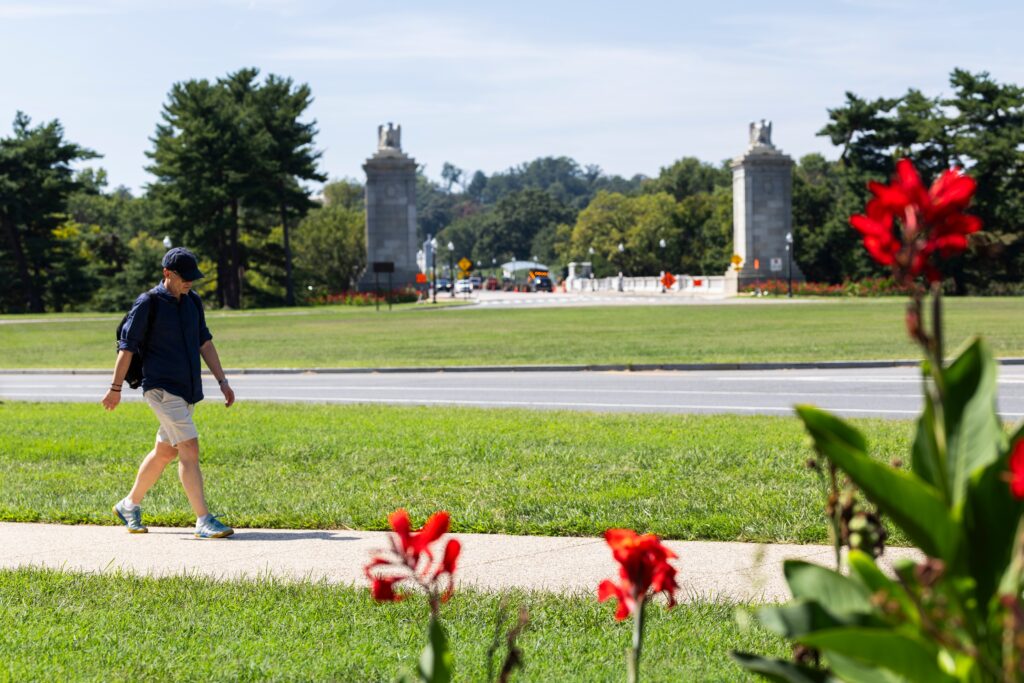
Trump plans to erect the arch on federal parkland in Memorial Circle, a traffic roundabout near Arlington National Cemetery and just inside the city’s boundaries — a location that has drawn lawsuits and an opposition campaign from critics who fear the project will disrupt military burials.
The timing for submitting the design is contingent on the Trump administration concluding reviews required under a 60-year-old historic preservation law, Stidham said. The arch has been bound up in that process, which requires the administration to assess the potential effects of construction projects and solicit public input, among other steps. The Trump administration is seeking to weaken that law.
Stidham also said Wednesday that NPS was not willing to reconsider the location, height or design of the arch, the people said. Historic preservationists, veterans and other groups have called for the administration to shrink the size of the planned 250-foot arch or pick a different place to build it.
Stidham and a spokesman for the National Capital Planning Commission did not immediately respond to questions Wednesday afternoon.
Administration officials have previously said that they will wait until the arch receives “all necessary approvals” before beginning construction. That timeline appeared to shift when Interior Secretary Doug Burgum said last week that site work on the planned arch would begin by Sept. 18.
“We are pleased to announce that after a very long wait (over 125 years!), we are preparing to start, over the next two-week period, the excavation work necessary for the Great Triumphal Arch and Military Observation Deck,” Burgum wrote on X.
Administration officials soon said that Burgum was referring to necessary work for informational purposes and not new construction.
The Interior Department on Wednesday did not answer questions and instead directed a reporter to Burgum’s post.
“This activity is not construction, or demolition in preparation for construction, of an arch,” Justice Department lawyers wrote in a court filing one day after Burgum’s remarks.
The arch is the subject of a lawsuit filed by three military veterans and a historic preservationist, who are seeking to prevent construction until the project receives approval from Congress and undergoes all necessary reviews. Trump officials have said that they do not believe they need Congress to authorize the project.
U.S. District Judge Tanya S. Chutkan ordered that the administration to provide her with 48 hours’ notice “before engaging in any activity on Memorial Circle” other than on-site information gathering.
Democrats and veterans’ groups this week said that Burgum’s comments show the urgency of moving now to stop the arch.
VoteVets, a political organization aligned with Democratic veterans, on Tuesday launched a new messaging campaign to mobilize more veterans against the project, saying that it would wrongly diminish the experience of visiting Arlington National Cemetery and interfere with military burials there.
“Here’s what I’d like you to do: File a public statement to the commission for this next vote,” Paul Eaton, a retired major general and VoteVets adviser, said in a video released by the organization.
The post Trump officials expect final approval of massive arch in November appeared first on Washington Post.