Photographs by Sasha Arutyunova
Like most New Englanders of a certain generation, my parents viewed New York City with distrust. They associated their neighbor to the south with “The Bronx Is Burning,” Bernhard Goetz, blackouts, bankruptcy, and the famous New York Daily News headline Ford to City: Drop Dead. The heart of Manhattan was a decadent playground for the wealthy, while outlying neighborhoods were plagued by desperate poverty and violence. I grew up only 200 miles away, and yet my parents never took me there as a kid.
But if New York felt menacing and foreign to them, in reality, it is the most American of cities. New York is a symbol of the nation’s money and power, its diversity and freedom. It is our capital of culture, a proudly loud and bustling melting pot. And for those who wanted to humble the world’s sole superpower, New York was the perfect place to strike 25 years ago this week. Two of its signature skyscrapers were toppled, and nearly 3,000 lives were lost.
The response underscored how much New York belongs to America. Rescue workers from red and blue states raced to help. Donations poured in from rich California cities and small Montana towns. American flags were seemingly everywhere. For the first time in decades, and less than a year after a bitterly contested presidential election, the nation felt unified.
We’ve been chasing that feeling ever since. New York City has bounced back—revitalized and thriving—with a new skyline emerging from the dust. But the nation is deeply divided, with angrier elections and escalating political violence. The pandemic could have brought the sort of unity we felt after the terror attacks, but it instead largely fostered division and rage. There is a new conflict in the Middle East, one whose dubious origins evoke the misguided war launched there after the World Trade Center fell. And now, a quarter century after the September 11 attacks, a New Yorker is president, one who was in Manhattan that crystal-clear, late-summer day. But Donald Trump won’t be there on Friday.
My first visit to New York City included the World Trade Center. I was in high school when, in 1995, my brother and I joined a church-group trip down from Massachusetts (my parents still wanted no part of it) to Liberty and Ellis Islands. I remember the ferry ride back to Lower Manhattan at the day’s end, staring at those impossibly tall towers. I was transfixed. Later, I was lucky enough to go to college in New York, and immersed myself in its energy. The Twin Towers were not exactly beloved architecture, but they were a constant, comforting presence; when you got out of the subway downtown, below the city’s street grid, the easiest way to orient yourself was to locate the World Trade Center. Find those towers, and you could get yourself anywhere. You could get yourself home.
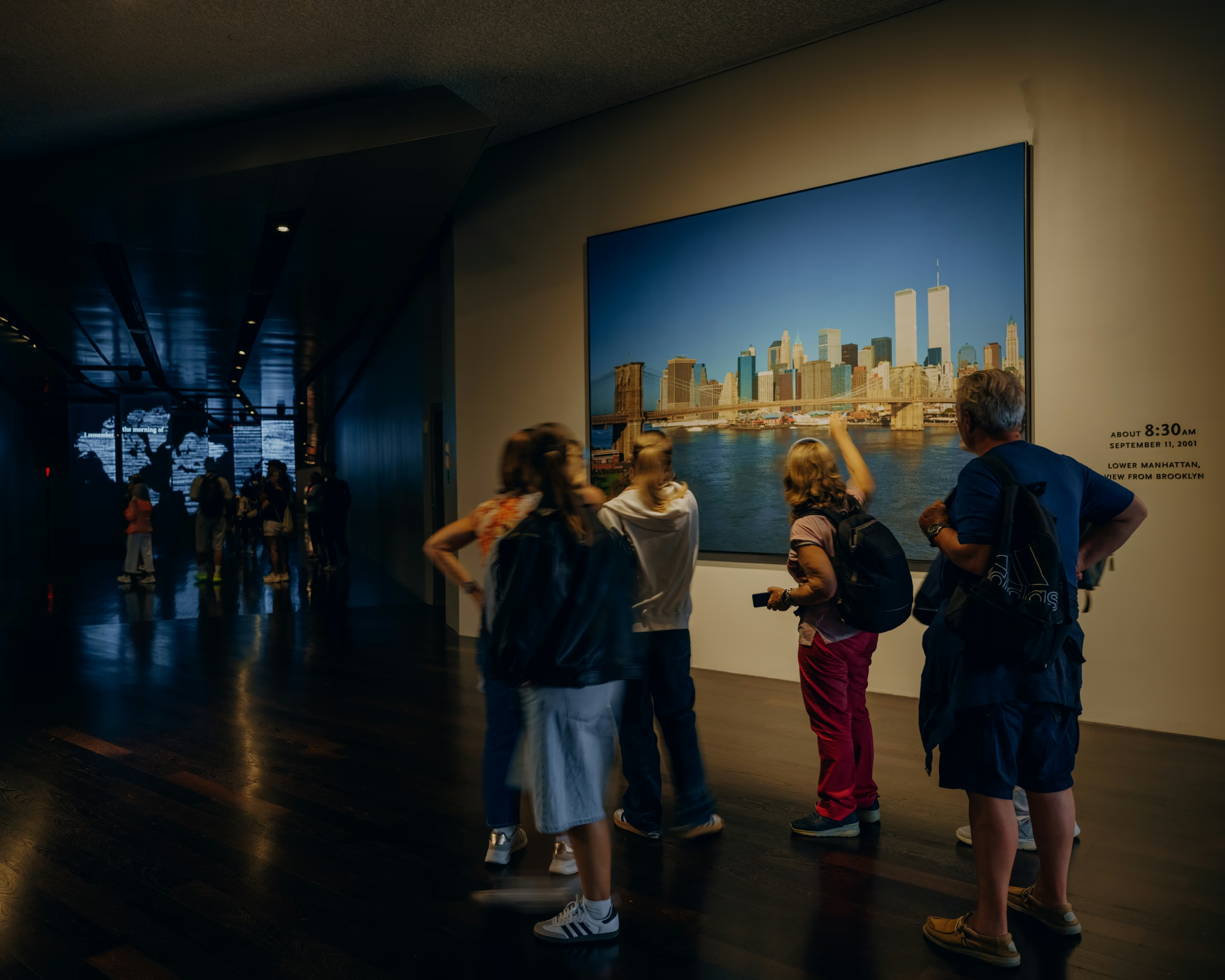
On September 11, 2001, I was a 21-year-old intern at the New York Daily News and, with no money to my name, was between apartments and sleeping on my friend’s couch. It was Primary Day, and I had the morning off ahead of covering some comptroller candidate’s Election Night party. My friend’s nanny had the television on, and I heard her shriek. Al-Qaeda got what it wanted: As the world watched the first tower burn, the second was hit. I grabbed my notebook and tried to get to work. But I was staying uptown, at West 120th Street, and the subways were already a mess and soon shut completely. I couldn’t reach the newspaper’s assignment desk; the phones were overloaded. So I started walking south, toward the World Trade Center, trying to listen to updates on my portable radio. Not long after the towers fell, I connected with an editor who diverted me to a major hospital with a trauma center, to witness the arrival of the injured.
I was instead confronted by a jarring and heartbreaking image: rows of empty hospital beds. The scores of survivors never came; there simply weren’t many. The sky was incongruously beautiful. When the wind turned, I could smell the smoke, an acrid blend of jet fuel and steel and other things too sad to consider. My next stop, after nightfall, was a bereavement center set up farther downtown. I fielded as many questions as I asked, and desperate pleas from frantic people—some covered in ash—looking for information about their missing loved ones. Soon, the city would be dotted with homemade signs about those who were lost, posters hung by families clinging to hope. Many would stay up for months.
On September 12, I slipped past the security perimeter and reached Ground Zero. I was there, off and on, for days, trying to describe the indescribable to the newspaper’s readers. The rubble continued to burn. Debris and body parts were everywhere. Firefighters refused breaks, as they dug for their fallen brothers. There was a pervasive sense of fear: It seemed as if anything could happen, including more attacks.
[Read: The man who refused to sit on the sidelines]
The four hijacked airplanes had attacked symbols of the United States’ financial might (the World Trade Center), its military (the Pentagon), and its democracy (the U.S. Capitol or the White House was the likely target of a fourth plane that passengers forced to crash in the Pennsylvania countryside). The sense of loss and disruption was overwhelming. Many nights, I cried myself to sleep. It felt as if life would never return to normal; even the small routines—going to an office, riding the subway, going to a baseball game—seemed newly fragile.
In the weeks that followed, I covered dozens of funerals. Traditionally, when a New York firefighter dies, much of the department attends. But that terrible fall and winter, many of the city’s firefighters were still working long shifts digging through the pile at Ground Zero. To make sure that each service was robustly attended, hundreds—and, at times, thousands—of firefighters journeyed from departments across the country. The funerals invariably included a version of “Amazing Grace” from the FDNY’s pipes-and-drums band. To this day, I have a hard time hearing bagpipes.
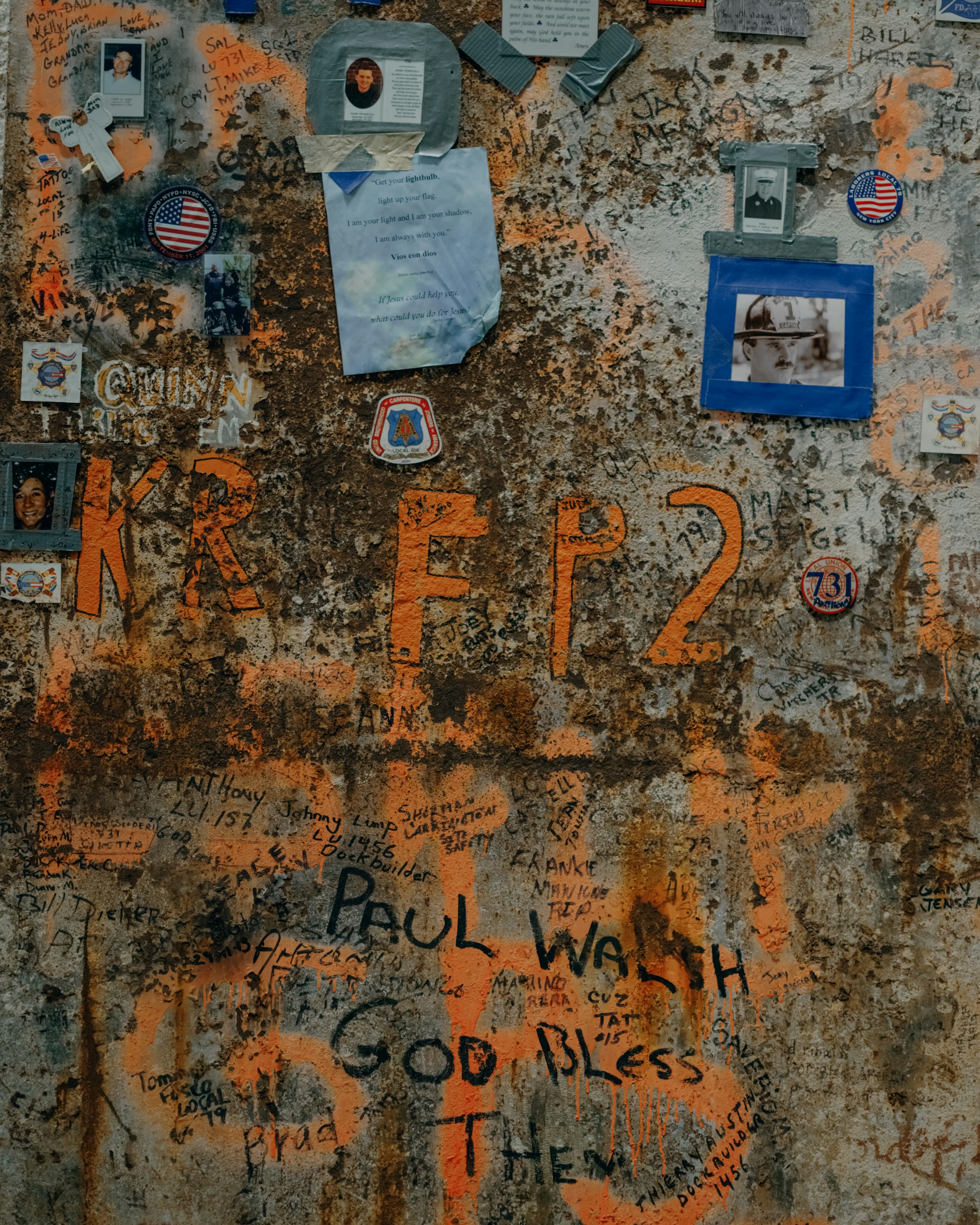
Yet even in those first hours, there were signs of hope. The city’s mayor, Rudy Giuliani, had woken up that morning as an unpopular lame duck, a self-styled political brawler whose success fighting crime had been overshadowed by his personal foibles and executive overreach. But with President George W. Bush largely out of sight that day, Giuliani became the face of a mourning, yet determined, city. His leadership in the weeks that followed was nothing short of heroic. He was followed into office by Michael Bloomberg, the billionaire businessman who led the city’s recovery and rebuilding (and personally financed much of the National September 11 Memorial & Museum). In bipartisan fashion, Congress passed a victims-compensation fund. Our NATO allies stood by us, invoking the Article 5 mutual-defense clause for the first and, so far, only time in the alliance’s history. Bush spoke out firmly against Islamophobia. The nation even rallied around the Yankees’ run to the World Series that year. (Okay, maybe not everybody rooted for them.)
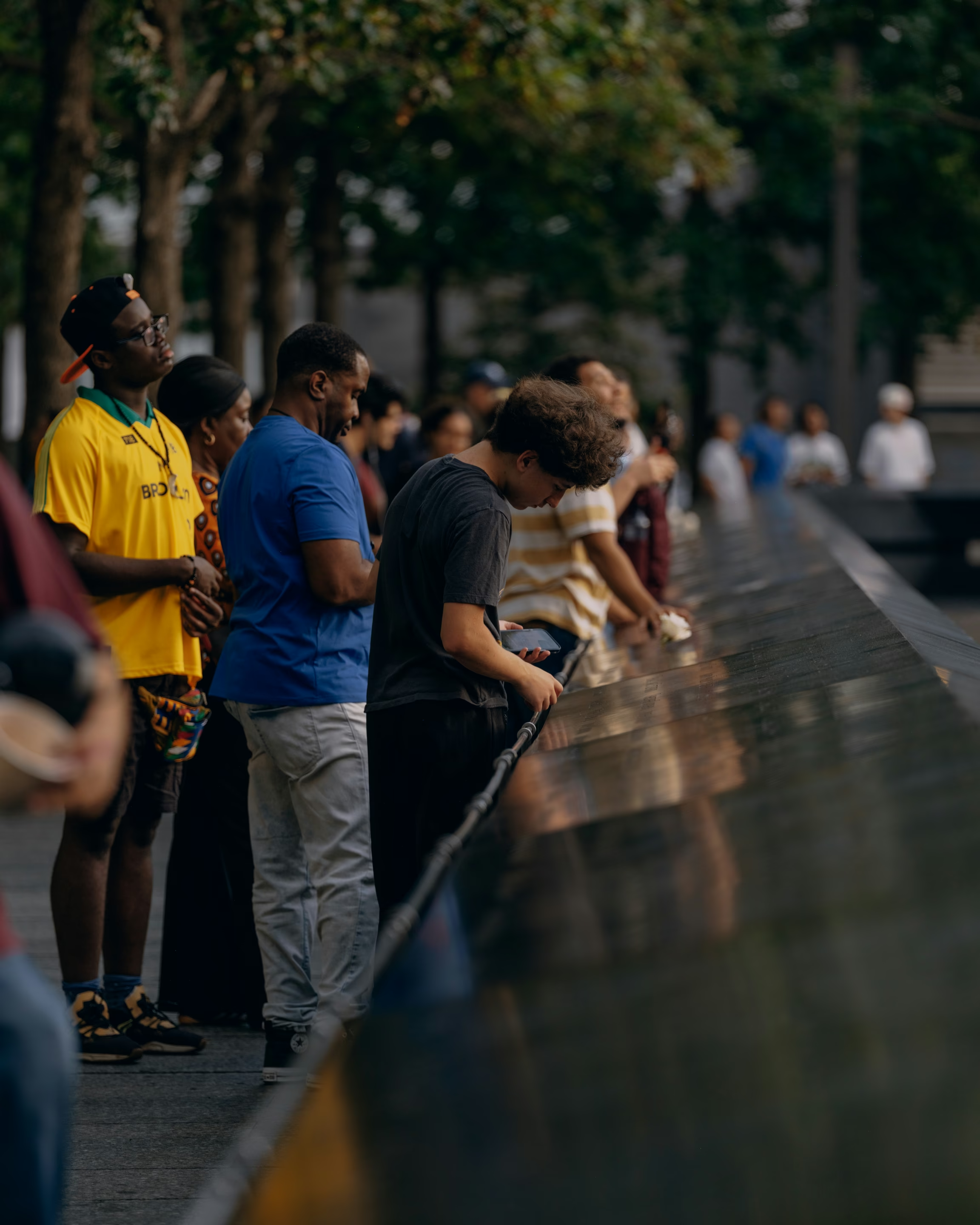
Despite early conversations about whether anyone would ever want to work or live in Lower Manhattan again, businesses came back, and, in a surprise development, more people moved downtown. As for the World Trade Center site itself, there were certainly turf wars, differing visions, false starts and delays, and probably more new office space than really was needed. But it slowly grew again, anchored by the 1,776-foot-high One World Trade Center, and the 9/11 memorial and museum. The tree-lined, eight-acre site was transformed into a peaceful park with two reflecting pools where the towers once stood. Those pools are filled by waterfalls and ringed by the names of the victims. Dennis Mojica. James P. O’Brien Jr. Cindy Yan Zhu Guan.
The rest of the city came back too. In the decades that followed, apartment prices skyrocketed and young people transformed neighborhoods deep into Brooklyn and Queens. Crime plummeted, and the NYPD developed a counterterrorism arm. More skyscrapers soared above Manhattan. Broadway boomed. Tourists arrived in record numbers (and, yes, even my parents warmed to the city). There are still challenges, affordable housing and income inequality among them. But the city today is safer and more vibrant than ever. And in a development that would have been unthinkable a quarter century ago, the year’s September 11 remembrance services will include the city’s 34-year-old democratic socialist Muslim mayor.
The city’s communal response to the terror attacks was inspirational: People checked on loved ones and strangers; they donated blood; they saluted first responders. The tragedy also provided a template of sorts for the calamities that would lie ahead. Gone were the stereotypes that New Yorkers didn’t care about their neighbors, or would take advantage of disaster to loot or riot. In their place were scenes of regular people banding together to pull through the 2003 blackout, Hurricane Sandy, and the pandemic. During those fear-filled early months of 2020, One World Trade Center’s top would at times be bathed in red, white, and blue.
The city today sits in a far more divided nation. That initial feeling of national unity was dealt a series of body blows, including the Iraq War, the financial panic of 2008, and the racist backlash to the election of the first Black president. The country became angrier, more polarized, more red versus blue, more us versus them.
Donald Trump seized the moment. Over the past decade, he has widened the nation’s political and cultural fissures, eroded trust of American institutions, governed like he was president only of his supporters—and moved to punish those who didn’t back him. Giuliani, once heralded as “America’s Mayor,” embraced Trump’s lies about the 2020 election, drawing an indictment, disbarments, and a loss in a $148 million defamation lawsuit over his false claims about two Georgia election workers.
[John Avlon: What happened to Rudy Giuliani?]
Trump has never seemed all that moved by his hometown’s darkest day. Mere hours after the towers fell, he spoke to a local television station, saying that a building he owned had suddenly gained in stature. That building, 40 Wall Street, “actually was the second-tallest building in Downtown Manhattan, and it was actually—before the World Trade Center—was the tallest,” he said. (The claim was inaccurate, as well as insensitive.) Trump has attended the annual memorial at Ground Zero a few times, including in 2024, but will not do so again this week. The New York Times reported that the president is instead participating in a Pentagon event because Manhattan organizers would not let him deliver a speech. (By tradition, there are no speeches delivered at Ground Zero, only a solemn reading of the victims’ names.) It would also be easier for Trump to fly out of Washington to attend a golf tournament this weekend at a course he owns in Ireland. The White House denied that Trump asked to speak.
Trump has long been incapable of bringing people together and uninterested in doing so. He frequently indulges in anti-Muslim rhetoric (emphasizing Barack Obama’s middle name, Hussein, and the full name of Michigan’s Democratic Senate candidate, Abdulrahman Mohamed El-Sayed) and once proposed a travel ban for anyone of that faith. His war against Iran has raised fears of another terror attack. The relationship between the president and his hometown is broken; he rarely visits his Midtown penthouse and is greeted with protests when he does. In all three of his presidential campaigns, he lost badly in New York. And though he has seemed charmed by the city’s new mayor, Zohran Mamdani, that did not stop his administration from announcing the results from a deportation surge for the city—dubbed “Operation Rotten Apple”—just days before the solemn Ground Zero commemoration.
New York City has been abandoned by its most famous son. But it will push forward, and it won’t be alone. Former presidents from both parties are slated to attend the ceremony on Friday morning. The commemoration itself is meant for the victims’ families, and officials expect a larger-than-usual turnout. But once the event is over, and the temporary ropes come down, the memorial will again open to the public. I took my sons there earlier this week. We saw people from red states and blue, and heard languages from all over the world. Those visitors stared at the waterfalls, let their hands run over the names of those lost, and shared quiet hugs. That will happen again this September 11. And when night falls, the Tribute in Light will switch on and beam pillars of light upward. The illuminated towers will stretch to the heavens—and they’ll guide so many of us home.
The post How 9/11 Changed New York—And America appeared first on The Atlantic.