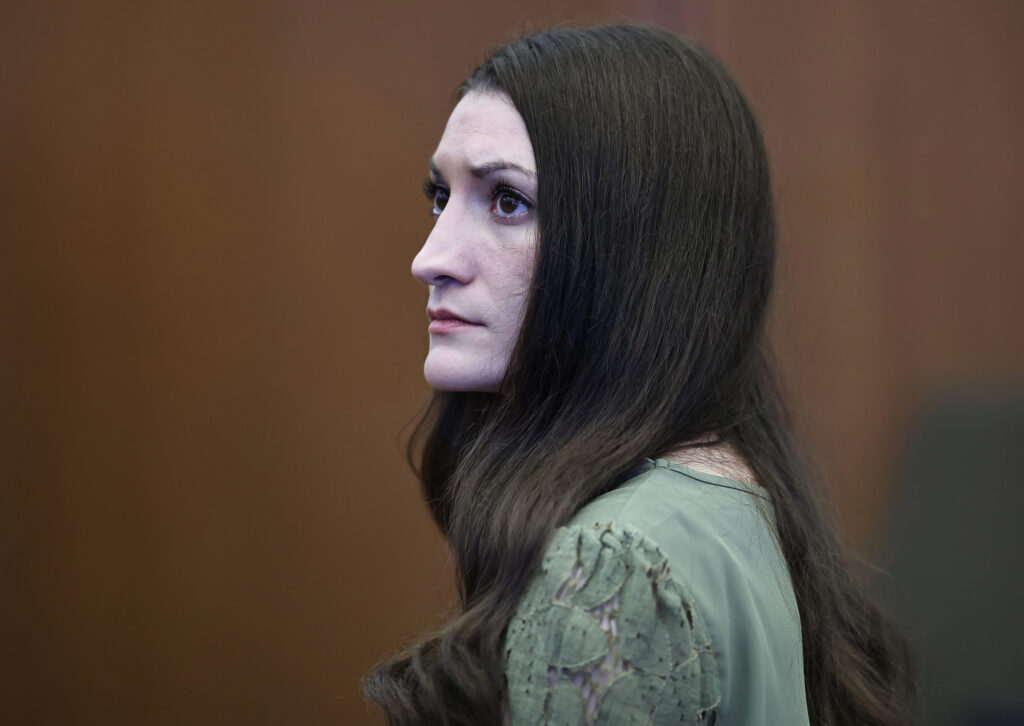
The holdout juror in the trial of Lindsay Clancy, the Massachusetts mother who killed her three children in 2023, admitted during deliberations “that he had reasonable doubt,” but refused to conclude she was not guilty by reason of insanity, the jury’s foreperson has said.
Roni Carlson, alongside two other jurors, opened up about the trial in an interview with NBC10 Boston, offering a glimpse into the seven days of tense deliberations that ultimately led the high-profile case to end in a mistrial.
Clancy, 36, admitted to killing her children, Cora, 5, Dawson, 3, and Callan, 8 months, by strangling them in 2023. The jury of 12 — nine women and three men — was asked to decide whether she was not guilty by reason of insanity.
Clancy’s lawyers argued she had been suffering from postpartum psychosis when she strangled her children at home — a position prosecutors disputed.
Carlson said all but one juror was persuaded to acquit Clancy. Then the holdout “admitted he had reasonable doubt,” she said. The law states that if a juror has real doubt based on reason, the juror must acquit the defendant.
“I started filling out the forms, I was so excited,” Carlson said. “And then he said, ‘But I’m still not going to say that she’s not guilty by reason of insanity.’”
Juror Paula Devlin said the holdout juror “really did not take anything that anybody said,” while the third juror, Kellie Farina, said the holdout juror “had the hardest time getting off the fact that Lindsay viciously killed her children.”
The holdout juror has not been publicly named or interviewed.
Jurors are no longer prohibited from talking about a trial once it is over, according to the Massachusetts Trial Juror’s Handbook, although they are advised against revealing how any juror voted or anything discussed during jury deliberations.
Prosecutors have not said whether they will seek another trial. But if Clancy is tried again, a new jury would be chosen to hear the case a second time.
Before the mistrial was declared Friday, Clancy’s defense attorney, Kevin Reddington, asked the Massachusetts Supreme Judicial Court to intervene, claiming the holdout juror was violating the judge’s instructions on reasonable doubt. The motion was denied.
Clancy’s case captured national attention and sparked debate about postpartum mental health issues.
“We weren’t trying to figure out if she murdered the children. She did, and she’s admitting that. We’re trying to figure out did she know right from wrong at that time,” Carlson said.
“Everything proved that she loved her children, so she had to have snapped.”
The post Holdout juror in Clancy case admitted ‘reasonable doubt,’ foreperson says appeared first on Washington Post.