Let’s get one thing straight up front: “The Drop: A Snowfall Saga” was always going to be different without Damson Idris.
Less of a spinoff of the late, great John Singleton’s original “Snowfall” series and more a new chapter that takes place after it, this timeline inevitably means Idris wouldn’t be able to hold the same place at the story’s center. This isn’t a problem per se and, if anything, you wouldn’t want a new show to mess with what was already a great thing. Idris, an endlessly magnetic actor whose magnificent, though still largely underrated, work over the course of six mostly strong seasons of television brought life to the rise and fall of the troubled Franklin Saint, had already left it all on the screen. His saga was about a man trying to keep his head above water, only to find that, in the course of doing so, he had become adrift, with Idris saying he even had invoked the Devil to play him. With nothing left to hold onto, the last moment we saw him, he was drowning on dry land as the world moved on without him. And while Franklin is not a part of this new show, there is something tragically poetic about his absence in the story we now see in “The Drop.” After all he went through, life carrying on with him as nothing more than a memory, merely someone to be referenced, is part of what makes this new show interesting. The Devil can’t be invoked again, but he does cast a long shadow. Even as much has changed and it is still finding its feet, questions of survival, family and legacy remain front of mind in this promising, visually inventive first season. It doesn’t attempt to just replicate what made the original show work, but it also feels like a fitting successor to it.
Bringing the same rich attention to character and engaging style in capturing how they’re all hustling for their own piece of the American dream, it’s compelling television with something more on its mind. It still has a long way to go before reaching the same high highs (and emotional lows) of its predecessor, with the first five episodes having to do much to establish the lay of the land, new characters, their backstories and the stakes, deeply personal as well as professional, they’ll be facing down. However, for those who have just been looking to peek back in on this era and some of these characters, it quickly settles in and begins to deliver.
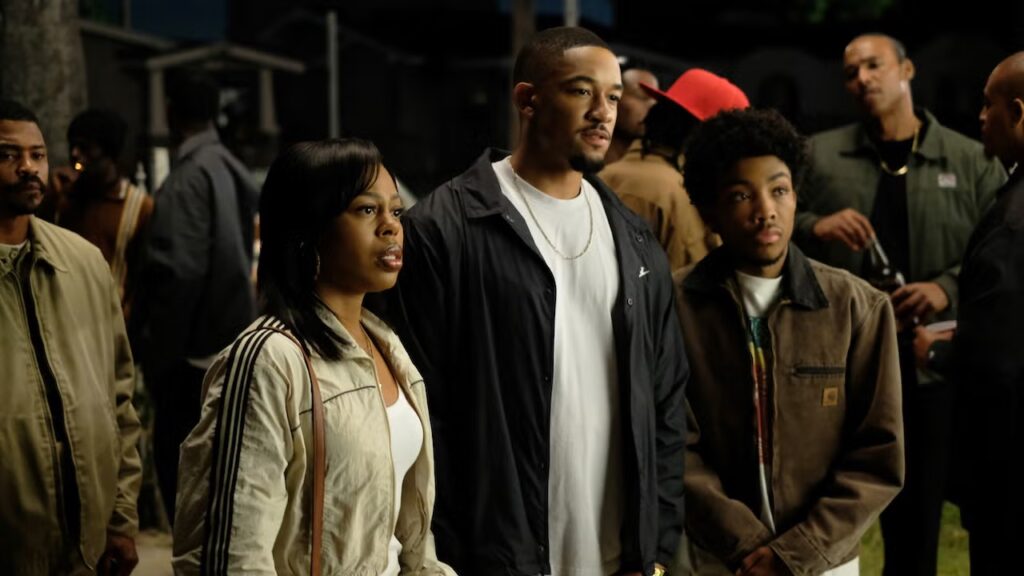
Still set in Los Angeles, it leaves behind the 80s to instead greet the similarly tumultuous 90s with the returning Wanda Bell (Gail Bean) and, to a lesser extent, Leon Simmons (Isaiah John) still trying to find their place in it. At the center of this are two newcomers to the show: Wanda’s cousins Lamar (Asante Blackk) and James (Peyton Alex Smith). Both are interesting new characters who simultaneously feel like they’ve been part of the fabric of the show from the jump; they become part of Wanda’s plans to leave her mark on the rising West Coast rap scene. Specifically, she is hoping that they can all find success not through the drug business that devastated her and so many others’ lives, but through this new rising music scene.
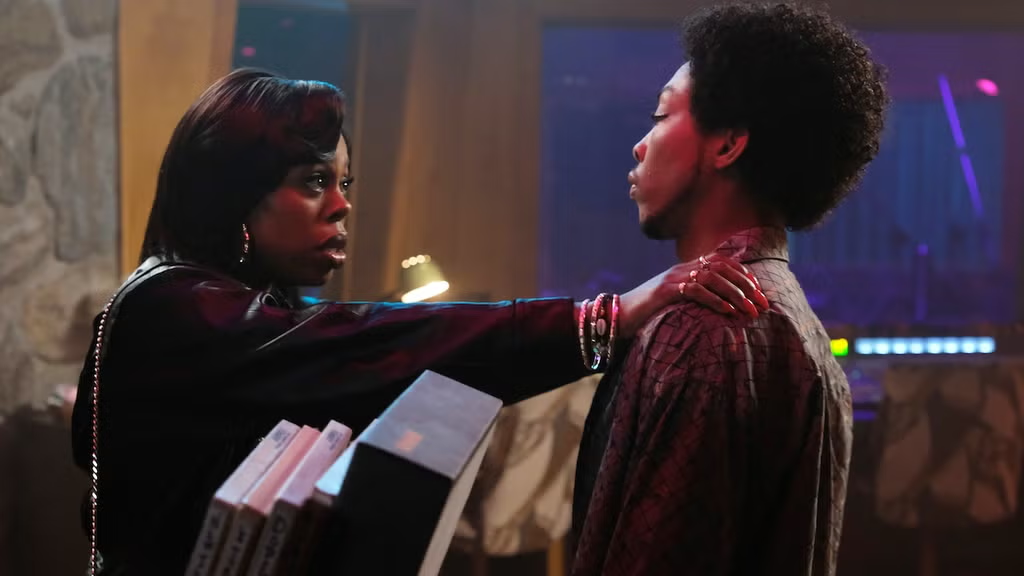
This is easier said than done, and staying clean when the world is still a cutthroat one will put the trio to the test. It’s all a solid hook that, while it may throw some with how much it is interested in the music scene, offers something refreshing and new in its specificity. Even as this is very much still a Los Angeles impacted by drugs, it explores how life and culture are also moving in directions both exciting and complicated. In particular, this is seen through the expressive eyes of Blackk.
Blackk is a welcome new presence, a great young actor who was previously in the series “When They See Us” and the underseen film “Story Ave,” and who deserves many more roles to sink his teeth into. His younger character is hungrier and not yet beaten down, providing a contrast to Wanda, who has been through hell and back after battling addiction in the original show. He’s full of aspirations for his life, yet is beginning to understand the pains of reality that surround him. Their dynamic is the strongest part of the show and makes one optimistic for where it will go next.
Even when there are some shaky narrative developments and a flashback episode that can drag things down, the cast of characters, new as well as old, are all great. It can occasionally feel like more of an ensemble show than the original, but that works well for how it’s trying to expand outwards into how the rap scene is changing the landscape of Los Angeles. This can be ugly and violent, though the show also isn’t afraid to have fun; one scene between Wanda and Leon and a third person attempting to cut in is chaotic, messy, and also puts a smile on the face.
You still care about all these characters and come to find yourself deeply invested in the new ones as well. While it’s not likely to win over any new fans and Idris still leaves behind some mighty big shoes to fill, this show is already finding its footing.
“The Drop: A Snowfall Saga” premieres Tuesday on FX and Hulu.
The post ‘The Drop: A Snowfall Saga’ Review: FX Series Is Missing Damson Idris, but Still Finds Its Footing appeared first on TheWrap.