The Australian parliament will consider legislation that would allow social media users to opt out of algorithms on platforms like TikTok, Instagram and Facebook under new laws proposed by the government on Tuesday to boost online safety.
It follows the country’s landmark social media laws introduced last year that banned children younger than 16 from having social media accounts. Within a month, more than 5 million social media accounts were deactivated or removed. But almost a year later, most indications are that the law has largely failed at keeping young teens off the platforms.
Anika Wells, Minister for Communications, said on Tuesday that technology companies had been “running real-time, unregulated product testing on Australians” for too long.
“Their platforms and tools have infiltrated our daily lives in ways that we could never have imagined. Some good, but some with terrible consequences. And there is a global reckoning coming for Big Tech.”
Australia is moving to impose an off switch on algorithms — why?
Under the proposed changes, new and existing social media users would receive a notification offering them the option to decide whether their default feed includes personalized content recommended by the algorithm — or not.
Users who opt out will instead view content from friends and creators they choose to follow.
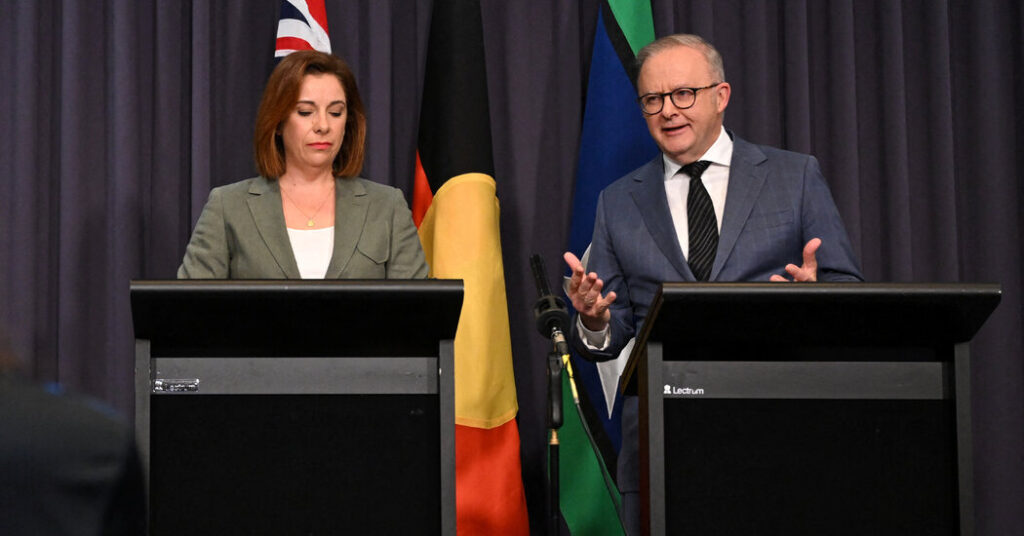
The proposed changes are part of a broader “Digital Duty of Care” draft law that will seek to increase online safety and “give people control” over the content they see online, said Australian Prime Minister Anthony Albanese.
“What we know is that the world is changing, and more and more people are engaged with things online,” he told reporters in Canberra on Tuesday. “The impact of new technology is impacting the way that we live our life. It’s having an impact on people, both desirable and undesirable.”
Tech companies could face “significant penalties” of more than 100 million Australian dollars ($72 million) if they fail to adhere to the proposed laws.
Tama Leaver, a professor of internet studies at Curtin University in Perth, said that historically, social media had focused on a reverse chronological feed of content from people users had chosen to follow. Over time, that shifted to a “recommender system” with the algorithm feeding users content it determined would keep them engaged for longer.
“In the Australian context, there’s been real concern that the recommender system has pushed harmful content, including misogynistic content, manosphere sort of content, and a range of other things, into people’s feeds when they haven’t wanted it,” he said.
“But because they can’t really look away, they tend to then consume it, and potentially there’s a bit of a cultural impact.”
How would it work?
There are still a few gaps in the details, but information will likely emerge during the coming months.
Aside from the choice to opt-in or out of algorithmically recommended content, there is also a proposed plan to require online games, apps and A.I. chatbots to protect children younger than 18 from design features that have negative behavioral impacts, like addictive features and from harmful content.
This would include content that promotes eating disorders, pornography, misogyny or glorifies crime, an additional statement from the government said.
Not everyone agrees with the proposed legislation. Critics, including leader of the opposition Angus Taylor, expressed skepticism ahead of the proposed changes.
“I fear that this is just going to be an attempt by the government to censor social media,” he told television station News24.
Mr. Albanese was adamant this was not the case.
The draft laws are open for consultation with social media companies, industry bodies and civil society groups and will likely be introduced to parliament later this year.
Mr. Leaver, the professor of internet studies, said that although the harmful content could still exist in parts of the internet, the proposed changes were about giving people the “tools to try and solve the problem.”
Social media companies have not commented on the proposed changes.
What are other countries doing?
There are some rules and regulations around algorithms. Most notably, the European Union’s Digital Services Act, which came into full force in 2024. It allows users on large platforms — defined as having more than 45 million monthly users in the region — to opt for feeds based on the algorithm’s suggestions or based on other criteria, such as chronological order.
But some regulators have complained that platforms did not make it easy enough for users to opt out.
The post Australian Social Media Users Could Get Power to Switch Off Algorithms appeared first on New York Times.