American forces are conducting combat operations in South America right now. If that comes as news, it is because the administration has disclosed the mission only in fragments, and Congress has not forced a public accounting.
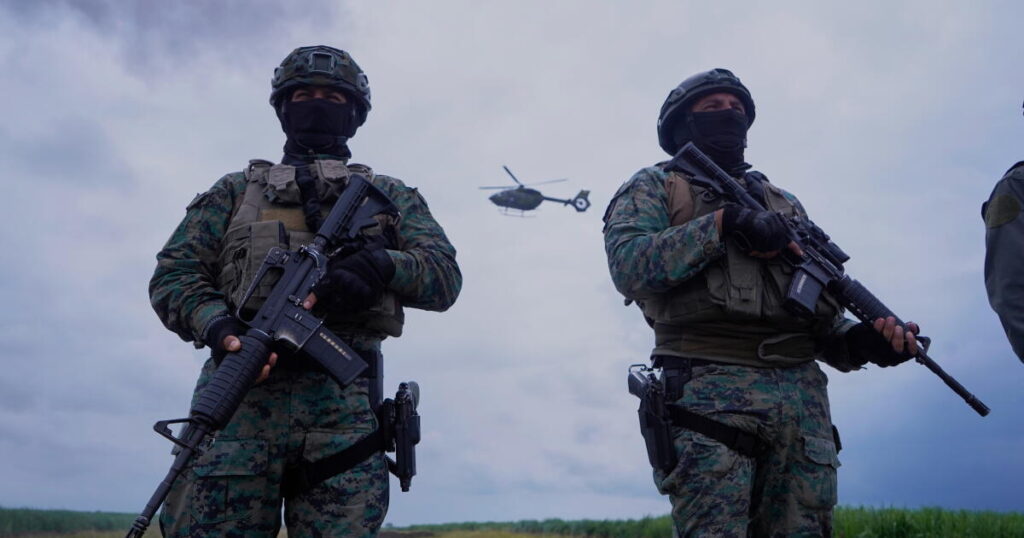
United States Green Berets are operating alongside Ecuadorian forces in the northern province of Esmeraldas in what the provincial governor described as joint operations against “narcoterrorism.”
Neither government has said which organizations the ground operations are targeting, what the troops are doing or how many Americans are involved. The governor said American forces had been there “for some time” and would remain “for as long as necessary.” Ecuador has authorized U.S. military personnel and contractors to enter without visas for up to 180 days and granted them immunity under existing agreements.
On March 6, American and Ecuadorian forces conducted what U.S. Southern Command called “lethal kinetic operations” against a site near the Colombian border. Three days later, the White House formally notified Congress that American forces had helped plan and execute the strike. President Trump cited his authority as commander in chief and chief executive.
Two U.S. warships and three Black Hawk helicopters have also joined the campaign. Ecuador’s defense minister said the deployment would triple the country’s maritime interdiction capacity.
Since late August, U.S. forces have boarded and sunk three vessels in the eastern Pacific that SOUTHCOM said served as floating refueling stations for drug traffickers. On September 5, they conducted a fourth interdiction involving a multi-vessel refueling station, transferring the people aboard the main vessel to Ecuadorian authorities before sinking it and the attached support vessels.
Operations in Ecuador are part of a broader campaign. Since September 2025, American forces have conducted lethal 68 strikes against alleged drug-smuggling vessels in the Caribbean and eastern Pacific, killing at least 227 people. The government has offered almost no public evidence about the people or cargo aboard the vessels.
Trump has initiated and expanded an unconstitutional, open-ended American combat campaign in Ecuador and at sea without congressional authorization.
The Constitution assigns Congress the power to decide whether the country will enter war. The president commands the armed forces once they are lawfully employed and may act without prior congressional authorization to respond to sudden attacks and protect Americans in immediate danger. The administration has not claimed that this campaign began under either circumstance. This is a deliberate and expanding military commitment chosen by the executive branch.
Ecuador has suffered devastating cartel violence and asked the U.S. for help. Part of a serious policy debate might well have been whether military force should play a role in a broader regional response to transnational criminal organizations. Trump never took that question to Congress or the nation. He simply committed American forces to combat.
Ecuador’s consent may address the international question of its sovereignty. It does not answer the constitutional question in the U.S. A foreign government cannot grant an American president authority that the Constitution assigns to Congress.
Calling drug-trafficking organizations “terrorists” does not create that authority either. A terrorist designation is not an authorization for war. Congress has not authorized force against any of these organizations. Executive labels do not transfer Congress’ war powers to the president.
A constitutional process was available. Trump could have identified the organizations the United States proposed to fight, explained why military force was necessary and defined the mission’s objectives, geographic limits and expected duration. Congress could have established reporting requirements and funding limits. Congress might have authorized that mission. Instead, the administration bypassed the debate altogether.
A handful of lawmakers have demanded answers about Ecuador. But five months after the White House formally notified Congress of the March strike, Congress has neither authorized the campaign nor acted to stop it.
A request to authorize military force produces hearings, testimony, reporting and public debate. Military and civilian leaders must explain what they intend to accomplish and what they are asking American troops to risk. Citizens have an opportunity to judge whether the objective justifies the cost.
When a president ignores that process, those questions remain unanswered. A combat mission can quietly accumulate troops, ships, aircraft and targets while the American public remains largely unaware that it exists.
If constitutional deliberation seems too cumbersome, we should ask what the Constitution is for. It exists in part to check executive power when unilateral action would be easier. Its allocation of war powers requires a president to obtain congressional authorization before beginning a sustained military campaign.
Nothing a nation asks of its troops is more consequential than placing them where they may have to kill or be killed. They deserve leaders willing to state the objective, defend the strategy and accept accountability for the war they are asking others to fight.
Citizens who claim to believe in limited government bear responsibility too. Those willing to treat the Constitution’s allocation of war powers as optional because they approve of this president or despise his targets must be equally comfortable with every future president claiming the authority to decide alone when, where and against whom the United States goes to war.
Whether the U.S. should confront drug cartels through law enforcement or military force is a question Congress and the American public should debate. Trump denied the public that opportunity, and Congress has failed to insist on it.
The country barely knows this war exists. American troops are fighting anyway. That should stop the country cold.
Jon Duffy is a retired Naval officer. He writes about leadership and democracy.
The post America is at war in … Ecuador? appeared first on Los Angeles Times.