If you buy a T-shirt at Gap, it will have a label that tells you where it was made. That’s federal law.
The same is true for automobiles, appliances, television sets, every fresh or frozen fruit and vegetable sold at the supermarket.
Beef and pork are notable exceptions to these laws. And that may help to explain why President Trump signed a proclamation last week that will allow the duty-free importation of about 660 million pounds of inexpensive beef.
If American consumers knew where that beef was coming from, they might not want to eat it.
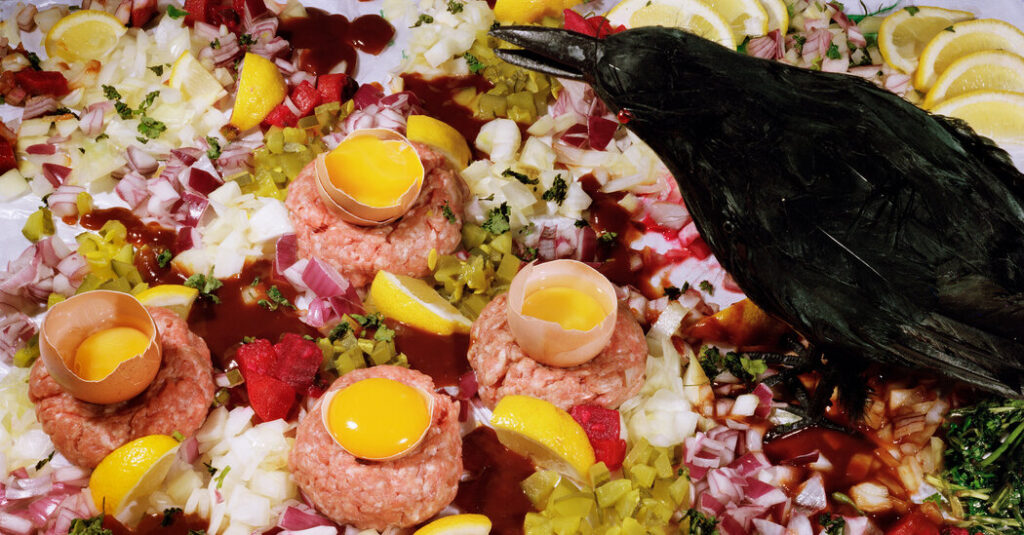
The cuts of meat covered by Trump’s proclamation aren’t fresh sirloins, rib eyes and filets. They’re lean beef trimmings that will be added to fattier American cuts to make ground beef. They’re small chunks of frozen meat that could have been kept in cold storage overseas for years. They are the quintessence of generic industrial meat, imported here to be subsequently processed in massive grinders that combine pieces of tens of thousands of cattle from multiple countries, mainly into fast food hamburgers.
I’ve been a longtime critic of food-safety practices in the U.S. meatpacking industry. But some of the practices in the 16 countries currently authorized to export raw beef to the United States are worse than any on these shores. During the past year, China rejected two shipping containers of beef from Uruguay after finding residue of an anti-parasitic drug in the meat, and rejected beef from Argentina reportedly because it tested positive for a banned antibiotic that can cause serious blood disorders.
One of the worst food-safety scandals occurred in Brazil, the world’s largest exporter of beef. In 2017, the Brazilian federal police raided nearly 200 meatpacking plants after allegations that government inspectors and politicians were being bribed to allow the sale of contaminated beef. Rotten meat treated with ascorbic acid and other chemicals to mask the contamination had been sold to hospitals and schools in Brazil and also been exported. Executives at the Brazilian company JBS, the largest beef producer in the world, later admitted to bribing inspectors.
American cattle industry leaders say that Mr. Trump’s move will hurt domestic ranchers and do little to reduce the price of ground beef. They say the real cost savings will be enjoyed by meatpacking companies, fast food chains and supermarkets.
Why did Mr. Trump come up with this scheme to import hundreds of millions of pounds of beef?
“Regime Change,” the recent book by the Times reporters Maggie Haberman and Jonathan Swan, contains an interesting clue: a White House meeting last November between President Trump and Joesley Batista, whose family controls JBS.
Mr. Batista had long been considered persona non grata in Washington, having been jailed in Brazil as a result of, among other things, paying $186 million in bribes to almost 2,000 politicians, including three Brazilian presidents, to obtain state financing for his family’s company. In 2019, after JBS bought several American meatpacking companies, Senator Marco Rubio and his colleague Robert Menendez deplored JBS’s “admitted criminal conduct,” its “business relationships with Venezuela’s Maduro regime, as well as its growing reliance on financing from entities aligned with the Chinese government.” The senators argued that allowing JBS to own U.S. companies could endanger America’s food supply and national security.
Mr. Batista gained the White House meeting last November, Ms. Haberman and Mr. Swan wrote, because of his friendship with Melania Trump. In addition, a JBS subsidiary had donated $5 million to Mr. Trump’s second inauguration, the largest gift from any individual or corporation. Not long afterward, JBS got approval from the Securities and Exchange Commission to be listed on the New York Stock Exchange, a privilege the company had sought for almost a decade.
After the White House meeting with Mr. Trump, Mr. Batista flew to Venezuela at Mr. Trump’s request, met with President Nicolás Maduro and urged him to resign. Mr. Batista’s unusual diplomatic endeavor did not succeed, but in July, a company owned by his family acquired a major stake in Venezuelan oil production, with the blessing of the new Trump-backed government there.
The European Union suspended imports of beef from Brazil this past Thursday because of concerns about antibiotic misuse. Mr. Trump’s proclamation facilitating beef imports from Brazil took effect the same week. Calling these facts to public view, the writer Shanley Hunt allowed that perhaps it’s just a coincidence. According to the The Wall Street Journal, Mr. Trump announced his intention to allow duty-free foreign beef just a day after another meeting with Mr. Batista at the White House. Perhaps that’s a coincidence, too.
And yet it’s remarkable that the livelihood of American ranchers is being shaped in private meetings between the president of the United States and a representative of Brazil’s largest exporter of beef.
Country-of-origin labeling on beef used to be mandatory in the United States. That changed in 2015, when a Republican-controlled Congress, led by Speaker of the House John Boehner, ended the requirement. Just over a year later, Mr. Boehner was appointed to the board of JBS Foods International.
Today, four large meatpacking companies control about 85 percent of the market for beef in the United States. Two of those companies — JBS and National Beef — are Brazilian-owned. Smithfield Foods, America’s largest pork company, was purchased by a Chinese company in 2013. Although Smithfield doesn’t currently import pork from China, if it ever does, that fact won’t appear on the label.
Last year the Senate majority leader, John Thune, and Senator Cory Booker introduced bipartisan legislation that would once again require that meat be labeled according to its country of origin. In March, the Senate minority leader, Chuck Schumer, introduced separate legislation that would require tougher antitrust enforcement in the meatpacking industry, break up the big four beef companies, strengthen protections for independent ranchers and place limits on foreign ownership of American meat companies.
Those bills are a good start. In the early 1970s, before the administration of President Ronald Reagan gutted antitrust enforcement, the top four beef companies had only 21 percent of the U.S. market. When that market was truly competitive, Americans ate more beef than they do today, the nation had more than twice as many cattle ranchers — and foreign corporations didn’t control the most valuable sector of American agriculture.
Until a new labeling act gets passed, if you want to eat a hamburger, I suggest going to your local butcher shop, rather than the supermarket, ordering cuts of American beef, and asking for them to be ground on the premises. Or grind it at home. Otherwise, there’s really no way of knowing what’s in your meat, or how many international borders it crossed to reach your plate.
Eric Schlosser is the author of “Fast Food Nation.”
The Times is committed to publishing a diversity of letters to the editor. We’d like to hear what you think about this or any of our articles. Here are some tips. And here’s our email: [email protected].
Follow the New York Times Opinion section on Facebook, Instagram, TikTok, Bluesky, WhatsApp and Threads.
The post Why Did Trump Order Up 660 Million Pounds of Mystery Meat? appeared first on New York Times.