Pop and Jackson Pollock are the tent-pole names of the coming New York art year. But both here and nationally it will be exhibitions touching on the now under-censure subject of social justice that promises to give the season a sense of grit and purpose.
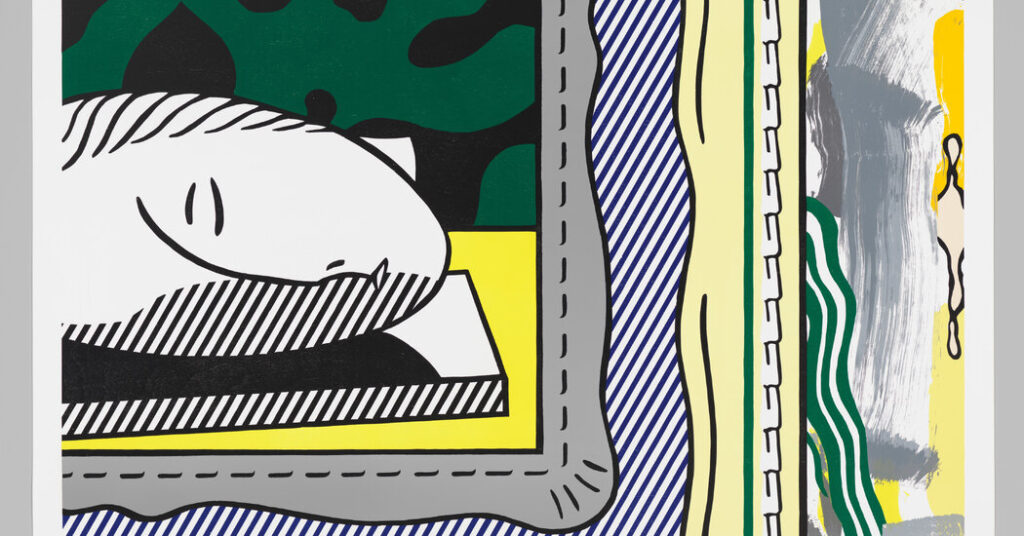
The big popular draw in New York will surely be “Roy Lichtenstein: Like New,” a career retrospective of the pioneering and prolific Pop artist at the Whitney Museum of American Art (opening Oct. 11). Lichtenstein, who died in 1997, took mass culture — commercial advertising, comics, movies — as his primary material in crisply executed images that captured the graphic allure of their sources, but added hints of critical content during the years of Vietnam and the feminist movement. Then as time went on, he increasingly presented himself as a “painterly” painter who happened to work in a linear mode, adding riffs on Modernism’s brush-happy founding figures — Monet, Cézanne, Pollock — to his image pool. Between the career survey, and a second, smaller show (opening Sept. 5), focused on his very last works, the Whitney promises to give a panoptic view of him.
European Modernism, ever-reliable box-office, will also provide a guaranteed highlight in “Brancusi: The Artist and His Studio” at the Museum of Modern Art (Oct. 25-Feb. 27, 2027). One of the most influential of the 20th-century sculptors, the Romanian-born Constantin Brancusi spent much of his long career in Paris, where his studio functioned as both a crucible for new work and a self-dedicated museum during and after his life. Much of its contents now reside at the Centre Pompidou in Paris and, with that institution undergoing renovation, a treasurable selection will be coming to New York.
Modernism, at least in traditional accounts, has been framed as a guy-thing. So it’s good to see at the Metropolitan Museum of Art stretching that view with “Krasner and Pollock: Past Continuous” (Oct. 4-Jan. 31, 2027). Lee Krasner and Pollock met in the downtown New York world in the early 1940s and married. Pollock’s career accelerated fast and ended abruptly when he died in a car crash in 1956. Krasner continued to paint for another 30 years, only gradually gaining a mainstream spotlight. The exhibition promises to explore the stylistic impulses they shared and to demonstrate how Krasner, far from being the silent partner of a revolutionary couple, pursued her own rich route. Interestingly, at a time when we’re finally starting to write inclusive (meaning accurate) cultural histories there comes an impulse to erase them, as evidenced in new restrictions and directives issued from the current White House. Doors that have only relatively recently been opened to admit Blackness into conventional accounts of the American story are now being closed again, which makes the assertive work in the exhibition “Arthur Jafa: I Am Tony,” at the New Museum, invaluable (Sept. 24-Jan. 31, 2027). The Los Angeles-based artist’s early films, beginning with “Love Is the Message, The Message Is Death” in 2016, served as turbocharged visual accompaniment to the Black Lives Matter movement, and the work has grown ever more insistent in its exploration of Blackness from an aesthetic, political and existential perspective, as the New Museum retrospective should demonstrate.
And I’m looking forward to the work of another formally inventive and social-minded artist in an exhibition titled “Beatriz González: In Series and Full Color” at the Art Institute of Chicago (Nov. 14-Mar. 1, 2027). The Colombian-born González, who died this year at age 93, spent her entire career in her home city of Bogotá and was pleased to call her work “provincial art.” It drew, like Lichtenstein’s, on mass media imagery, and used it to limn a profile of a national culture steeped in military and civilian violence. A 1998 retrospective at El Museo del Barrio in Manhattan unforgettably surveyed her painting and sculpture; the Chicago show will focus on her drawings and prints. Whatever the format and ingredients, the flavor is one of tongue-burning wit and grief.
The González show will overlap in time with another exhibition, “Nilima Sheikh: Fractured Skies” at MoMA (Sept. 27-June 13, 2017), a long-overdue U.S. survey of work by a major South Asian artist. Born in India in 1945, Sheikh has focused her attention on a history of rebellion and repression that has scarred the visually paradisal Himalayan region of the Kashmir Valley. And she captures that history in vivaciously colored and minutely detailed narrative paintings. A series in the form of 12-foot-tall suspended scrolls and titled “Each Night Put Kashmir in Your Dreams,” will, enchantingly, anchor the MoMA presentation.
Sometimes rebellion can be a personal, inside, emotional job, as it seems to have been in the case of the Italian Baroque painter Michelangelo Merisi da Caravaggio (1571-1610), who charmed, cursed, and (reputedly) punched his way through a short, on-the-run life, leaving stunned and perplexed witnesses in his wake. I will be glad to encounter some of these souls in “Caravaggio’s Models: Friends, Lovers, Rivals,” some two-dozen of the artist’s portraits, the largest selection in the United States in decades, at the Detroit Institute of Arts next Spring (Mar. 21-July 18, 2027).
And looking ahead to April 2027, I anticipate with pleasure a major exhibition, “Wendy Red Star: Whispering Spirit,” with new portrait-based work by Red Star, a midcareer Apsáalooke artist, organized by the Smithsonian’s National Portrait Gallery in Washington, a branch of the beleaguered Smithsonian Institution. (In 2023, in a group show of new sculpture temporarily installed on the National Mall, Red Star contributed to a memorial to 51 Crow chiefs in the 19th century, whom the U.S. government coerced into signing away Indigenous land. The piece, a red glass thumbprint, was placed in proximity to a still-existing Mall memorial, this one to the 56 signers of the Declaration of Independence.)
Closer in time, this fall’s art season brings “Halumii Ktapihna: Lenape Legacies and Futures” at the Museum of the City of New York, a visual telling, through archival materials and contemporary art, of the colonialist displacement of the Lenape/Lunaapeew peoples, the original and continuing inhabitants of what is now New York City. (“Halumii Ktapihna” means “We are here forever.”)
And paired with this show is one called “Raise Your Voice: New York Activism,” presenting the city itself as source of resistance to such erasures through, among other means, the work of its history-affirming cultural institutions. Both shows open on Sept. 25, with the second show inaugurating a newly renovated wing at the M.C.N.Y. called the Puffin Foundation Center for Social Activism.
And just three days earlier, on Sept. 22, we’ll see, after much delay, the debut of an entire new billion-dollar history museum, this one in Los Angeles: the Lucas Museum of Narrative Art.
Founded by the filmmaker George Lucas and his wife, Mellody Hobson, the institution promises to showcase visual storytelling in all its modern forms, including films, comic books, painting. And, already possessed of enormous media-spanning holdings, it has the means to do so. The obvious question in this truth-challenged moment we’re in, of course, is exactly what stories will it tell, and how?
The post Art’s New Season: Retrospectives and Resistance appeared first on New York Times.