The U.S. military said Saturday it hit three Iranian oil tankers, including one near Kharg Island, the country’s main oil terminal, after Iran launched missiles toward two U.S. Navy warships.
U.S. Central Command, which oversees operations in the region, said in a statement that its strikes disabled an oil carrier off the coast of Kharg Island and another off Jask, and it destroyed a third one in the Gulf of Oman.
“Let the message to the IRGC be clear: If you shoot at two of our ships, we will impose an even higher economic cost — taking out three of yours,” said Adm. Brad Cooper, Centcom commander, referring to the Islamic Revolutionary Guard Corps. “We will not hesitate to defend American forces, and if necessary, destroy Iran’s limited and exposed oil fleet.”
Along with the statement, Centcom published what it said was video of the attacks, showing strikes causing fiery explosions on the three ships.
Iranian media reported there were no casualties in the strike off Kharg and the vessel’s crew was evacuated.
Iran’s military issued a statement threatening retaliation if attacks continued.
“If hostile acts, destabilizing our security, harassing Iranian ships, and the naval blockade imposed on Iran continue,” the Iranian Armed Forces said, then Iran’s strikes against U.S. military vessels in the region “will be more severe than before, and their scope may expand.”
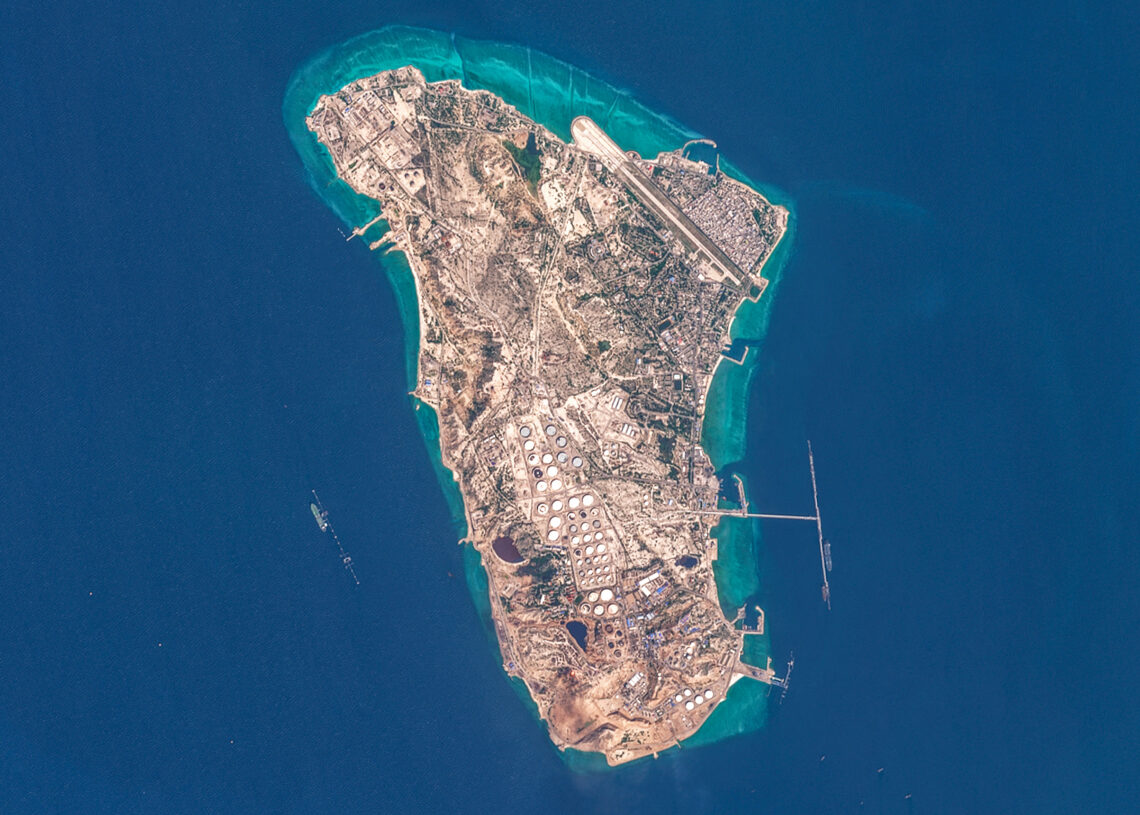
Kharg Island, about 15 miles from the Iranian mainland in the Persian Gulf, is the centerpiece of Iran’s oil-based economy, with about 90 percent of the country’s oil exports moving through there.
Since the U.S. and Israel launched the first airstrikes against Iran six months ago, President Donald Trump has been mired in an unpopular war with no end in sight.
After the failure of the June ceasefire and memorandum of understanding, the U.S. ramped up strikes on Iran and reimposed a blockade on all ships attempting to enter or leave Iranian ports. Iran has escalated attacks on countries in the region where U.S. troops are stationed, including Kuwait and Jordan, as well as on ships attempting to navigate the strait without Tehran’s permission.
About a fifth of the world’s oil and gas flowed through the Strait of Hormuz before the war began. Traffic has since slowed to a trickle, putting upward pressure on oil prices. Diesel prices in the U.S. hit a record high on Friday. Higher energy costs have had ripple effects throughout the U.S. economy, creating headwinds for Trump’s Republican allies in the November midterm elections.
Trump made renewed threats against Iran on Friday, saying “we may hit Pickaxe very soon,” referring to “Pickaxe Mountain,” a heavily fortified underground site near Iran’s Natanz nuclear enrichment site that the U.S. attacked during the 12-day war between Iran and Israel in 2025.
The war has cost at least an estimated $37.5 billion, according to Defense Secretary Pete Hegseth. Eighteen U.S. service members have been killed in the war, and more than 750 have been wounded.
Trump and Vice President JD Vance have in recent days sought to downplay the war.
The president on Friday referred to it as “small potatoes.”
“It’s not a big thing,” he told reporters in the Oval Office.
Vance on Thursday said he “wouldn’t call it a war.”
Facing its own economic pressure, Iran is lashing out with more bellicose rhetoric and strikes in the region. Iranian and humanitarian officials have reported more than 3,400 Iranians killed in the war.
The post U.S. military says it hit 3 Iranian tankers after Navy ships targeted appeared first on Washington Post.