Our new Canada-based investigative reporter, Jane Bradley, kicked off her tenure with a major story: tracking stolen cars from Canada across countries to learn where those vehicles end up. She teamed up with a London-based correspondent, Michael Schwirtz, on the six-month investigation, and this week Jane sat down to talk about how they got the story.
What first drew you guys to Canada’s car theft epidemic?
Our investigation began with a tip from a source at Interpol, the international police organization. The official had been tracking stolen cars across the world and noticed something surprising: Thousands of stolen Canadian cars were turning up in Russia. That had never been reported before, so my colleague Michael Schwirtz and I were immediately interested.
Where did you guys start, in terms of the reporting?
We had to understand just how big a black market this was for car thieves. We knew we needed records, and after months of speaking with sources at Interpol and the Royal Canadian Mounted Police, we got them. They showed that Interpol had received nearly 5,000 reports of stolen Canadian cars found in Russia between February 2024 and July 2026. That made it by far the biggest overseas destination for Canada’s stolen cars.
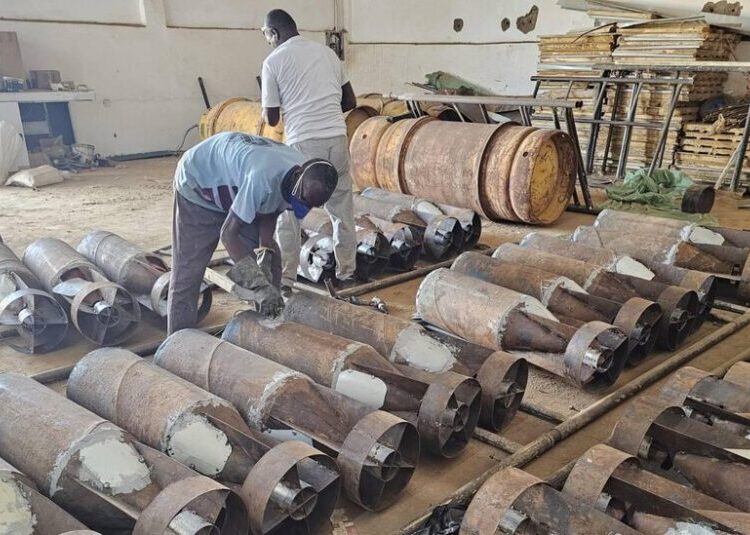
Then we had to follow the entire smuggling route, from cars being stolen in Toronto neighborhoods, through Canadian ports like Montreal, to the United Arab Emirates, and from there to Russia. We spoke to law enforcement officials across Canada and Europe, from the Canada Border Services Agency and Mounties, to police officials across Interpol, Britain and Sweden.
This narrative unfolds in almost real time, as if you’re uncovering it as it’s happening. Is that how it felt during the reporting?
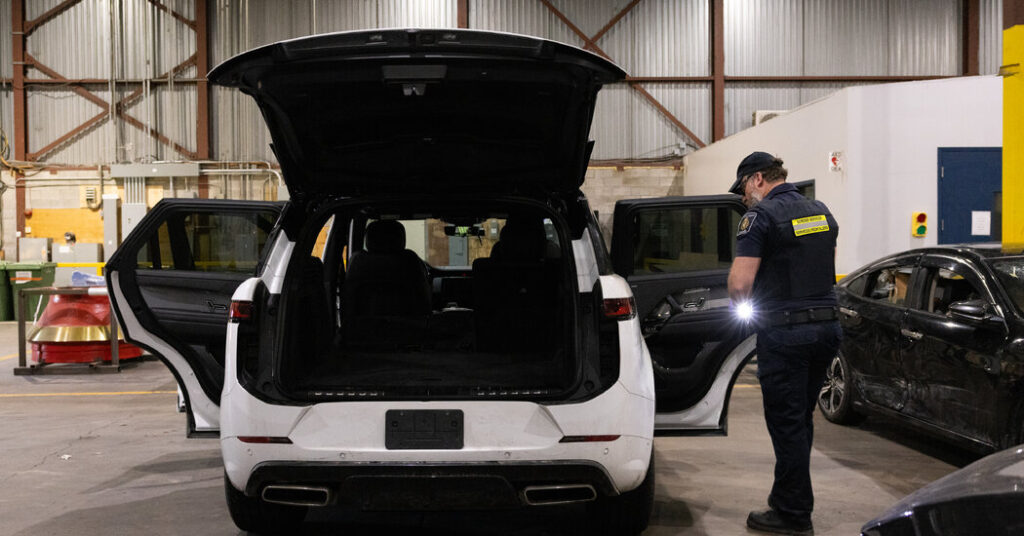
Reporting it felt more like a complicated puzzle, to be honest. We would get one piece — interviews with important police officials and the exclusive Interpol data, for example — but we still needed to figure out how those stolen cars got to Russia. That meant getting Canadian cops to talk to me and, when it became apparent how key the ports are in the car theft trade, persuading Canada’s Border Services Agency to give us access to a port operation to help us understand how these thieves physically smuggle the cars from Canada to Russia. That gave us the narrative.
What was your big breakthrough?
We had a couple. The first was obtaining the Interpol records showing the flow of stolen vehicles from Canada to Russia. It’s not publicly available, and it shone a light on an illicit trade that had been going on for years.
The second was when Michael persuaded a notorious Russian auto theft criminal known as the Wasp Killer to give him an interview from a prison in Ukraine. His real name is Daniil Aleynik, and he was in prison charged with involvement in an international car theft ring. We couldn’t quite believe it when he agreed to speak on the record about how the illicit trade worked and why Canada was such a target.
What surprised you about this story?
I was struck by how organized and sophisticated the trade is. These cars are stolen to order, and transnational organized criminal networks work together to meet a black market demand for expensive Western trucks and cars. Canadian investigators and Mr. Aleynik both described how orders would be placed in Russia — let’s say, for 15 Land Rovers — and this would be passed to scouts in Canada who worked scouring neighborhoods and parking lots for them.
Also surprising are the sophisticated tactics used by thieves to steal cars — for example, distracting drivers in parking lots to clone electronic fobs and using AirTags to track a car from shopping malls to homes that are easier to steal from at night.
Are the police adapting to fight car thefts?
The Canadian authorities have invested tens of millions of dollars into this. Other countries, such as Britain, are now looking to them for guidance on their own car theft problems. But tens of thousands of cars are still being stolen across Canada every year, thousands of which we know are smuggled overseas. Auto theft criminals like Mr. Aleynik are dismissive of Western efforts to crack down on the crime. He gave us this great quote: “In Russia, no one steals cars, because if you do, you won’t live long. In the West, a human life is worth more than a car.”
Jane Bradley is a Toronto-based investigative reporter covering Canada for The Times. Shawna Richer is The Times’s Canada editor. She lives in Toronto.
We answer your trade questions
Thank you to everyone who took time to send in questions about the often baffling issues emerging from the tariffs that are now in place between Canada and the United States, as well as those of you who raised queries in comments on our articles.
Here are some answers to the questions you most commonly raised, and below, in case you missed it, our trade coverage from this week.
How has President Trump been able to impose tariffs after the United States Supreme Court declared them to be illegal? Doesn’t the power to introduce tariffs rest with Congress?
Congress has delegated its power over tariffs to presidents under certain circumstances through at least six laws. Last year, the Supreme Court ruled on Mr. Trump’s tariffs on more than 100 countries, including Canada, which were imposed under a 1970s emergency statute. The court ruled that the law did not allow Mr. Trump to impose tariffs unilaterally.
Those tariffs had very little effect on Canada. Anything shipped from Canada that qualified for free entry under what Canadians call the Canada-United States-Mexico Agreement had continued to move along duty-free.
But that court ruling didn’t apply to the tariffs of up to 50 percent on steel, aluminum and autos that Mr. Trump also brought in last year. For those, Mr. Trump used a 1962 law that allows the president to place tariffs when the importing of products “threaten to impair the national security.”
While there are some current court challenges, legal experts told me that American judges generally defer to presidents on national security issues. But some of them said there is an argument that Mr. Trump did not clearly show how, for example, Canadian-made Toyotas endanger U.S. national security.
Finally, Mr. Trump dusted off a protectionist 1930 trade law — that many economists argue had made the Great Depression longer and more severe — for his latest 50 percent tariffs. The law has never been used. Any court actions are likely to argue that it was replaced or superseded by subsequent legislation.
Are Canadian shoppers actually avoiding American products? American-owned stores in Canada seem as crowded as ever.
With the exception of cross-border travel, there is no hard data on the extent of “Buy Canadian” campaigns. With travel, however, the pattern is clear. The latest figures from Statistics Canada show that it was down 29 percent from July 2024.
An indication of interest in avoiding American products was the decision last month by Loblaw, which operates under a variety of names across the country, to backtrack and restore country of origin labels on produce in its stores in several provinces. (Provincial laws meant that they had never disappeared in Ontario and Quebec.) The removal prompted a social media backlash from shoppers.
In a survey of Canadian manufacturers commissioned for KPMG, the consulting firm, 47 percent of the respondents said that “Buy Canadian” had increased sales. Many of the companies in the survey, however, do not make things sold directly to consumers.
Some economists suggest that one difficulty for the strategy is a dearth of Canadian-made consumer products in many categories.
If Canada and the United States do finally get a deal, what are the chances that Mr. Trump honors it?
After pulling Canada’s negotiators back from Washington last month, Prime Minister Mark Carney said of the United States under Mr. Trump: “Sometimes, its signature is written in pencil.”
All of the Trump tariffs, of course, are flagrant violations of the trade deal he negotiated, and repeatedly praised, during his first term in office.
Several American readers asked how they can support Canadian businesses affected by U.S. tariffs.
I can’t find any reliable list of Canadian consumer products available in American shops. There are some brands, however, that do promote their Canadian roots that also do some or all of their manufacturing in Canada, notably Canada Goose, Arc’teryx sportswear and Moosehead beer, with wide distribution in the United States.
The 17-digit vehicle identification numbers on Canadian made cars always begins with 2. All Chrysler minivans and Dodge Charger muscle cars sold in the United States are made in Canada. Most Lexus RX and NX models at American dealers come from Canada, although a few are made in Japan. All of the other vehicles made and shipped from Canada are also produced in American factories. But supplies are very tight for most of those vehicles, particularly the Toyota RAV4 and the Honda CR-V, most likely making it impractical to request Canadian-made ones.
If you do buy directly from Canadian companies’ websites, don’t put them on the spot by asking that they undervalue your purchase on the customs declaration to reduce the tariff bill when it crosses the border. Aside from raising the possibility that the parcel will be seized, there can be serious legal consequences for the seller.
Ian Austen reports on Canada for The Times. A Windsor, Ontario, native now based in Ottawa, he has reported on the country for two decades. He can be reached at [email protected].
Trans Canada
-
In the quarter century since the terrorist attacks of Sept. 11, 2001, the horror of that day has inspired novels, films, television shows, paintings and sculpture. But the most enduring artistic response has been the uplifting Canadian musical “Come From Away,” about a small town with a big airport that nearly 7,000 travelers were diverted to amid the chaos and fear.
-
Survivors of a mass shooting in Tumbler Ridge, British Columbia, filed 30 new lawsuits against OpenAI, contending that the company should have notified the police when it shut down the shooter’s disturbing ChatGPT account eight months before the attack.
-
Severe thunderstorms that rolled through Toronto and other parts of Ontario on Wednesday, causing major flooding, downed trees and widespread power outages, severely damaged Rogers Stadium, a venue that hosts major concert tours.
-
The F.B.I. is investigating the theft and sale of scans of millions of identity documents belonging to people in the United States and Canada.
-
How a phantom island in Williston Lake in northern British Columbia appeared, vanished, and reappeared. Officials first thought it was an A.I. ruse, until they checked satellite images.
-
Rescue trucks at the three major airports that serve New York City now have a critical piece of equipment that was missing from the fire truck involved in a fatal crash with a plane at LaGuardia Airport in March that killed two Air Canada pilots: transponders that notify air traffic controllers of the trucks’ locations.
-
A Times Insider column looks behind the scenes of our reporting for an article about drug use on the music festival scene at Shambhala Music, a weekend rave on a ranch in British Columbia in July.
How are we doing? We’re eager to have your thoughts about this newsletter and events in Canada in general. Please send them to [email protected].
Like this email? Forward it to your friends, and let them know they can sign up here.
The post Following Stolen Cars From Canada to Russia appeared first on New York Times.