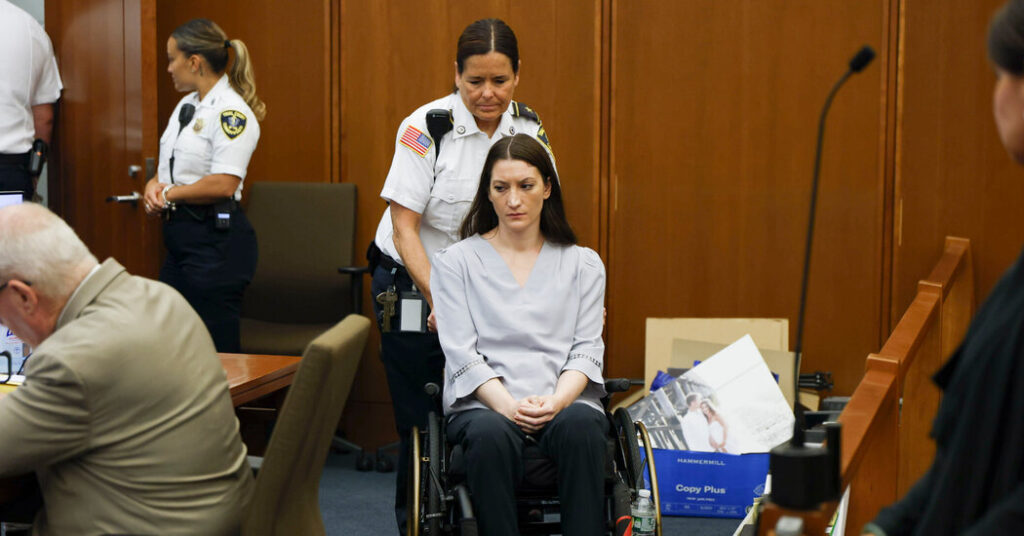
Lindsay Clancy will return to Tewksbury Hospital, a state-run psychiatric facility where she has been held during trial, her lawyer said, after a Massachusetts judge declared a mistrial on Friday in the murder case against her.
Ms. Clancy’s symptoms of postpartum psychosis in the months before she killed her three children were at the center of her defense. Had she been acquitted, she most certainly would have continued to be hospitalized.
Experts say she may have been sent to a high-security forensic psychiatric hospital — a center to treat people who have stood criminal trial — for long-term mental health care.
Several psychiatrists said that for many women, symptoms of postpartum psychosis are treated and resolved within a year. But regardless of the ultimate outcome of her case, Ms. Clancy will most likely be treated for other ongoing issues, such as suicidal thoughts and a potential diagnosis of bipolar disorder, which can be a risk factor for postpartum psychosis.
Patients often work with a team of psychiatrists, psychologists, social workers, nurses, peer advisers and other therapists while they’re hospitalized, said Dr. Susan Hatters-Friedman, a forensic and reproductive psychiatrist at Case Western Reserve University and the former president of the American Academy of Psychiatry and the Law.
The goal of forensic hospitalization is not just to manage patients’ mental illness, but also to prepare them to heal and possibly return to society.
The treatment plan for patients like Ms. Clancy might include helping them cope with the killings of their children.
“Many of these women have no significant past psychiatric history, and then get very ill very quickly,” said Dr. Nicole H. Cirino, a psychiatrist who serves on the Postpartum Psychosis Task Force at Postpartum Support International, a nonprofit.
She continued: “Reconciling that and thinking about how to move forward, particularly if they have legal involvement, is really something that is quite complicated and takes some time.”
In many states, including Massachusetts, where Ms. Clancy was prosecuted, people who are found not guilty by reason of insanity often spend more time hospitalized than they would have in prison, said Dr. Renée Sorrentino, a forensic psychiatrist who is licensed in Massachusetts.
In Massachusetts, she said, Ms. Clancy would be reviewed for discharge on an annual basis. Doctors could recommend that she be discharged from the hospital if they believed that her symptoms had improved and if they determined that she was not a danger to others.
The Plymouth County District Attorney’s Office would then be notified. If it disagreed with the medical team’s assessment, it could obtain its own experts or argue in court that Ms. Clancy should remain hospitalized. A judge would then decide whether she could be released, Dr. Sorrentino said.
“Humane mental health treatment is really important for her, and for us to think about as a society,” said Dr. Nirmaljit Dhami, the medical director of an inpatient psychiatric ward in California focused on perinatal mental health and preventive care.
In 2012, Deanna Laney, a Texas woman who was found not guilty by reason of insanity for killing two of her children and seriously injuring a third, was released from a psychiatric hospital after treatment. Several conditions were placed on her release.
Some women, however, like Andrea Yates, a Texas woman who in 2006 was found not guilty by reason of insanity in the killings of her five children, choose to waive their right to a review and remain hospitalized instead.
If you are having thoughts of suicide, call or text 988 to reach the 988 Suicide and Crisis Lifeline or go to SpeakingOfSuicide.com/resources for a list of additional resources.
The post Where Will Lindsay Clancy Go Now? appeared first on New York Times.