Erik Tihelka’s first glimpse of one of the world’s oldest insects came from an outdated Russian textbook that he bought on eBay.
In it, a small line drawing of a fossil, labeled as an early crustacean that had lived 324 million years ago, caught his eye. “The more I looked, the more intrigued I got,” said Mr. Tihelka, a doctoral student in paleontology at Cambridge.
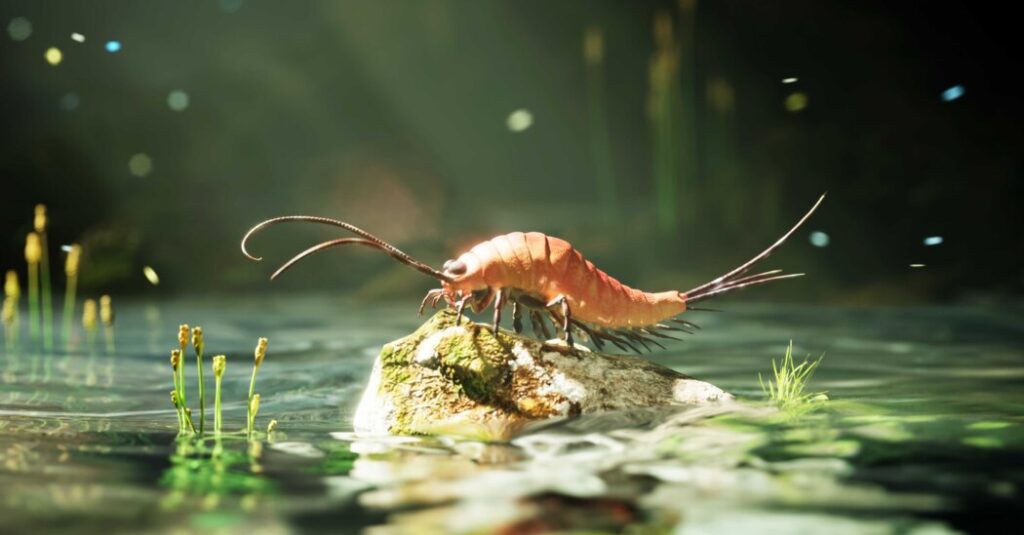
For a fossil described as a crustacean, it seemed to have an awful lot of insectlike traits, such as a body split into three parts, a pair of antennae and six legs emerging from the central part of the body. Overall, it looked a lot like a modern silverfish.
But there was one big difference between this fossil and our current definition of an insect, which has six legs: This one had 24.
Today, insects make up more than half the known species of animals, but their early origins are shrouded in mystery. The many-legged fossil, unearthed in Texas and stored in the collections of the San Diego Natural History Museum since 1985, could represent a breakthrough. In a new study published in Nature, Mr. Tihelka and his colleagues propose that his discovery is one of the oldest insect fossils ever found, and that these early insects had four times the number of legs seen on a standard bug today.
Genetic analyses have shown that insects’ closest relatives are crustaceans, but they split off into their own group and moved onto land. Very little is known about this transition, because insects and their fellow six-legged arthropods are missing from the fossil record from roughly 385 to 322 million years ago. Paleontologists call this period the “hexapod gap.” But the insect-resembling fossil in Mr. Tihelka’s textbook was from 324 million years ago — just inside the gap.
Based on the illustration alone, he couldn’t be certain that he’d really spotted an early insect. “Although it’s a very nicely preserved fossil, it’s a black fossil on a black rock,” Mr. Tihelka said. “I had an inkling, but I thought, I have to make sure.”
He took his first trip to the United States to examine the fossil in person. Using a microscope and specialized light polarization filters to highlight subtle features, he was able to confirm that the fossil had a combination of insect and crustacean traits. He hypothesized that the extra legs were “a holdover from its crustacean ancestors,” but the fossil was indeed an insect.
Its unusual body might reflect a life in transition from water-dwelling crustacean to land-dwelling insect. Some of the legs on its lower body had a flattened shape, which might have helped it paddle in water, while the three pairs of legs in the middle of its body seem more suited to terrestrial living.
The team named the fossil Chosha praecursor, a reference to the Diné word for insect, “ch’osh.” In the Diné (sometimes known as Navajo) creation story, insect people were the land’s first inhabitants.
Upon realizing that Chosha was an early insect fossil hiding in plain sight, the researchers decided to revisit several other fossils in museum collections that had raised questions previously. They examined Leverhulmia, a 405-million-year-old fossil from Scotland, and two 306-million-year-old fossils from the Mazon Creek formation in Illinois, and determined that despite their extra legs, these fossils were insects too.
The early insects’ transition to land didn’t look the same for every species; for instance, while Chosha shows signs of an amphibious lifestyle, Leverhulmia seems better suited to dry ground. But these ancient animals still have a lot in common with each other. “They broadly show a similar pattern — a big overgrown silverfish-like thing with extra, stubby legs on the belly,” said Mr. Tihelka.
Of the fossils in this study, Chosha is the only one that lived during the hexapod gap, and its discovery only shrinks the long insect-less period in the fossil record by a small amount. However, said Richard J. Knecht, a paleobiologist at the Museum of Comparative Zoology at Harvard, so little is known about early insect evolution that every discovery is precious. “We’re literally talking about one handful of fossils, trying to put together the whole early history of insects,” said Dr. Knecht, who was not involved with the new paper. “When we actually get a clue, no matter what that clue is, it’s extraordinarily important.”
The find is “revelatory,” said David Grimaldi, a curator at the American Museum of Natural History who was not involved with the project. “They provide very, very good evidence to indicate that this is an insect and not some other kind of crustacean,” he said.
In addition to providing new insight into the history of life on Earth, Dr. Knecht said that the study highlights the importance of museum collections like the one where Chosha was kept for 40 years before being recognized as an insect. “It allows us to go back, revisit, and sometimes make big discoveries using new technologies or new insights that we didn’t have the first time we looked at the fossil,” Dr. Knecht said.
The post The World’s First Bugs Had Way More Legs appeared first on New York Times.