As Lindsay Clancy’s murder trial came to an end on Friday, there was no shortage of drama.
The courthouse in Plymouth, Mass., was thronged with observers. Ms. Clancy’s lawyer butted heads with the judge and made a doomed appeal to prevent the declaration of a mistrial. Audience members gasped.
But the most pivotal decision took place behind closed doors. After spending nearly 40 hours in deliberation — and half of those in deadlock — jurors said they could not come to a unanimous verdict on whether Ms. Clancy should be held criminally responsible for strangling her three children in 2023. A single juror was said to be at odds with everyone else in the room.
It was a remarkable outcome, said Valerie Hans, a Cornell law professor who studies jury behavior. “Hung juries are not frequent,” she added. “Maybe one out of every 20 cases in criminal courts results in a hung jury.”
Jury verdicts in serious criminal cases across the United States must be unanimous, a rule that was affirmed in a 2020 Supreme Court decision interpreting the Sixth Amendment of the Constitution.
“It’s entirely an artifact of history and tradition,” said Christopher Slobogin, a law professor at Vanderbilt University. He added that the standards for criminal cases were high because a guilty verdict could result in a deprivation of liberty.
Dr. Hans says that failures of consensus are most likely in cases where the evidence is close — that is, not clearly favoring either side — and complex.
The Clancy trial seemed to fit those parameters. Jurors sat through four weeks of emotional, often harrowing, testimony. They watched expert witnesses reach opposite conclusions on Ms. Clancy’s criminal culpability in the death of her children. Her lawyer, Kevin Reddington, argued for an insanity defense, claiming that she had been in the throes of postpartum psychosis.
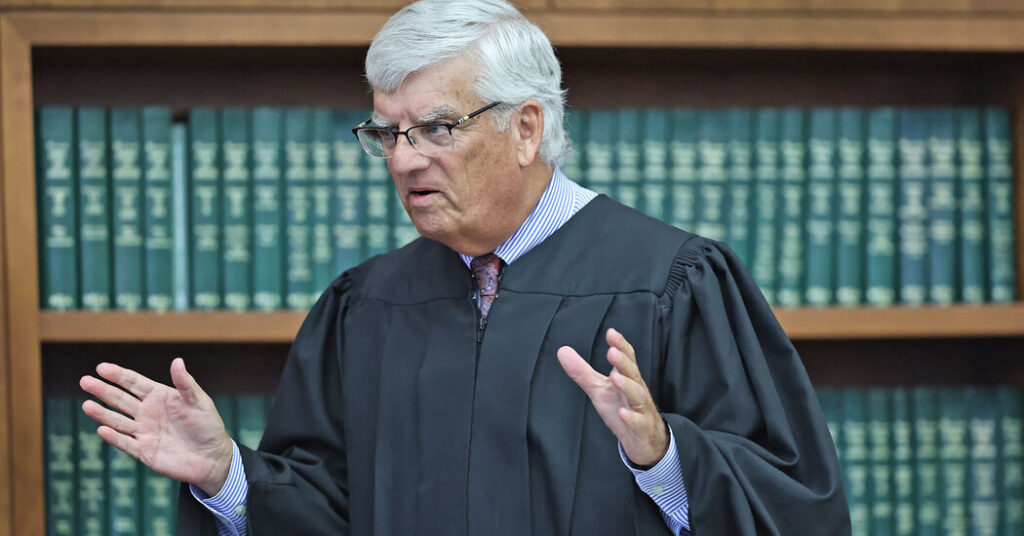
The jurors, nine women and three men, wore increasingly grim expressions as their deadlock dragged on, even after the judge, William Sullivan, delivered a set of instructions on Wednesday known the “dynamite charge” in a last-ditch effort to nudge them toward a verdict.
Professor Slobogin said it was notable that Judge Sullivan’s efforts had failed. “Typically, if there is a hung jury, the judge is able to convince the jury to go back and reach a unanimous verdict,” he said.
But on Friday, the jurors said in a note to the court that “with a heavy heart,” they had been unable to reach a consensus.
According to Dr. Hans, the jurors probably took their work very seriously. “People can be very flippant outside the jury context,” she said, “and yet there’s something about getting sworn in as a juror that is sobering.”
That extends beyond the courthouse, she added: Research suggests that people who serve on juries tend to become more civically engaged after the trial ends.
For now, the jurors’ work at the Plymouth courthouse is done. Ms. Clancy still faces murder charges, and prosecutors will decide whether to try their case all over again.
If they do, a brand-new jury will be sworn in.
The post In Complex Cases, Consensus Can Be Hard to Reach appeared first on New York Times.