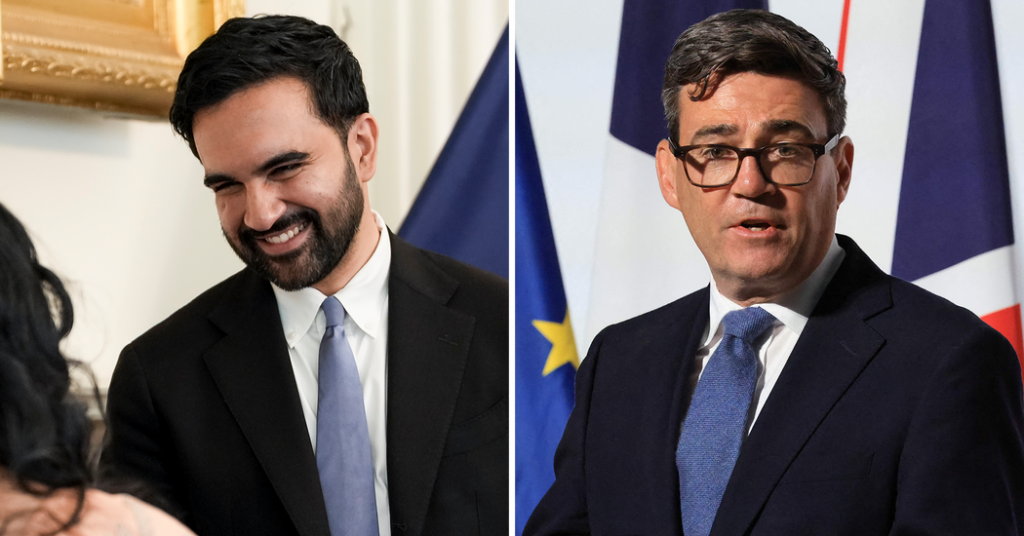
When I interviewed the New York City mayor, Zohran Mamdani, recently, it struck me how popular he still was, more than six months after taking office. He had a 58 percent approval rating — something many national leaders can only dream of.
Some of this is almost certainly Mamdani himself. He’s a talented politician who has rolled out a number of popular initiatives, fast. But what if some of it is because … he’s a mayor?
Mayors around the world, of all political stripes, are seemingly bucking the anti-incumbency trend we’ve seen in recent years. Today, I’m writing about mayor magic — and whether leaders at the national level can learn anything from it.
People love mayors
Zohran Mamdani is not just popular; he’s more popular than he was when elected.
We live in anti-incumbent times. In 2024, every incumbent across the world’s major developed economies lost vote share in national elections. And yet Eduardo Paes, the former center-right mayor of Rio de Janeiro, won a fourth term in office that year with more than 60 percent of the vote. Andre Dickens, the center-left mayor of Atlanta, was re-elected the next year with 85 (!) percent of the vote.
Not every local leader is popular, of course. There are corrupt mayors, mayors who disappoint, mayors who are voted out like any other politician. Still, it’s striking how many of them, on both sides of the political divide, seem to hold on to voters’ trust even at a time when so many national politicians lose it so quickly.
Struggling leaders have at times even sought out mayors in the hope that some of their magic rubs off: At the height of the yellow vest protests, President Emmanuel Macron held televised town hall meetings with mayors across France and posed with some 600 of them to bolster his approval rating. It worked, at least for a while.
This summer, Andy Burnham became prime minister of Britain. Burnham was a popular mayor of Greater Manchester, who had won three consecutive terms. He’s also taking on a particularly politically challenging office. Britain has gone through six prime ministers in the last 10 years.
There are lessons national leaders can learn from mayors and Burnham, in particular, seems keen to apply them. Can they help him survive?
A human scale
It’s perhaps no coincidence that democracy was born in Athens, a city-state. The most obvious advantage mayors have over national leaders is that cities are small. Mayors know their voters, and their voters know them.
I spoke to Alexander Heffner, a journalist who recently met the mayors of 10 cities for an ongoing PBS documentary series called “Mayors of the World.” He told me they got fist bumps and back pats walking around town.
It’s not just that voters know their local leaders. They also have more capacity to understand and evaluate their policies, Heffner said, because these policies often affect their lives in tangible ways.
It reminded me of the many stories I heard from New Yorkers about running into Mamdani out and about in the city, and also about experiencing his policies first hand. They might like the newly widened cycle lanes around New York; they might find them frustrating. But they know who to hold responsible for them.
As Heffner put it: “There’s a democratic and civic accountability that’s almost unavoidable if you’re the mayor.”
Voters feel more in control. They can track the gap between what was promised and what’s been delivered.
Mayors, in other words, tend to make people feel that democracy is working.
National localism?
I spoke to Bruce Katz, who wrote “The New Localism” and has advised mayors in Britain and the U.S., and has also worked in national government. Katz argues local governments not only do better at connecting with voters, but also actually govern better. Local governments often work across different departments and the private and civic sectors in ways that national governments struggle with but that are essential for solving problems, he says.
Katz wants to see more power shifted away from the national level to the local governments.
That’s also what Andy Burnham wants.
Burnham has gone from being the mayor of a working-class northern region to being leader of one of the most centralized countries in the Western world, with the vast majority of power concentrated in London. But if you take him at his word, he plans to change that.
He’s already established “No. 10 North,” an official northern outpost for the prime minister’s office at 10 Downing Street in London. His cabinet has adopted “devolving by default” as its operating principle. He wants to give local governments more fiscal autonomy, and, with that, more control over public services and infrastructure, from transport to health — part of his strategy to fight regional inequality and reboot economic growth.
Will it work? That depends on how well local authorities manage these new powers, Katz said.
And if it does work, will Burnham get credit? That, Katz said, is a separate question.
Good approaches to devolving power give local officials primary responsibility, he said, but keep national leaders in the chain of accountability. National leaders should get credit for both the successes and failures of the broader strategy.
In that sense, Burnham’s premiership will function as a double test case: of whether shifting power to local officials can help Britain tackle some of its most intractable problems, and if it does, whether that persuades voters that even some national politicians are worth keeping around.
MORE TOP NEWS
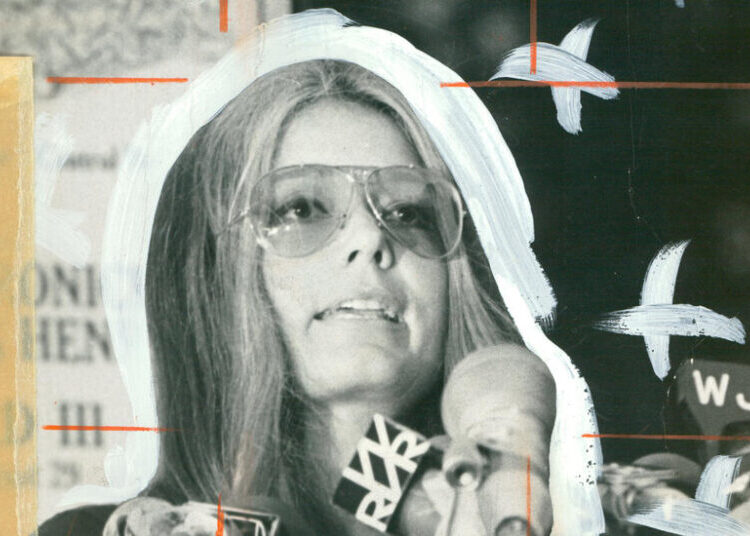
Remembering Gloria Steinem
Gloria Steinem, the activist and journalist who galvanized the women’s movement, died at 92. She helped millions of women expand their sense of self-worth and gain more equality at home, at work and in society at large.
In a never-before-seen interview with The New York Times in 2008, Steinem reflected on her life. “I can tell you what makes me feel the most fulfilled and happy, and that is when someone comes up to me in a plane, or on the street, or wherever, and tells me how their lives have changed because of the women’s movement.” Watch the interview here.
Russia and Ukraine escalate, with no end in sight
The intensifying air war in Ukraine and Russia is bringing more pain to the populations of the two countries than at any other point since the early months of Russia’s full-scale invasion in 2022.
Each side is using missiles and drones to try to pound the other into giving up, but there is no sign that either country’s determination will weaken. Human suffering will only grow this winter, analysts say.
The latest: Three members of Ukraine’s military intelligence were wounded during a shootout in Kyiv between rival spy agencies.
OTHER NEWS
-
A wedding in Iran ended when a bomb brought down the roof, killing at least five people. The bomb was American, a Times visual analysis found.
-
Israeli security forces killed two Palestinians during a nighttime raid in the occupied West Bank, witnesses said.
-
Nvidia is buying Hugging Face, a library of open A.I. models, for $12.9 billion.
-
Vietnam sentenced 11 men to death in a major drug trafficking case that involved ketamine and ecstasy concealed in tubes of toothpaste.
WHAT ELSE IS HAPPENING
-
China boycotted the Gwangju Biennale in South Korea over a Taiwanese exhibition.
-
Amelia Dimoldenberg is ending “Chicken Shop Date,” the popular YouTube talk show she created.
TOP OF THE WORLD
The most clicked link in your newsletter yesterday was the visual analysis of the glacier collapse in Nepal.
SPORTS
Tennis: Iga Swiątek and Naomi Osaka made it through to the third round at the U.S. Open. We have live updates.
Basketball: The N.B.A. fined the L.A. Clippers $30 million for circumventing salary cap rules.
EXISTENTIAL QUESTION OF THE DAY
Why am I like this?
Are you naturally anxious? Highly adventurous? More argumentative than you’d like to admit? Ever wondered why? Scientists have found 1,260 genetic markers tied to personality, nearly two-thirds of them identified for the first time.
MORNING READ
Can driverless cars navigate London’s medieval streets? This week, a small number of robotaxis will find out when they start carrying the city’s passengers for the first time.
The arrival of the technology in one of the world’s largest markets for ride-hailing services is an important step for the autonomous vehicle industry. London will also be a battleground for the vehicles, pitting American, European and Chinese technology against one another. Read more about the new robotaxis in London.
RECOMMENDATIONS
Watch: The Peruvian documentary “Runa Simi” follows a voice artist who’s trying to preserve an Indigenous language.
Hunt: Tokyo has become a global hub for vintage luxury jewelry and watches.
Exercise: Here are strategies to maintain your balance as you age.
RECIPE
This Syrian-style walnut baklava is lightly soaked in a lemon sugar syrup, rather than honey, making it less intensely sweet. Try chopping the walnuts by hand, as they can get bruised and overly pulverized in a food processor.
WHERE IS THIS?
Where is this shopping mall?
BEFORE YOU GO …
I spent last week on Skopelos, a delightful Greek island. We’d never been there before, but by Day 3 we were greeting locals — Vrahos at the local taverna, Dimitri at the boat rental. My 10-year-old hit it off with a group of Greek boys. We felt at home, despite being thousands of kilometers away. It made me think about the amorphous nature of Europe.
The continent is named after Europa, who in Greek mythology was the first queen of Crete, another Greek island and perhaps the closest thing to a cradle of European civilization. Some 3,500 years later, I can take a shortish flight to more than two dozen countries with their own languages and traditions, still be in Europe, and somehow feel a sense of belonging.
Fittingly, I was reading “Homelands: A Personal History of Europe,” by Timothy Garton Ash, an Oxford historian. He argues that Europe is different things to different people and depending on what definition you use, you draw its borders differently. Sometimes Europe indicates a shared geography; sometimes it’s shared history; other times, it’s shared values.
For me, someone who has lived, loved and worked in four European countries, the sense of shared identity feels very real. I’m curious to hear from you. If you’re European, do you also feel “at home abroad” in other European countries? And if you’re not European, do you feel a similar sense of shared regional identity? (Do you feel a sense of belonging in your own country, for that matter?) I’d love to hear your thoughts.
One album I became obsessed with on holiday was Rosalía’s “Lux.” She sings in 13 languages, including Catalan, Latin and Ukrainian. Talk about layering European identity. One favorite song is “La Fama.”
Have the best weekend! — Katrin
TIME TO PLAY
Here are today’s Spelling Bee, Mini Crossword, Wordle and Sudoku. Find all our games here.
We welcome your feedback. Send us your suggestions at [email protected].
The post Mayor Magic appeared first on New York Times.