The list of Canadian imports now subject to 50 percent tariffs in the United States includes steel, seaweed, ink, animal hides, dog leashes, saddlery, suitcases, plywood, knit hats (toques, to Canadians), floating docks, furniture, whiskey, honey and, of course, hockey sticks. But the tariffs on aluminum show most starkly the irrationality of President Trump’s trade war with our northern neighbor.
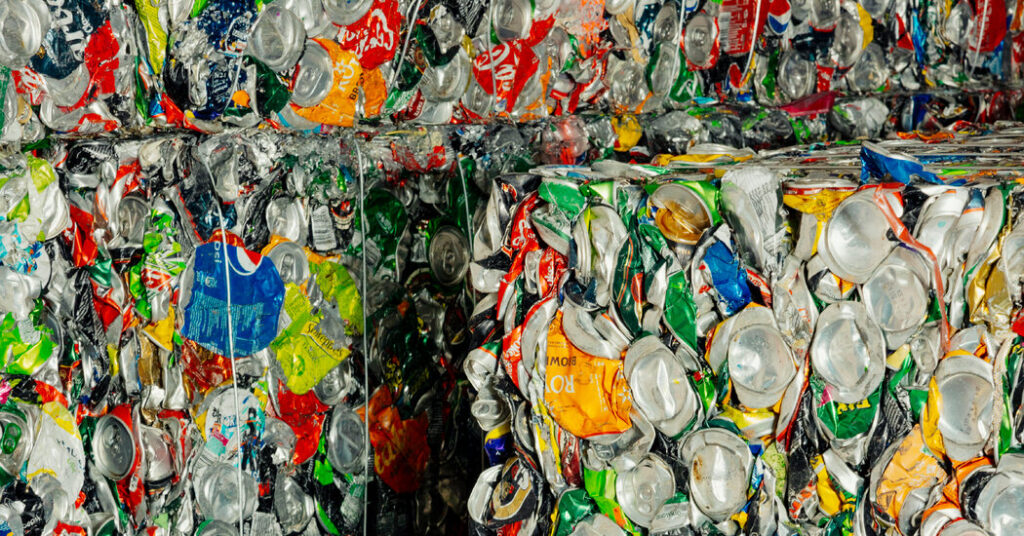
Canada shipped nearly $10 billion in aluminum products to the United States last year. The metal is used in construction, cars, furniture, drink cans and countless other things. Mr. Trump has every obligation to enforce trade laws and prevent other nations from taking unfair advantage of us. But the Canadian aluminum industry hasn’t bilked the United States. America needs aluminum to keep its auto plants running and to keep food and drink prices down, and Canada is just better at making it.
Aluminum isn’t cooked like steel; it’s made from alumina, a powder refined from bauxite ore and zapped with electricity until it renders into a metal. The electric bill alone can account for up to 40 percent of the manufacturing cost. When thinking about trade with Canada, it’s useful to imagine aluminum not as a metal but as electricity in solid form.
With its abundant snow, lakes and rivers, Canada has huge hydroelectric power resources, often in sparsely populated areas. As a result, the country has lots of reliable, inexpensive electricity, which gives it an edge over the United States in aluminum smelting. Today there are eight smelters operating in Quebec and one in British Columbia, producing about 3.64 million tons of metal annually. The United States gets about 60 percent to 70 percent of its imported aluminum from Canada.
The United States tried to develop a competitive domestic aluminum sector. It began to expand with the Tennessee Valley Authority, a Depression-era project that was a model for rural electrification initiatives across the country. Low-cost energy attracted increased investment in aluminum smelters, like the one in Alcoa, Tenn., the ultimate company town. Alcoa, founded in 1888 as the Pittsburgh Reduction Company, would become the biggest aluminum smelting operation in the country. But the population grew after World War II, and in the second half of the 20th century the energy crises would help flip the cost calculus. Many American smelters would shutter.
Canada’s often less expensive, more reliable energy supply — nobody’s moving into northern Quebec to compete for it — proved decisive.
Since 1980, almost 30 American smelters have shut down, with companies typically citing inadequate guarantees about the supply and price of power as the reason. You can’t just hope that there’s enough juice to run the smelter.
Alcoa led the retreat to Canada. The company today operates three aluminum plants in Canada and has just two operational plants in the United States. It’s looking to sell some 10 of its shuttered or curtailed sites to the data center industry. One of its remaining smelters, in Massena, N.Y., depends on a New York State allocation of low-cost power and recently received several million dollars in incentives. Alcoa is investing nearly $60 million in the plant through 2028. Canada might call that a state subsidy — cheating — but without it, the company can’t operate competitively.
The closure of struggling American smelters means that the United States must import — and that the cost of tariffs is destructive to American industry. As of March, the automobile industry had already paid more than $35 billion since 2025, thanks to tariffs on aluminum, steel and car parts and other items. This is money that carmakers could have spent on research and development or lowering car prices.
Mr. Trump wants to reverse history and create domestic manufacturing jobs in industries such as aluminum. He’s not the only one. The dream of increasing well-paying manufacturing jobs was what inspired states such as New York to shell out money to open factories and keep them in business. Alcoa’s plant in Massena pays $37.71 an hour for a general mechanic.
The president has largely failed — at least so far. Manufacturing jobs have declined in his second term. On aluminum specifically, Mr. Trump is promoting a $4 billion smelter in Oklahoma, backed by the United Arab Emirates-based Emirates Global Aluminum and Century Aluminum, along with $500 million in federal dollars and a couple of hundred million in state incentives, including tax breaks. This factory might get built, but few — if any — others will.
Even with all the incentives, building new smelters in the United States isn’t all that appealing. Our electric grid is in terrible shape, electricity rates are rising and the Trump administration is actively discouraging new sources of power, such as renewables. And no one knows whether Mr. Trump will waver on tariffs again. Try selling your board of directors a multibillion-dollar, two- or three-year investment on that basis. Emirates Global might be willing to shoulder the risk, but few other companies are.
It’s not cheating when Canadians undersell American aluminum producers. It’s an advantage. It’s logical for the United States to import lower-cost Canadian aluminum and invest in industries in which America enjoys its own advantage — chip design, for instance, or artificial intelligence.
Who would flout this logic, trashing a 150-plus-year-old relationship with a close ally in a disruptive attempt to separate two interdependent economies? Oh, right.
Bill Saporito is an editor in Opinion.
The Times is committed to publishing a diversity of letters to the editor. We’d like to hear what you think about this or any of our articles. Here are some tips. And here’s our email: [email protected].
Follow the New York Times Opinion section on Facebook, Instagram, TikTok, Bluesky, WhatsApp and Threads.
The post Wondering How Nuts Trump’s Tariffs Are? Consider Aluminum. appeared first on New York Times.