This is an edition of The Atlantic Daily, a newsletter that guides you through the biggest stories of the day, helps you discover new ideas, and recommends the best in culture. Sign up for it here.
The day before Donald Trump’s second State of the Union address, the former Representative George Santos shared a video of himself saying, in no uncertain terms, that he was “going to be there.” The next day, he didn’t show up. According to the prediction-market company Kalshi, that was the plan—the firm alleged that he made roughly $17,000 by betting on the platform that he wouldn’t appear at the speech. Kalshi flagged the wager to federal authorities, and the Commodity Futures Trading Commission (CFTC), the agency that regulates prediction markets, fined Santos over it in July. On Monday, Kalshi doubled down, levying a fine of its own and giving him the platform’s first-ever lifetime ban.
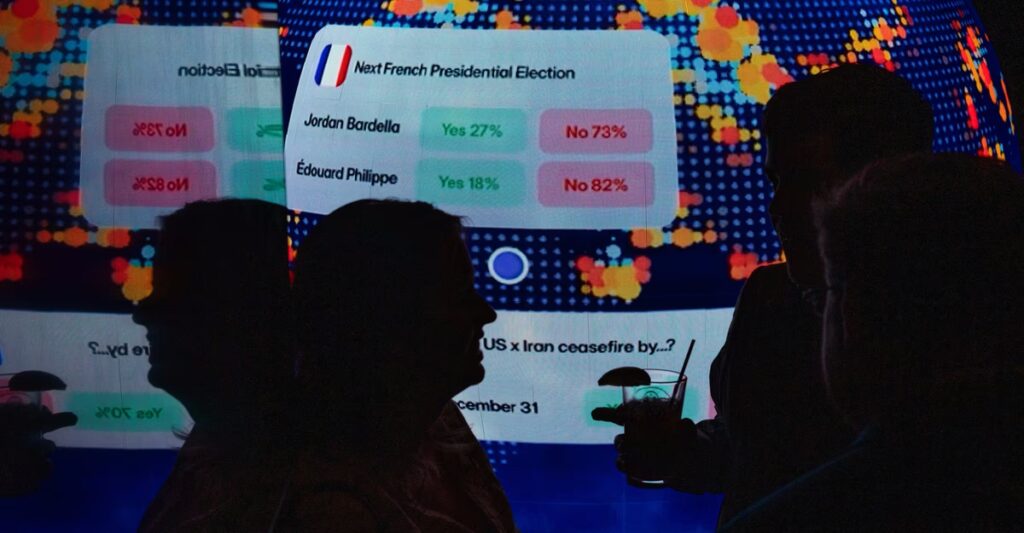
Prediction-market companies, which let users make bets on the outcomes of all sorts of real-world events, have fully entered the mainstream over the past few years. You can find their logos at major sporting events, on cable-news broadcasts, and at awards shows. They’re easy to access and, thanks to a recent advertising blitz, essentially ubiquitous. Trading volumes on Kalshi and Polymarket, the two market leaders, have exceeded $200 billion and $100 billion this year, respectively. But these companies have strenuously resisted the idea that they should be thought of as gambling platforms. “I just don’t really know what this has to do with gambling,” Kalshi CEO Tarek Mansour said of his company last year. (By avoiding this classification, prediction markets have also been able to operate in states where sports betting is banned.) Instead, Kalshi and Polymarket have suggested that their platforms are digital oracles: potent indicators of what the future might hold, fueled by the wisdom of the crowd.
In recent months, a nascent crackdown on insider trading has been exposing a fundamental tension in these companies’ guiding principles. If the goal is to create fair markets and not get targeted by the government, then they must enforce a ban on insider trading, as U.S. regulators already do. But if the goal is forecasting—aligning these markets’ odds with what’s really going to happen in the world—then allowing bettors to trade on inside information could actually benefit these platforms. This, at least, was once the thinking of Polymarket CEO Shayne Coplan, who described his platform last year as “the most accurate thing we have as mankind right now, until someone else creates some sort of a super crystal ball.” In response to a question about his approach to preventing insider trading, he said in November that Polymarket “creates this financial incentive for people to go and divulge the information to the market”—theoretically creating more accurate projections.
This may help explain why Polymarket has taken so long to clamp down on insider trading. The company didn’t explicitly ban the practice until March, nearly six years after its founding. Kalshi took a different tack: When I reached out to the company in January, its representatives stressed that insider trading was unambiguously prohibited. (But the question of which offenders are penalized—and what those punishments look like—still seems to be decided on a case-by-case basis.)
This year, both companies have been ramping up their enforcement efforts. The shift began back in January, when The Wall Street Journal reported that, in the lead-up to the U.S. capture of former Venezuelan President Nicolás Maduro, an unknown trader had made more than $400,000 betting that Maduro would soon be out of power. To many observers, it certainly looked like insider trading—and lawmakers from both parties began pushing for stricter regulation. A few months later, Polymarket notified the Department of Justice that one of the soldiers involved in the operation had allegedly placed the wager, and the agency indicted him for trading on nonpublic information (he has pleaded not guilty).
According to a spokesperson for Polymarket, the company’s insider-trading investigations have led to “nearly 100 referrals to law enforcement,” and its work on the Maduro bets and on a separate case involving a Google employee resulted in the “first and second prediction markets insider trading cases charged in the United States.” This week, in addition to the Santos ban, Kalshi announced several new settlements with public figures accused of insider trading on its platform, including a North Carolinian candidate for the House who has admitted to betting on her own race. (“I bet on myself,” she wrote in an emailed statement. “It was a dumb mistake, and as soon as I learned there was an issue, I worked to make it right.”) And this past weekend, Trump’s longtime teleprompter operator paid $172,000 to settle the CFTC’s claims that he was betting on the individual words that the president would use in his speeches—claims first made by Kalshi.
Regulators don’t have a unified approach to this sector. As The New York Times points out, 20 states are now waging legal battles over whether these companies should be subject to the same laws as online sportsbooks. In an apparent defense of the industry, the CFTC has sued some of the states suing prediction-market companies for infringing on federal jurisdiction. Polymarket’s international platform, which runs on the blockchain, is off-limits to U.S. traders and isn’t bound by the CFTC’s rules on insider trading.
But even as major legal questions remain unresolved, what’s indisputable is that insider trading is a red line for U.S regulators. Polymarket’s and Kalshi’s stricter enforcement of those rules may help keep them in the federal government’s good graces, and the appearance of fairness may also prevent people from betting elsewhere. But in taking these steps, these businesses will have to reckon with how they present themselves. They can cling to the idea that they’re not gambling platforms—but regulators may not always see it that way.
Related:
Here are three new stories from The Atlantic:
- The MAGA right is only pretending to be censored, Anne Applebaum argues.
- Inside a conservative operation to hijack your social-media feed
- The air marshals keeping watch on Eric Swalwell
Today’s News
- The United States and Iran exchanged their heaviest attacks since July, with American forces striking Iran’s southern coast and Tehran retaliating against U.S. targets in Bahrain, Jordan, Kuwait, and Iraq; U.S. officials said that initial assessments showed no American casualties. Iranian officials said that the latest U.S. strikes killed 18 people, including four at a wedding party, and injured 108.
- Jurors in Lindsay Clancy’s murder trial said for the second time that they were deadlocked on whether she is criminally responsible for killing her three children in 2023, when, she claims, she was experiencing postpartum psychosis. The judge instructed the jury, now on its fifth day of deliberations, to keep trying to reach a verdict.
- Senator Ed Markey defeated Representative Seth Moulton in the Massachusetts Democratic Senate primary last night, winning about 65 percent of the vote; he will face Republican John Deaton in November.
Evening Read
The Truth About American Food Safety
By Daniel Engber
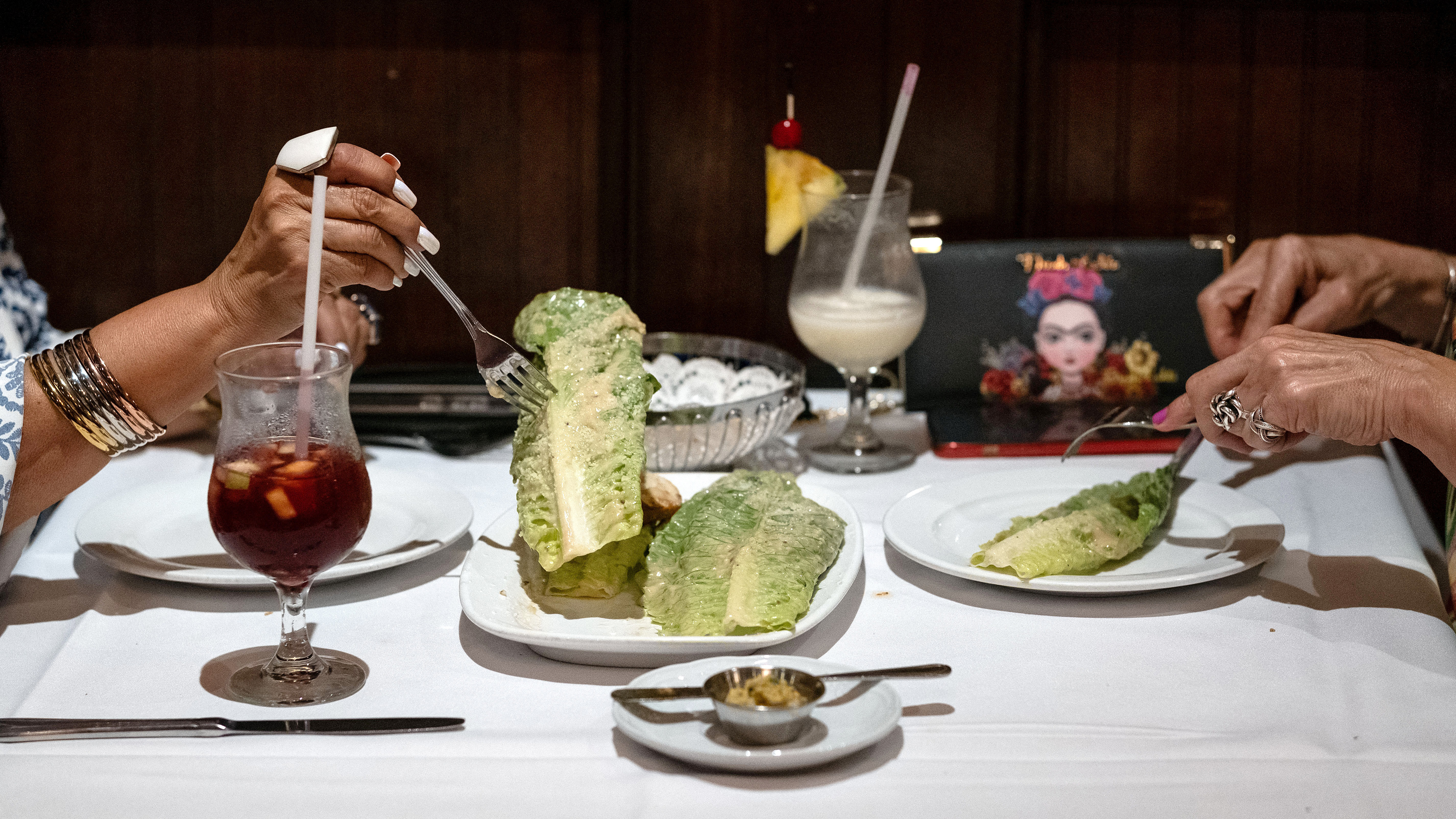
The phrase When it rains, it pours isn’t one you like to see applied to outbreaks of foodborne illness, yet here we are. The summer started with a diarrhea-causing parasite called Cyclospora cayetanensis, which infested iceberg lettuce. Then came news of Shiga toxin–producing bacteria in organic frozen berries, and a Salmonella outbreak linked to Whole Foods guacamole that eventually got traced to tainted jalapeños. (Pico de gallo, salsa fresca, and a variety of spicy dips have also been implicated.) Ricotta-style cheese was recalled for Listeria. Both Salmonella and E. coli were found in products from the aptly named Everything Sprouts. And 10,000 cases of lightly fried tofu were flagged for potential contamination with printing ink.
This flood of food-contamination events comes at just the time when our systems to prevent such outbreaks may be hobbled.
More From The Atlantic
- The White House wants to make the Smithsonian a pariah.
- The singularity is not what it seems.
- The David Frum Show: How Trump lost Asia
- The court’s ballroom decision is a sign of deeper problems.
- The guard that won’t be changing
Culture Break

Take a look. Here are some of the best images of bird life from the 2026 Audubon Photography Awards.
Watch. In 2024, Shirley Li recommended nine underrated movies that are worth your time.
Rafaela Jinich contributed to this newsletter.
When you buy a book using a link in this newsletter, we receive a commission. Thank you for supporting The Atlantic.
The post What Do Prediction Markets Want to Be? appeared first on The Atlantic.