The Justice Department declined to tell a judge that a whistleblower was wrong when they warned that President Donald Trump’s new mail ballot system could fail catastrophically and derail the November elections.
The department made its case in a reply brief filed Tuesday in the U.S. Court of Appeals for the 1st Circuit, where it is asking the judges to lift a lower-court order blocking the U.S. Postal Service from enforcing new mail ballot rules before Nov. 3.
The Postal Service’s mail-in ballot rules are in response to an executive order signed by President Donald Trump that seeks to circumvent Congress and take greater control over state elections.
Government lawyers spent their response attacking who made the allegations but never contested the claims.
Instead, the department dismissed the whistleblower’s account as “recent hearsay claims of a single unidentified individual” and called the allegations “unsubstantiated assertions, which were not before the district court.”
Nowhere in the 16-page filing did the department say the system works. It did not say the system had been tested, nor that it would be ready for November.
The whistleblower warned that USPS had eliminated standard testing, creating a substantial risk of “catastrophic failure” of the system that could “derail the midterm elections,” according to a disclosure dated Aug. 30.
Sen. Richard Blumenthal (D-CT) released the disclosure Aug. 31 alongside a letter demanding answers from USPS. The whistleblower is an anonymous federal official with direct knowledge of the project, represented by lawyers at the nonprofit group Whistleblower Aid.
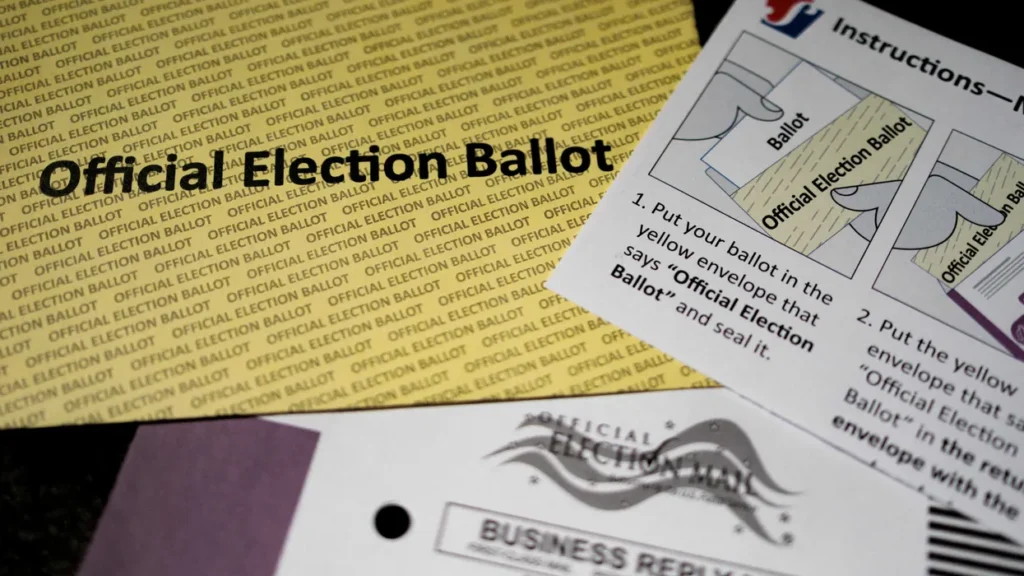
At the center of the disclosure is a rule the whistleblower calls a zero percent failure policy. States must upload every mail voter’s name, address, and ballot barcode to a new federal portal, and postal clerks then scan a sample of each batch of ballots to confirm the barcodes match.
If a single barcode fails to scan, the entire batch is rejected and sent back to the state, according to the disclosure. In a batch of 10,000 ballots, one failure stops all 10,000.
“Voters intending to cast ballots by mail may not even be aware that their ballots have been rejected, or were part of a rejected batch, until it is too late to secure an alternative ballot or vote in person,” Blumenthal wrote.
In his executive order signed March 31, Trump directed USPS to police the delivery of mail ballots. The agency published a final rule carrying it out on Aug. 26. The first states will begin sending out ballots next week.
Blumenthal wrote that the rule allows the Postal Service to refuse to mail ballots that election officials have already decided to send, the first time the agency has exercised that kind of power over an election. He called it a “marked and deeply troubling departure” from its traditional role as a mail carrier.
The department describes the same rule in far smaller terms. Its brief calls the requirements “modest,” argues they amount to envelope standards and a data upload, and says the rule “is, at bottom, a regulation of the mail, not of elections.”
While the DOJ spent a substantial part of the brief responding to claims by states that the rule will block ballots, it was nearly silent about warnings from the USPS whistleblower.
There is a practical reason for the silence. Every allegation in the disclosure is factual — when work began, whether the system was tested, whether it functions, whether the batch rule exists. Facts reach an appeals court on an emergency motion through a sworn declaration from an official, not through legal argument.
A declaration establishing the system is ready would also have to account for the months of work that produced it. Those months are the second half of what the whistleblower alleges, and anything sworn in this filing would become testimony before the district judge, in any contempt fight, and in response to a congressional records demand due within days.
The whistleblower disclosure says work began on or about June 15 and stopped 10 days later under a court order barring USPS from implementing the executive order. Development resumed on or about July 29, roughly a month into the pause.
“The project was suddenly resumed without explanation of what authority permitted USPS to ignore the court order,” the disclosure said.
The last of those court orders was not lifted until Aug. 26, according to the disclosure, leaving weeks of work performed while a block was in force. Postal Service leadership told Democratic senators in July that it was abiding by the rulings, AP News reported at the time.
That question is before a judge who has already ruled on it once. U.S. District Judge Indira Talwani found the administration violated an earlier order of hers by moving ahead with the rule, The Hill reported.
The whistleblower disclosure revealed that multiple USPS officials described the effort as “a s— show” in its final week.
Rather than answer any of it, the department pointed the court to a press release. Its brief cites a statement USPS posted Sept. 1, offering it with a bare cross-reference and quoting nothing from it.
The statement never says the system functions, and it does not address testing or the batch-rejection policy. It says USPS has spent “months developing” the portal and is “now finalizing” it, and its assurance that the work “has at all times been conducted in a manner consistent with court orders” rests on an order issued this week — months after the July restart the whistleblower describes.
Talwani hears arguments Thursday on whether to replace her temporary order with a longer one, and Blumenthal has given USPS until Friday to say whether it worked on the system while court orders were in force, and on what authority.
“We urge you to abandon this ill-conceived, unconscionable plan and ensure that all Americans can exercise their constitutional right to vote, including by mail, without interference by USPS,” Blumenthal wrote to Postmaster General David Steiner.
The post Paralyzed DOJ won’t deny ‘catastrophic’ risks of Trump mail-vote scheme in court appeared first on Raw Story.