I was 17 when the University of Northwestern-St. Paul offered me a scholarship in 2010. When I was 21, Stanford’s M.B.A. program did the same. From there, I went on to the Bill & Melinda Gates Foundation, where I learned how financial technology could change millions of lives.
In the years after I finished my degrees, I started a financial-technology company in Palo Alto, Calif., backed by American investors, that now serves more than 500,000 customers in the United States. But these days I’m running my American company from abroad: The same country that invested in me won’t let me, or thousands of others like me, return to the United States. With rare exceptions, Tanzanian nationals like myself are barred from entry.
The company I founded, NALA, helps immigrants and businesses in the United States, Britain and Europe send money across borders to build businesses and keep their families afloat. I have met customers who use our service to pay a parent’s hospital bill or a cousin’s school fees, or to keep a small business open across continents. Over the past four years, we have raised more than $60 million from American venture firms, including Y Combinator, Accel and Bessemer. Forbes twice ranked us among the world’s top 50 fintech companies. Our investors and board members are American. I set out on a mission to use software to make this better and cheaper for people in emerging markets.
NALA pays U.S. taxes. Nearly every consequential decision about the company’s future, every board meeting, every fund-raising event, every bet on where we go next, is made on American soil.
That is why what is happening now is so hard to reconcile.
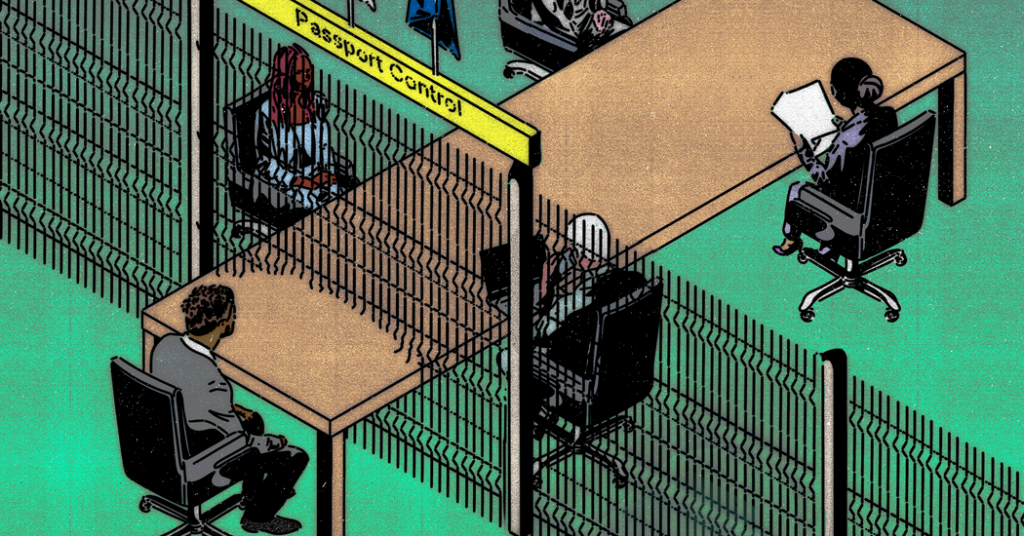
On Jan. 1, a presidential proclamation went into effect, adding Tanzania to a group of 24 countries facing new entry restrictions. The United States stopped issuing the business-visitor visa I relied on, as well as student and exchange visas and other visa types, to these countries. The visa allowed founders like me to fly in to the United States for meetings with investors, customers and partners, and to sit in the boardroom. After the proclamation, anyone with a valid visa could use it until it expired, but it cannot be renewed, and no new one will be issued. Mine ran out on July 10.
The education I received in America turned a Tanzanian teenager into the founder of a company that answers to American investors. Then the government closed its doors to me. I have never broken any laws in the United States, or elsewhere. I did not enter the country illegally. I pose no security risk. I have been shut out of the country simply because of the passport I carry. The U.S. government’s stated rationale is a statistic: Tanzanians overstay business and tourist visas at relatively higher rates than people from some other countries.
But a statistic is not a person. A blanket ban punishes those who follow the rules just as harshly as it does those who do not. I have crossed the U.S. border for 17 years in a row now. I have always left exactly when I said I would.
I now run my company from abroad, between London and Dar es Salaam, over video. But fund-raising and enterprise sales are relationship businesses. The trust that closes a round, or a bank partnership, is built in the room, over dinner, in the hallway after the meeting. You do not Zoom your way to a deal.
Close readers of the presidential proclamation may point out that the decision lets officials grant an individual entry if it’s in the national interest. I am aware of this loophole: I applied for it, and was rejected. If that clause means anything, surely it should cover those who are building American companies and paying Americans salaries. In my case, it did not.
I am far from the only person affected by the shuttering of U.S. ports of entry to foreign nationals from all 39 countries with travel bans. And even though I am personally devastated by the expiration of my business visa, the barriers that matter to me most are the new roadblocks to student visas. I arrived on one. So did 234 of the founders or co-founders behind America’s current privately held billion-dollar companies, each creating on average over a thousand American jobs. Nearly three in five of those billion-dollar start-up companies have an immigrant founder; almost half of the Fortune 500 in 2025 was built by immigrants or their children, producing over 15 million jobs worldwide. I have Tanzanian friends who got admitted into top schools like Harvard this year on scholarship, but they can’t attend because of the visa rule.
I can list off the top of my head companies and individuals whose lives and contributions to society were predicated on sane border policies. Two Nigerians come to mind. Tope Awotona came to Atlanta as a teenager and later built the scheduling company Calendly into a $3 billion business. Adebayo Ogunlesi built the world’s largest independent infrastructure investor and sold it to BlackRock for $12.5 billion; he now sits on the board of OpenAI. Nigeria is now also on the presidential ban list.
Somewhere, another 17-year-old is being offered a place on an American campus. She might build the next great American company. She might create thousands of jobs. Or, denied a visa, she might never be able to board the plane even with a full scholarship to Stanford or Harvard in hand.
America has always been exceptional because it believed in people before anyone else did. It believed in me. Would it still?
Benjamin Fernandes is the founder and chief executive of NALA, a cross-border payments company.
The Times is committed to publishing a diversity of letters to the editor. We’d like to hear what you think about this or any of our articles. Here are some tips. And here’s our email: [email protected].
Follow the New York Times Opinion section on Facebook, Instagram, TikTok, Bluesky, WhatsApp and Threads.
The post I Went to School in America. Started My Business in America. I Can’t Stay in America. appeared first on New York Times.