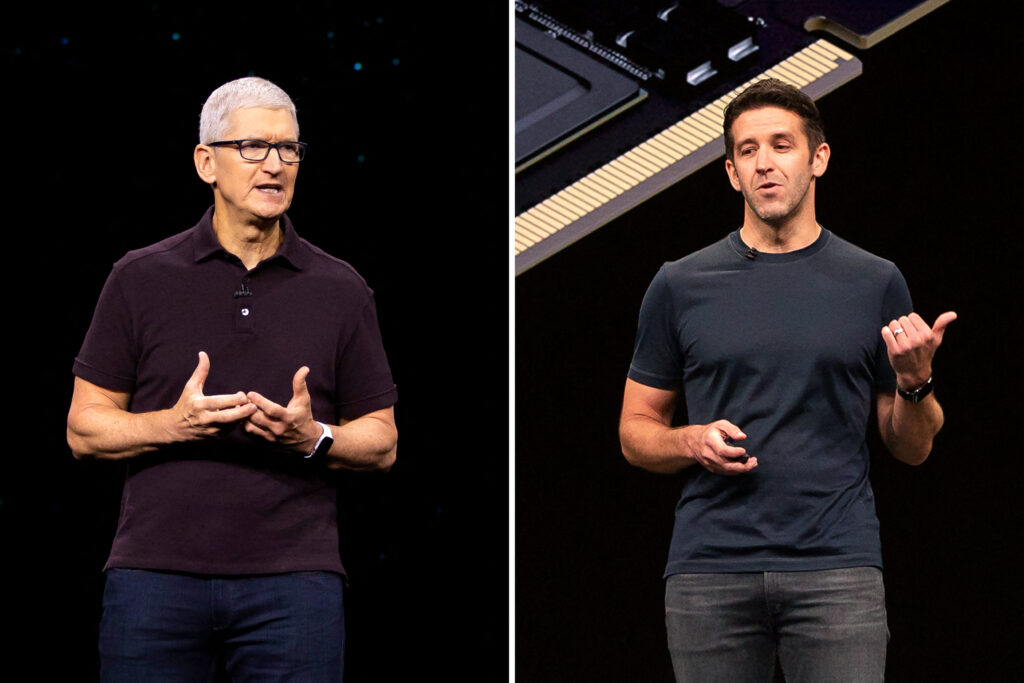
Apple’s new chief executive, John Ternus, officially took the reins of the $4.7 trillion iPhone maker on Tuesday to replace Tim Cook, the company’s longtime leader who oversaw the introduction of AirPods, the Apple Watch and services like Apple Music in the post-Steve Jobs era.
Ternus, a veteran of Apple’s hardware division, comes into the role as Apple faces the challenge of steering itself through the upheaval of the artificial intelligence boom.
Unlike its peers Meta and Google, Apple has not pivoted as aggressively to making its own AI products. Although Siri pioneered the concept of an intelligent digital assistant, it is widely seen as lagging behind the power of chatbots like OpenAI’s ChatGPT. (The Washington Post has a content partnership with OpenAI.)
And Apple must manage the effects of a dramatic chip crunch due to the construction of data centers for AI that in June forced the company to increase the price of its MacBooks. The latest iPhones, due to be released next week, are expected to cost $100 to $200 more than previous models, according to analysts.
Mixed legacy
Cook made his name at Apple as the logistics chief who assembled the globe-spanning manufacturing operation that backed up co-founder and CEO Steve Jobs’ visions for the iPhone, iPad and other products.
After Jobs died in 2011, Cook became CEO and oversaw the launch of products and services that built on top of the Apple ecosystem the co-founder had established.
AirPods — and the removal of the headphone jack in iPhones — were initially met with doubt from some consumers, but ultimately became a hit product that rivals such as Samsung sought to emulate. Apple Music became a competitor to industry streaming leaders like Spotify and expanded the company’s services revenue. The Apple Watch showed many of the company’s customers were ready to welcome another device into their lives.
Cook’s boldest bet, the Vision Pro virtual reality headset released in 2024 with a price tag of $3,500, didn’t work out. Despite hopes it would make virtual and augmented reality mainstream, it’s unclear whether the company plans to release another version this year. An electric car project also foundered, and was shut down before getting close to launch.
AI wobbles
Ternus joined Apple in 2001 on the product design team before rising to be a top executive credited with finding new ways to make its products more durable. He now faces the challenge of reestablishing Apple’s image as the maker of breakout new products that redefine how people use technology.
Next week’s iPhone release is expected to include a foldable phone, the company’s most significant change to its flagship technology in years. But investors and analysts are more interested in how Ternus will change Apple’s approach to AI, after a few years marked with missteps.
In 2024, Apple ran an ad with actor Bella Ramsey touting that Siri, its voice assistant, could access far-reaching context and content of a users’ apps. At one point she asked the digital helper: “What is the name of the guy I had a meeting with a couple of months ago at Cafe Grenel?” But Apple pulled the ad after an advertising watchdog pointed out that the company’s technology could not yet do that.
The Apple Intelligence features that did launch were found to be unreliable by many reviewers. Last year the company shut some of them off after incidents where notifications summarizing news alerts made untrue assertions, including that Defense Secretary Pete Hegseth had been fired.
In January, Apple appeared to concede its homegrown technology was lacking when it announced a deal to have Google’s Gemini models power new AI features. Apple released a revamped, AI-forward version of Siri for testing in June and is expected to roll it out more widely this fall.
As well as making Apple’s products more competitive with AI rivals like OpenAI, Ternus will also face the challenge of convincing staff to stick with Apple. In July, Apple claimed in a lawsuit alleging that OpenAI stole trade secrets that over 400 of its former employees now worked for OpenAI. OpenAI has denied the lawsuit’s allegations.
Cook, who has managed Apple’s relationship with the Trump administration, will be close at hand as Ternus takes on those challenges. The former CEO will remain in the background as executive chair of the company’s board.
The post Who is John Ternus, Apple’s new CEO? appeared first on Washington Post.