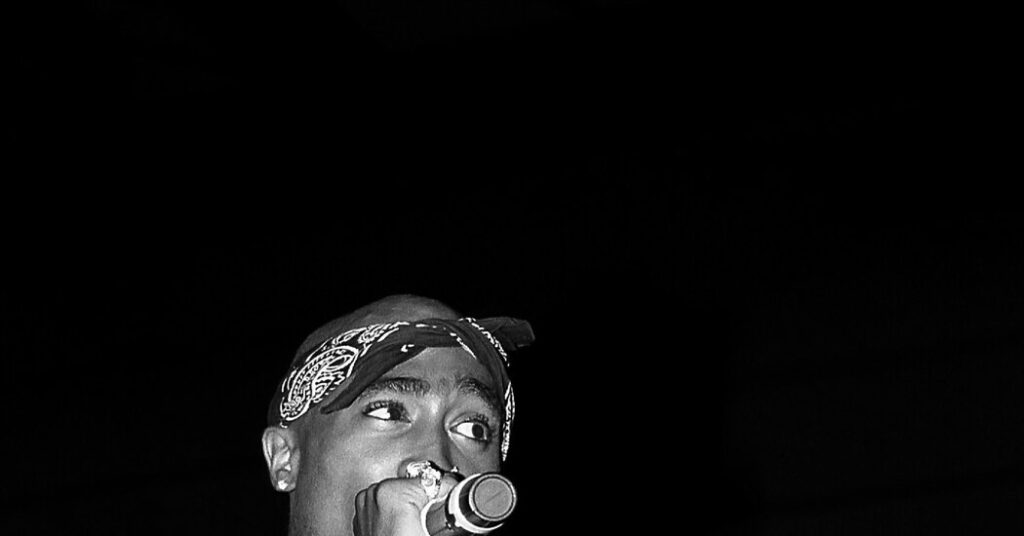
Tupac Shakur was at the peak of his craftsmanship and popularity when he was killed at the age of 25 in 1996.
Earlier that year, Mr. Shakur had released “All Eyez on Me,” the first full-length double studio album released by a solo hip-hop artist, a landmark offering that vaulted him from a rap artist into a cultural icon.
The album showcased Mr. Shakur at his rawest, poetic best as he peppered commercial smashes like “California Love” and “2 of Amerikaz Most Wanted” with socially conscious anthems like “I Ain’t Mad at Cha” and “Life Goes on.” “All Eyez on Me” debuted first on the Billboard 200 and crossed more than 10 million sold copies globally more than a decade ago.
By the time of his death, Mr. Shakur had also established himself as a bankable actor. In 1992, he broke out as Bishop in Ernest Dickerson’s “Juice,” portraying a volatile teen as he descended into paranoia and violence.
The next year, Mr. Shakur flexed his versatility, starring as the grounded Lucky alongside Janet Jackson in John Singleton’s “Poetic Justice.” Mr. Shakur acted in seven films with three — “Bullet,” “Gridlock’d” and “Gang Related” — released posthumously.
The rising recognition and fame arrived while Mr. Shakur was at a crossroads in his personal life. Mr. Shakur joined Marion Knight’s Death Row Records, which released “All Eyez on Me,” after spending most of 1995 in prison at Clinton Correctional Facility.
Mr. Shakur was convicted in 1994 of first-degree sexual abuse for forcibly groping a woman. He had maintained his innocence in the case and was acquitted of other serious charges like sodomy and weapons possession.
In November 1994, an incident at a recording session at Quad Recording Studios became a major catalyst in fueling the East Coast-West Coast hip-hop feud. Three armed men confronted Mr. Shakur in the studio’s lobby and he sustained five gunshot wounds while being robbed.
The incident established Mr. Knight, known as Suge, and Mr. Shakur as rivals to Bad Boy Records’s Sean Combs and the Notorious B.I.G.
In early 1996, Mr. Shakur released “Hit ’Em Up,” which featured deeply personal lyrics toward a slew of rappers including Mr. Combs and the Notorious B.I.G., and is widely considered one of the most vitriol-laced songs in hip-hop history. In past interviews, Duane Davis said that Mr. Shakur’s murder weapon was supplied by one of Mr. Combs’s associates.
The post Tupac Shakur Was at His Cultural Peak When He Was Killed appeared first on New York Times.