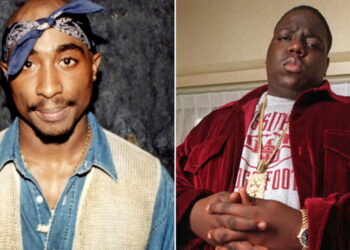
Tupac Shakur was 25 years old when he was murdered. It would take longer than his lifetime for his murder case to produce a criminal conviction, as it did on Monday.
I was 15 when he died and I grieved. I also grieved when Kurt Cobain died. The music of the 1990s was a golden age of raucous, irreverent sound, and it was filled with heartache and tragedy.
Tupac was my Bob Dylan, my introduction to music as a form of political consciousness. I loved him as a rapper, but I thought of him as a poet. Born into a family of Black revolutionaries, he inherited their compulsion to speak truth to power. He was my first touchpoint into activism, rapping about poverty, racism, women and police brutality, and crucially, his own contradictions and mistakes.
After Pac in 1996 and Notorious B.I.G. in 1997 died in gunfire, it felt to me like the allure and electricity of mainstream hip-hop died too. The now federally convicted Sean “Diddy” Combsand the shiny, sample-heavy pop rap of Bad Boy would terrorize the radio and MTV. I hated it. Pac’s absence would drive me underground and toward the East Coast, from Harlem down to Philadelphia, rappers who are still interested in using the genre to say something about the world.
What we lost in 1996 wasn’t just music he hadn’t made yet. We lost his emotional intelligence, still curious in a world that made him furious. He was also reckless, still figuring out what kind of man he wanted to become.
Instead, sometimes in cynical, ghastly ways, Tupac would never leave the culture. Albums continued dropping after his death, contributing to his messianic mythology. In 2012, a Tupac hologram walked on stage at Coachella, a horrifying precursor to the AI-fueled digital necromancy of today.
This year, a studio whose games I’ve enjoyed used Tupac’s name and image to market its upcoming video game, “Stranger Than Heaven.” It is a reminder that he does not get to live his own life, that such a sensible man was gunned down in senseless violence, and how the murder of a very real man became mythology to sell product.
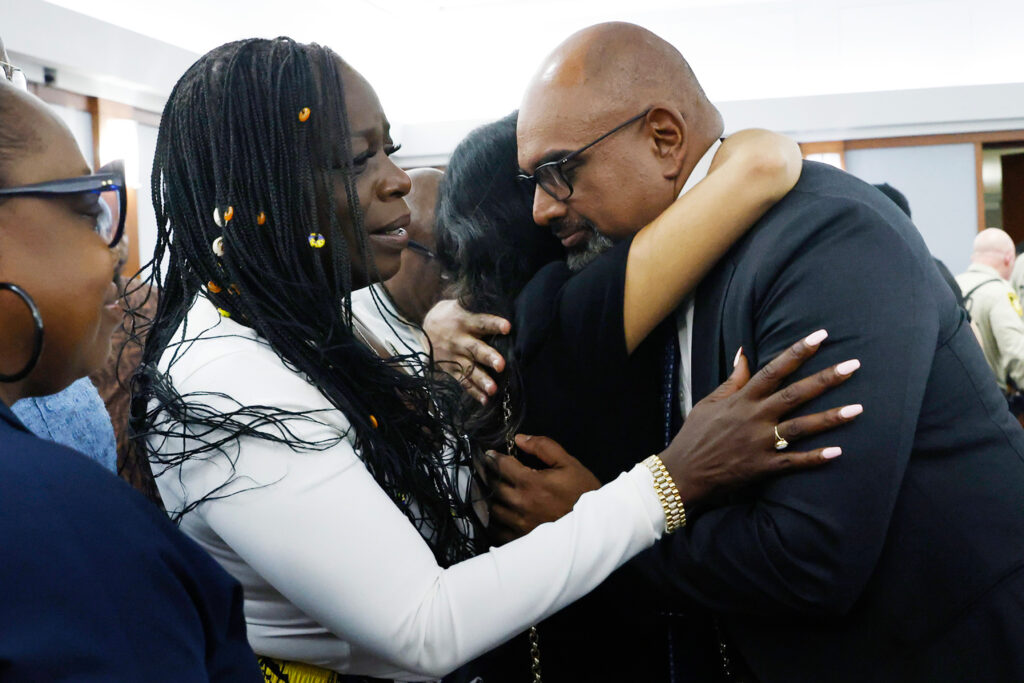
That discomfort is why I followed the trial and conviction of Duane “Keffe D” Davis from a distance. I knew it was happening, and that for the first time, someone was finally being prosecuted. I couldn’t summon much interest in the outcome. But one result of the verdict helped me understand its importance: The artist’s family described themselves as relieved. Shakur’s cousin Zayd Akinyela told the Associated Press that the family was “waiting 30 years to grieve properly.”
A verdict will never give back what was stolen. But there is some measure of peace in finally knowing what was unknowable for so long, and now the wound can scar over.
So what’s next? Once again, 30 years later, I can still look to Pac for guidance. As he reminded us once, no matter how long we mourn, life goes on.
The post The Tupac verdict dresses a wound from the traumatic 1990s appeared first on Washington Post.