The primary season is mostly over and Labor Day, the traditional start of the general election campaign, is just around the corner. It’s time to look into the mailbag, where we received numerous questions about the changes we’ve made to our polling this year.
Can you please make some comments about contact method? What is that going to look like? — Jim Clifton, chairman, Gallup
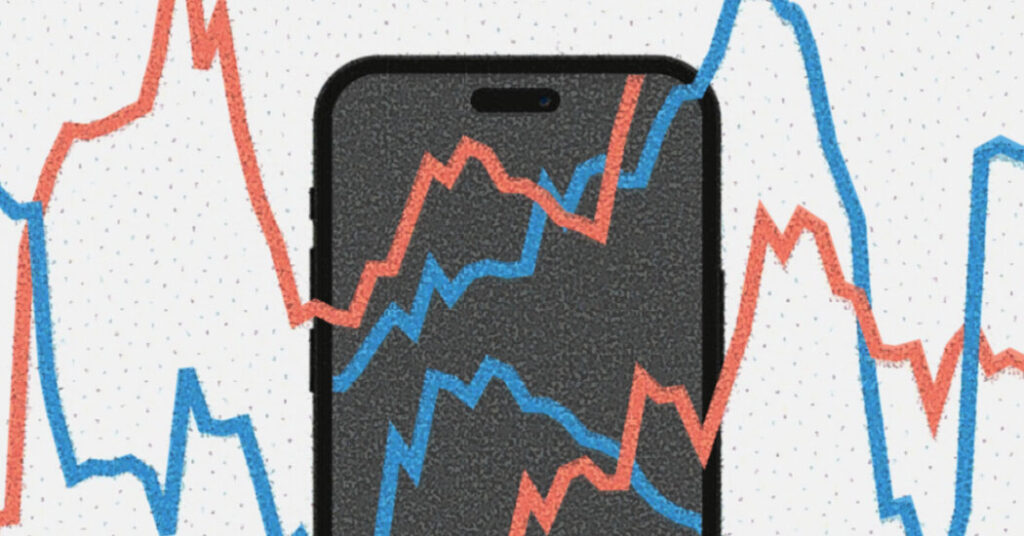
The New York Times/Siena Poll has traditionally been a telephone survey, but over the last few years we’ve experimented with most of the major methods for contacting voters. These include sending them text messages (and sometimes offering financial incentives to participate), sending them mail with financial incentives, and getting data from panels of people recruited online to take polls. At the end of it all, the Times/Siena poll is still a telephone survey.
The phone, while expensive, is still much faster and cheaper than high-incentive mail surveys. And the phone still seems to reach a more representative population — based on measures like educational attainment and record of voting in recent elections — than supplementing the phone with text-message links to surveys or online panels.
What keeps the phone viable? Its secret sauce is that it has a high cooperation rate. While very few people respond to a phone poll, that’s mostly because most people don’t pick up unknown numbers at all. Among those who do pick up, a reasonably high proportion choose to take the poll — around 15 percent.
In contrast, only a tiny share of those who see the text invitation to take a poll choose to participate, and they appear to be real political junkies who aren’t representative of the broader population (it’s possible this is a factor in why so many polls recently overestimated the support of progressive candidates). A less political group of people tends to be more likely to agree to take a survey on the phone — if and when they pick up.
I’ve written a few newsletters this year about other changes we’ve made to our methodology — you can read those here:
Have we ever overestimated Republicans?
Thank you for the article discussing revisions to your polling methodology. I have a question. Has The Times ever overestimated support for a Republican? If so, when? — Bob Nazarian
The last time our polls overestimated support for Republicans was back in the 2018 midterms. In particular, we overestimated support for Republicans in relatively Hispanic states and districts, where turnout surged compared with the 2014 election.
Making sense of Michigan voting groups
In the wake of Dr. Abdul El-Sayed’s weak performance among Black and rural white working-class voters in Michigan’s Democratic Senate primary, some readers wanted to know if that might augur poorly for his chances among the same groups in the general election:
Are you suggesting that those groups [Black, white working class] will stay home in November, or will they vote Democrat like most progressives do for moderate candidates? — Lawrence S. White
Dr. El-Sayed is at risk of underperforming in the general election, but it doesn’t follow that he’s likely to underperform among the groups who opposed him in the primary. After all, most Democratic primary voters are reliable Democrats and they probably liked both candidates, even if many preferred Haley Stevens.
If Dr. El-Sayed underperforms, it will mostly be among persuadable voters who probably sat out the Democratic primary. To the extent he struggles among Democratic primary voters, it will probably be among relatively moderate voters.
Is Republicans’ money edge actually important?
My question is based on reporting that Republicans have a large cash advantage going into the midterms and that Trump is very unpopular: To what extent, if any, will the cash advantage overcome the unpopularity and Democratic enthusiasm? — David McManus
The G.O.P.’s financial advantage matters, but it isn’t likely to decide the overall outcome of the midterms or overcome the Democrats’ big structural advantage in this election: They’re the party out of power in a midterm when the president’s approval rating is in the 30s. The Democrats have enough resources to compete in the most important states and districts.
Where the G.O.P.’s money will really help is on the periphery of the battleground. It should be able to help solidify the kind of Republican-leaning district where, otherwise, the Democrats might hope to use a financial advantage to break through against unprepared Republican challengers.
Can an independent win in Nebraska?
What is the likelihood of the independent Dan Osborn defeating Pete Ricketts? John Thomsen
There’s good reason to think Mr. Osborn should be highly competitive in the Nebraska Senate race. In 2024, he lost to a different Republican incumbent, Senator Deb Fischer, by only seven percentage points. In today’s more favorable political environment, he would be expected to fare even better against Senator Ricketts. (The Democratic nominee withdrew from the race.)
Whether this means the race should be considered a tossup is harder to game out. If Mr. Osborn were a typical Democrat, it would be easy enough to note that the national political environment has shifted about seven points toward the Democrats and therefore assume that Nebraska might now be a tossup.
The catch is that it’s not obvious that a more favorable national environment for Democrats helps Mr. Osborn as much as it would an actual Democrat, in the same way that a bad national environment for Democrats in 2024 may not have hurt him as much as other Democrats. As a result, it might be safest to say that the race still leans Republican, even if it’s highly competitive.
Unfortunately, there’s been only one poll in the last few months — and it was sponsored by Mr. Osborn’s campaign.
The post Why We’re Not Hanging Up on Phone Polling appeared first on New York Times.