“Are the Russians bad?”
That, according to newly declassified FBI files, is what Donald Trump asked a counterintelligence agent during a 2016 briefing — the same trove the president ordered released to prove the Russia investigation was a hoax. “Because they have more numbers, are they worse than the Chinese?” he pressed.
Instead of exposing the “total weaponization” Trump promised, the latest batch of Crossfire Hurricane records serves up a string of awkward moments and does nothing to undercut the probe he has spent years branding a disgrace.
Trump promised that the American people would see that the FBI’s investigation into potential collusion between Russia and his 2016 campaign was “total weaponization” and “a disgrace” when he signed an executive order declassifying the files. The 56th installment of batched records by the FBI last week, like previous releases, contains no information that undercuts the rationale for the FBI counterintelligence investigation known as “Crossfire Hurricane,” which probed the campaign for evidence of coordination with the Russian government that would compromise national security.
Much of the information in the latest release of declassified files has already been revealed through extensive media coverage, the report of Special Counsel Robert Mueller and multiple congressional inquiries, but the files color in some vivid details about the tumultuous period between Trump’s acceptance of the Republican nomination in the summer of 2016 and his inauguration in early 2017.
Here are five revelations from the latest document dump.
The FBI suspected a Trump campaign advisor of being a ‘logical conduit’ for the Russians to ‘message’ to the Trump campaign
The FBI met with an informant — subsequently revealed to be Cambridge University professor Stefan Halper — on Aug. 12, 2016, and tasked him with cultivating a relationship with Carter Page, a senior foreign policy advisor to the Trump campaign, to probe him on the campaign’s alleged ties to Russia.
The FBI team explained to Halper that due to Page’s “ties back to the Russian Federation,” he would be “the logical conduit” for Russia “to message the Trump campaign,” a report captioned “Crossfire Hurricane,” “Foreign Agents Registration Act – Russia” and “sensitive investigative matter” reads.
The day before, according to the files, Halper had told the FBI that he had met Page and the two had discussed Page’s “relationship with Gazprom,” a Russian government-controlled energy company, along with Page’s “views” on Russian President Vladimir Putin and the U.S. presidential campaign. Page reportedly told Halper that he had recently been in Abu Dhabi “representing Gazprom.”
When the FBI asked Halper “if it was unusual for a senior policy adviser to a presidential campaign to still be advising a company like Gazprom,” Halper reportedly said that he did, indeed, find it unusual.
Page would later admit to investigators in an inquiry by the U.S. House of Representatives that he had served as an adviser for Gazprom and at one time had held a financial interest in the firm, according to an NBC report. Page also released a 2013 letter in which he had described himself as an “adviser” to the Kremlin to help the Russian government prepare for a G-20 Summit.
Trump asked FBI during counterintelligence briefing: ‘Are the Russians bad?’
One of the declassified reports released last week details the counterintelligence briefing given to Trump by the FBI and intelligence officials in a secure conference room at the FBI New York Field Office in August 2016.
The report, which was separately declassified by former Director of National Intelligence John Ratcliffe in 2020, describes a 13-minute briefing given to Trump by Joe Pientka, a supervisory special agent of the FBI’s foreign counterintelligence squad.
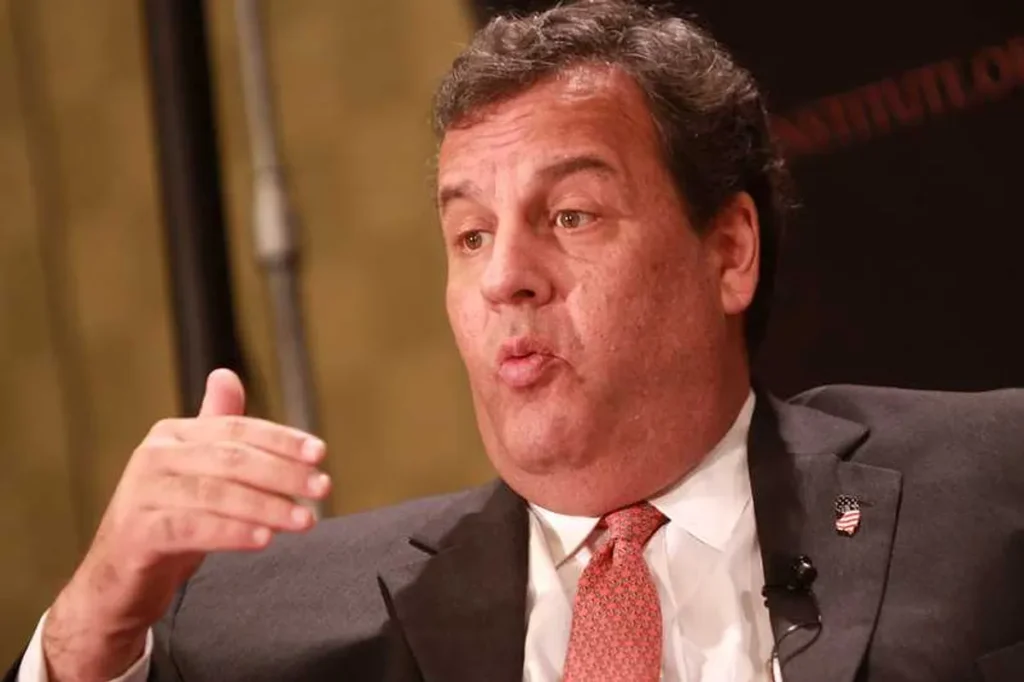
Pientka warned Trump, who was accompanied by New Jersey Gov. Chris Christie and retired Lt. Gen. Michael Flynn, that foreign intelligence services target U.S. officials to gain economic, energy, technology and military information to give their countries a competitive advantage over the U.S., according to the report. Pientka went on to say that foreign spy agencies use both intelligence officials working under diplomatic cover and operatives using non-official cover such as tourists, businessmen and students to get information.
“Joe, are the Russians bad?” Trump reportedly asked the briefing agent. “Because they have more numbers, are they worse than the Chinese?”
The report conveys that Pientka “responded by saying both countries are bad. The numbers of [intelligence officers] present in the U.S. is not an indicator of the severity of the threat.” Pientka “reminded Trump the Chinese asymmetrical presence in the U.S. could be ten times as large as the symmetrical presence, yet we would not know.”
The FBI used the counterintelligence briefing to gauge Trump’s reactions
The report on the counterintelligence briefing, which is captioned “Crossfire Hurricane,” includes Pientka’s disclosure that he “actively listened” to Trump’s responses during a presentation by the Office of the Director of National Intelligence, with a specific eye towards Russia.
Pientka noted that when the deputy director of the National Counterterrorism Center told him the United States is “the world leader in counterterrorism,” Trump reportedly interjected: “Russia, too?”
The briefing turned to the issue of nuclear testing, with the official telling Trump’s team that both Russia and China cheated on the Nuclear Test Ban Treaty.
“Who’s worse?” Trump asked.
The official’s response is redacted, but according to the report, Trump and Christie turned towards one another, and Christie commented, “I’m shocked.”
Putin concluded weeks before the 2016 election that Russian influence efforts had ‘failed’
Another unnamed FBI informant, whose collection methods are consistent with those of retired British spy Christopher Steele, relayed to the FBI that a “sub-source” told him that Russian President Vladimir Putin had “admitted to senior intelligence officials” in the month before the 2016 election that the efforts of Russian intelligence services “to influence the U.S. presidential campaign failed and were ‘f—ed up.’”
The Oct. 18, 2016, report was filed just days after WikiLeaks released an apparent transcript of a paid speech Secretary of State Hillary Clinton, the Democratic nominee, gave to Goldman Sachs.
“Those involved were dismayed at the lack of traction of material leaked against Hillary Clinton,” the report said. “They advised that the most compromising material has been put out but that they will ‘drip-feed’ the remaining materials through WikiLeaks.”
The report also includes an assessment by an entity whose name is redacted “that Trump would not win the presidential campaign.”
A DOJ official funneled information from an oppo research firm to the FBI
Two declassified reports released last week detail how Bruce Ohr, a senior Department of Justice official, passed along a thumb drive to the FBI that included research his wife conducted for the opposition research firm Fusion GPS. One report shows the FBI received the thumb drive from Ohr on Dec. 12, 2016, during the period between Trump’s election and his inauguration.
The report states that Glenn Simpson, the co-founder of Fusion GPS, hired Nellie Ohr, “a Russian linguist/analyst and a former Russian History professor” to conduct research for his firm, and that Bruce Ohr “voluntarily provided his wife’s research to the FBI.” The report notes that the Fusion GPS header was stripped from the documents on the thumb drive.
The transfer of information from Nellie Ohr through her husband to the FBI became controversial after it was learned that Fusion GPS commissioned the now-discredited Steele dossier. The dossier was compiled by Christopher Steele, who had earlier served as an informant on the Crossfire Hurricane investigation. Trump and his allies have cited the Steele dossier as a basis for claiming that the Russia investigation was a “hoax,” but journalists have noted that it neither predicated the case nor sustained it.
Nellie Ohr was called to testify before Congress in 2018, and then-Rep. Mark Meadows (R-NC) made a criminal referral to the Department of Justice alleging that she “knowingly provided false testimony” when she said, “I did not give the FBI my research.”
A 2019 review by the FBI’s Federal Public Corruption Squad backed up Meadows’ claim by finding that Ohr “provided demonstrably false information in two aspects of her testimony.” The report, which was released by Sen. Chuck Grassley (R-IA) last year, concluded that “a plain reading” of the facts “leads to the inference that Nellie Ohr was aware of the FBI’s Russia information and gave her Fusion GPS information because it related to the FBI’s Russia investigation.”
The Department of Justice, then led by Attorney General Barr under Trump’s first administration, declined to bring charges against Ohr.
The post ‘I’m shocked’: Chris Christie’s telling Trump moment among revelations in new Russia files appeared first on Raw Story.