Republicans and Democrats once praised Flock Safety as a protection tool for American communities. Now politicians across the political spectrum are turning against the mass-surveillance technology.
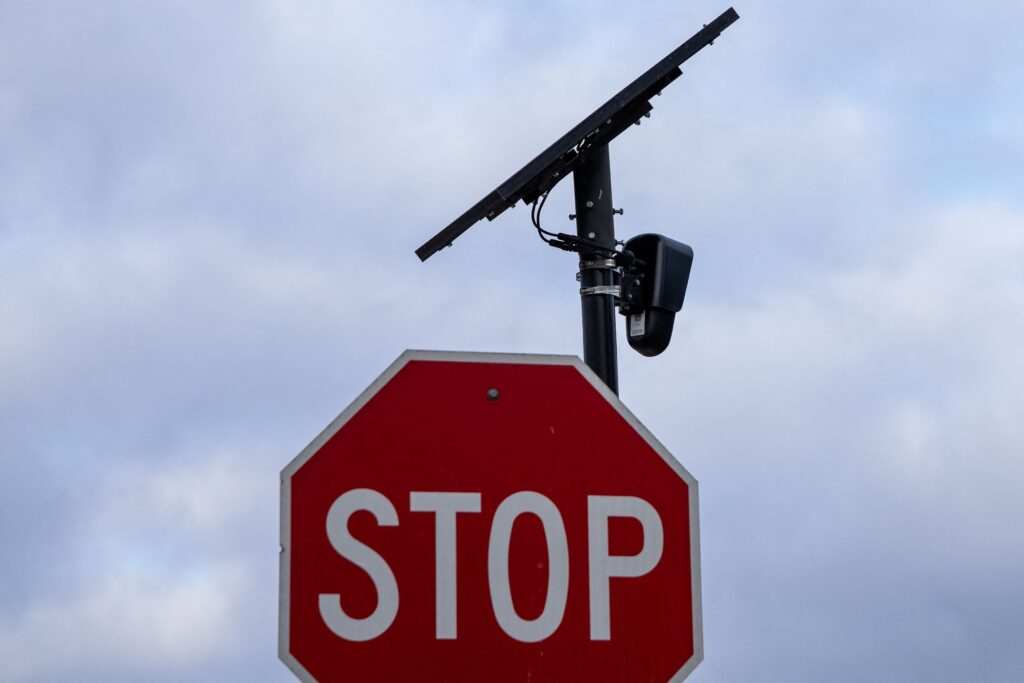
Texas Gov. Greg Abbott (R) froze state spending this week on the shoebox-size cameras that have proliferated across the nation.
The flow of taxpayer money halted just before the Texas Tribune published an investigation probing how one state agency poured at least $30 million into expanding the reach of the controversial automated license plate scanners.
“There is a crackdown across Texas,” Abbott spokesperson Andrew Mahaleris said in a statement.
Reports of authorities misusing the Flock network, which spans 120,000 cameras in every state except Alaska, have sparked an intense backlash, with critics asserting the crime-stopping devices too easily enable stalking or spying in the wrong hands. Abbott’s office highlighted a case in the East Texas city of Lufkin, where a police officer was indicted on felony charges after searching his ex-girlfriend’s license plate number thousands of times.
Like energy-guzzling data centers, the robotic trackers have grown increasingly unpopular, sparking heated debate on the responsible use of AI in the United States as the midterm elections near. Protesters have vandalized Flock cameras they blast as “Big Brother,” and internet pranksters have danced in front of them in lighter-hearted viral mockery.
Abbott’s office, meanwhile, said the technology is concentrated in densely populated areas and mainly funded by the federal government.
“Almost all Flock cameras in Texas are used by cities, and those cities are increasingly canceling their contracts with Flock,” the governor’s press secretary said in a statement.
The Democrat running against Abbott for governor, Gina Hinojosa, released an ad this month criticizing her opponent for allowing 10,000 of the monitors to trace Texans’ movements.
“No warrant needed in Greg Abbott’s Texas!” a voice-over chirps.
Flock officials have told The Washington Post that abusers of the technology make up a tiny sliver of its 140,000 active users, and that the company provides training guides meant to prevent unauthorized activity. The system, they say, was built to help police catch those breaking the law.
Yet bad actors have exploited loopholes. Authorities have charged or accused at least 50 law-enforcement officers of using license plate readers for unofficial reasons, including to stalk women, a Post analysis found. Dozens of cities throughout the nation have shut them down.
Candidates on the right and left are leaning into the anti-Flock sentiments.
“Big Brother has NO place in the Lone Star State,” Rep. Keith Self, a Republican running for reelection in Texas, recently posted on Instagram.
Abdul El-Sayed, a progressive Senate candidate in Michigan, also referenced sci-fi horror in a TikTok post, framing Flock as “little cameras watching your every move to collect information about you without you even noticing.”
Sen. Josh Hawley (R-Missouri) has launched an inquiry into Flock and urged the company to reveal who can access what its system captures. Sen. Bernie Sanders (I-Vermont) has pledged to introduce legislation that would ban AI surveillance.
The blowback in Texas, meanwhile, has been steadily brewing. This month, the state’s agriculture commissioner, a Republican, urged Abbott to stop investing in automated license plate readers until more safeguards are adopted.
“No law-abiding Texan should enter a digital lineup whenever he drives on a public road,” Sid Miller wrote in an op-ed for the Houston Chronicle. “No mother should wonder whether her school route is in a government database.”
The post Gov. Abbott blocks funding in Texas for Flock cameras as bipartisan fury brews appeared first on Washington Post.