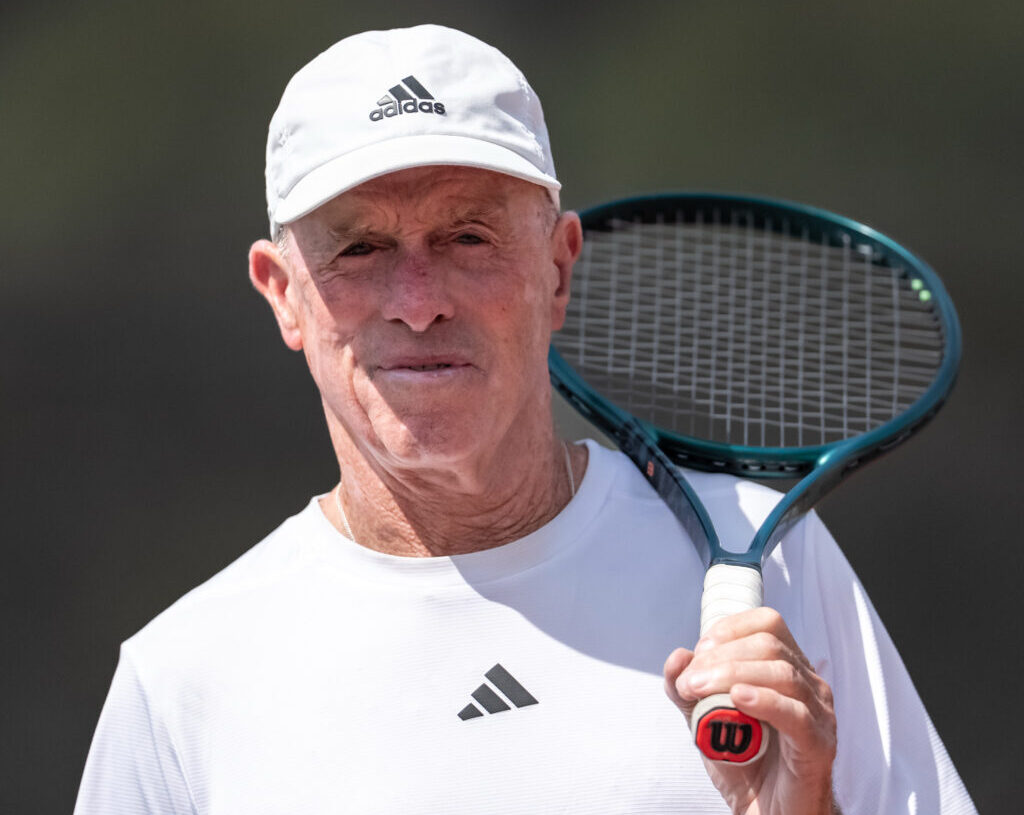
After Mark Orwig had a melanoma tumor removed from his cheek in 2023, he began to worry about the future. The smallest remnants of the deadly skin cancer can linger in the body after a successful surgery, eventually causing the disease to recur.
Orwig, like most melanoma patients, must watch for the cancer for the rest of his life. He worried about affording scans and treatments that could help keep it at bay. He thought about his odds. Then a doctor told him about a clinical trial being run nearby at the University of California at San Francisco.
“He says, ’It’s groundbreaking,’” Orwig recalled. “‘It’s a groundbreaking process that I think is going to revolutionize cancer and many other treatments.’”
“I said, ‘If that’s the one, let’s go.’”
That was how Orwig, a 73-year-old tennis coach from Moraga, California, joined 1,136 other skin cancer patients around the globe in testing intismeran autogene, an experimental treatment that drugmakers Moderna and Merck say is the most promising exampleof an emerging field of cancer vaccines built using messenger RNA, the technology behind the coronavirus vaccines.
The Phase 3 trial, which tested intismeran’s ability to prevent melanoma from recurring when combined with a separate proven immunotherapy, was successful, drugmakers announced Wednesday. The news sent stock prices for both companies soaring and opens the door for the Food and Drug Administration to potentially approve the first mRNA-based cancer treatment.
The data that would inform that decision came from patients like Orwig, who, like all the trial participants, does not know whether he received injections of intismeran or a placebo during his year-long regimen.
Orwig’s melanoma has not recurred. He experienced side effects from his injections but is healthy and continues to coach tennis everyday. And he said he felt a sense of purpose in joining a long history of cancer research as it reaches a potential milestone.
“Somebody did it for me,” Orwig said. “I’ve got to do it for the next people who have melanoma.”
How the process worked
Orwig said he believes his work and an outdoorsy lifestyle in the San Francisco Bay Area may have contributed to his skin cancer. Besides his hours on the tennis court, he is also an avid runner and surfer. His mother also had skin cancer. Orwig was treated several times for basal cell carcinoma, a different form of skin cancer, in his middle age.
In September 2023, during a checkup, doctors flagged a small, clear bump on Orwig’s cheek. It was diagnosed as a Stage 3 melanoma, and Orwig quickly underwent surgery to remove it. The cancer, which had spread under Orwig’s skin, ultimately required doctors to remove a large section of his cheek.
That can be just the beginning of a patient’s experience with the cancer, said Ryan Sullivan, director of the cutaneous medical oncology program at Mass General Brigham Cancer Institute. Depending on the kind and severity of melanoma, the risk of the cancer returning can be as high as 80 percent for some patients. Melanoma can be fast-growing and elusive, and a few cancer cells left after a surgery can stealthily spread to other parts of the body.
“Anything you can do to improve cure rates is great,” Sullivan said.
Orwig’s diagnosis and treatment made him eligible for the trial of intismeran, which boosts immunotherapy usually delivered after a melanoma removal by helping the body target cancer cells. He entered the trial in December that year.
Six patients at UCSF participated in the clinical trial, according to Adil Daud, a professor of medicine at UCSF who oversaw them. Patients across 25 countries and around 30 sites in the United States took part in the trial, according to Moderna.
To begin, doctors submitted a rice-grain-size sample of Orwig’s tumor to a lab for analysis. Intismeran is unique among cancer treatments as a personalized drug — researchers sequence a patient’s tumor to find mutations unique to their cancer, then encode instructions into a custom-made mRNA vaccine to target that cancer’s specific mutations.
That may not always be possible, Daud said. The process of analyzing a cancer tumor after surgery, which involves staining it with dyes, can use up the tissue needed for a DNA analysis, which could limit some patients’ access to the treatment if it becomes more widely available.
“Genome sequencing is getting better and better,” Daud added. “Right now you need a fair amount of tumor, but as time goes by, I don’t know if that’s persistently going to be a problem.”
While he waited for labs to follow up, Orwig began infusions of Keytruda, an approved immunotherapy drug that helps the body’s immune system fight cancer. After six weeks, he started on injections of either the vaccine or a placebo.
For a year, Orwig received infusions of Keytruda every six weeks and injections in the arm every three weeks.
Two-thirds of the participants in the trial received intismeran, and the rest received a placebo; Orwig is not allowed to know which. But he and Daud said he experienced side effects after his injections that appeared similar to those from other mRNA vaccines, like the Moderna coronavirus vaccine. After his first injection, Orwig said he felt fatigue, nausea, headaches and soreness, which he said were much more severe than from a coronavirus shot. It took around a week to recover, though he learned to cope better on subsequent injections.
“It was pretty tough,” Orwig said. “… As it went on, it got a little bit better, and I developed routines on how I would first start [recovering].”
Side effects?
One of Orwig’s peers in the trial at UCSF stopped receiving Keytruda and injections after experiencing more severe side effects. Richard Dehmel, 80, developed colitis, inflammation of the large intestine, in November 2024, several months after beginning his regimen, he said. Dehmel was hospitalized for dehydration due to diarrhea caused by the condition.
Daud, the UCSF doctor, cautioned against drawing conclusions from Orwig or Dehmel’s individual experiences. He added that it could be hard to distinguish between conditions caused by Keytruda, which can cause side effects including colitis, and intismeran.
“Even though the vaccine is personalized [to target cancer] … there’s a lot we don’t understand about the immune system,” he said.
Moderna and Merck have said in previous clinical trials that the most commonly reported side effects related to intismeran were fatigue, pain at the site of injection and chills, and that the number of serious reactions was comparable to patients who received only Keytruda.
When it comes to assessing a cancer vaccine, no news is good news, Daud said. Orwig completed his regimen and continues to receive checkups as part of the trial. His cancer has not recurred.
Dehmel developed complications from his colitis which took around a year to recover from, he said. His melanoma recurred, and he had a second operation in January to remove a new tumor.
Both participants celebrated the news this week that the clinical trial was successful, they said.
“I’m utterly delighted,” Dehmel said of the trial’s success. He added that he was disappointed by how the treatment ended for him but knew it was a possibility going in.
“One always hopes that a trial vaccine will be personally useful,” he said. “But … I’m an engineer, and in science you need data, and so I was happy to sign up for this so that we could get more data.”
Experts said the full picture on intismeran is still incomplete. Moderna and Merck have not yet released the data from the latest clinical trial, and participants like Orwig and Dehmel will still need to be monitored to assess the treatment’s long-term effectiveness. But the success of the trial is still a significant milestone and could spur the development of other cancer vaccines.
“There’s a bladder cancer trial and a lung cancer trial looking to do very much the same thing that this trial did,” Sullivan said. “Just the concept [that] cancer vaccination can lead to a positive Phase 3 trial, I think, will make people very interested in investing in this.”
Orwig completed his latest skin checkup Thursday, where doctors found no abnormalities. He went straight to the tennis courts from the hospital for his afternoon lessons.
“I’m thankful and I’m glad I did what I did,” he said. “A lot of trials don’t go anywhere. This trial is definitely going to go somewhere … and anybody that gets into the same situation I got into in the future is going to really benefit from it.”
The post What it was like to go through a trial that could revolutionize cancer treatment appeared first on Washington Post.