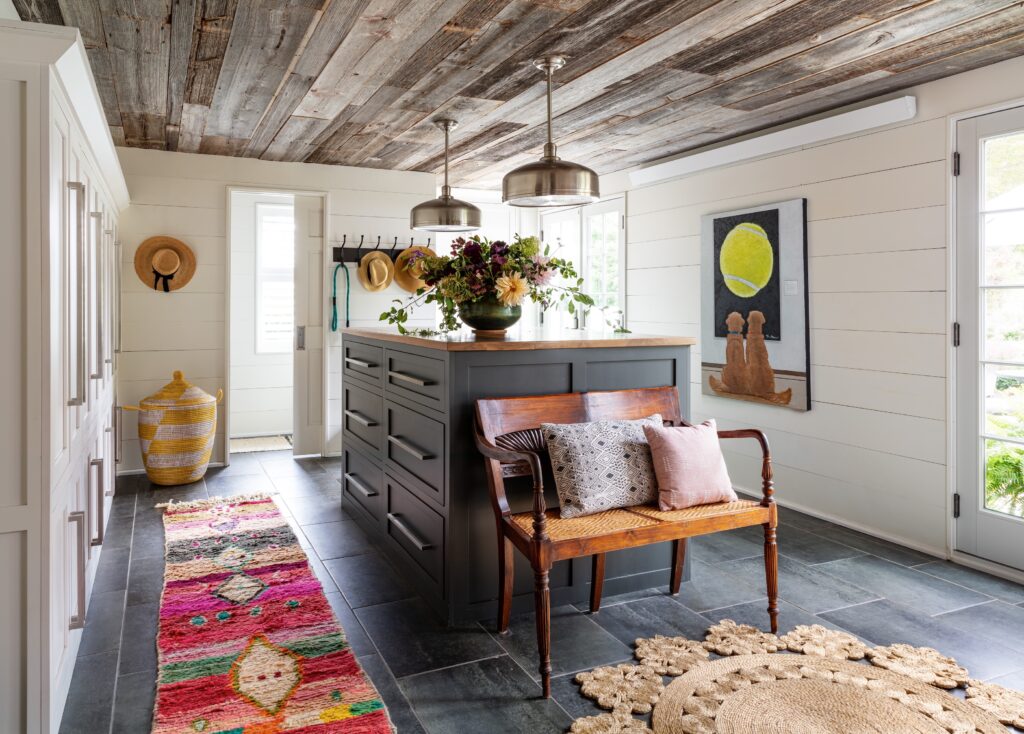
Recently, a pigeon relieved itself on interior designer Leslie Banker as she walked home. Good thing her Manhattan apartment includes a laundry area with a utility sink. Thanks to this “dirty zone,” Banker was able to hose down her winter jacket once she walked in the door. “I would not have wanted to do that in the kitchen sink or a bathroom,” she says.
Dirty zones like laundry areas or even baskets by the front door are the “first line of defense, containing everyday mess before it migrates into the rest of the house,” says Albert Betesh of Cicognani Betesh Architecture Studio. Carving out such a space, even if it’s a small corner of the kitchen, can improve the experience of your home.
Within the bounds of a dirty zone, you can “put your bags down, make a pile and it’s messy for a second,” says interior designer Sara Hillery. “Then you can come back later and digest it one chunk at a time.”
Limiting dirt and clutter to one area can benefit mental and physical health. One study found that participants who performed chores in a chaotic space had higher levels of an enzyme associated with stress in their saliva than those who completed the same tasks in a neater environment.
Even if you don’t designate a dirty zone, like a mudroom, your home probably has one (or several) anyway, Betesh says. “The only question is whether you’ve planned for it,” he adds. “If you don’t, it inevitably becomes the front hall, kitchen island or dining table.”
Such spaces should be planned out, says interior designer Betsy Wentz. Take an inventory of your household’s dirty items, such as muddy shoes, sports equipment and cat litter, and then designate places for each.
In the kitchen, consider adding a small cabinet to contain coffee clutter. A large basket by the garage can corral pet toys. But whichever storage methods you choose, make sure they’re convenient. “If it becomes too complicated, it will never get used,” Betesh says.
Hidden spaces are also ideal. Near the front door or the garage, include a bench with closed storage for putting on and taking off shoes, says Wentz, who also has colorful lockers for each family member. (“When you open the doors … it’s a disaster back there.”) As an alternative, try several of the same basket in multiple hues.
When choosing colors for dirty areas, including mudrooms, try green, Hillery says: “If you’re a heavy Amazon shopper and get all those [brown] Amazon boxes, green looks really good with brown.” Hillery relies on hyacinth baskets from the Container Store and recommends monogrammed L.L. Bean tote bags as another way to accomplish a neat, cohesive look. (No one needs to know about the bunched-up towels and open bags of chips they contain.)
Flooring materials in these areas should be durable and moisture resistant — think porcelain tile, luxury vinyl planks or brick. Dark colors and a strong pattern like checkerboard help camouflage dirt. “What you look at is the floor, not the shoes,” Hillery says. “And it gives you an instant style element.”
Banker says she gravitates toward green or blue ceramic tiles, which reflect light and add color. Interior designer Lisa Erdmann is a fan of Sabine Hill patterned cement tiles and recommends always adding an area rug for capturing excess dirt.
Wall coverings should be similarly hardy. Hillery recommends vinyl wallpaper, but only above waist level. Installing paper on the lower portion of the wall makes it vulnerable to damage or staining from a toddler with sticky fingers or “a wet dog shaking or rubbing against it,” she says.
Patterned wallpapers can distract from mess and hide holes from hooks, Wentz says. Along with wallpaper, she will often hang a corkboard dressed up with mica paper. “It gets papers off the desk and onto the wall,” she says. Over the years, she has watched her kids’ boards “morph from [displaying] swimming medals and ribbons to college acceptance letters.”
Finally, consider masking odors. Hillery relies on Febreze Air Mist Linen and Sky or, for a splurge, Santa Maria Novella’s Acqua Della Regina diffuser, which has notes of citrus, rosemary and lavender. Close your eyes and you might not realize you’re in a messy zone. (Shh! It can be our dirty little secret.)
The post The secret to an orderly home? ‘Dirty zones.’ appeared first on Washington Post.