To the Editor:
“What It Will Take to Win the 2028 Democratic Nomination,” by David Plouffe (Opinion guest essay, Aug. 18), closed with a plea for presidential candidates to “offer the party and the country something distinctive enough that they should be our nominee and our president.”
One model for these candidates to consider is the 1968 campaign of Robert F. Kennedy, with which I was deeply involved. Our nation back then was as divided as we are today, perhaps even more so. His campaign themes were reconciliation, renewal, dignity and decency. These themes cut across racial, generational and class lines.
The coalition he was developing — white working class, young and old, Black and Hispanic — is a winning formula for today’s Democratic Party.
The 2028 campaign will be one of overarching ideas and ideals. Our nation yearns for a leader who will inspire and unite us.
William J. Arnone New York
To the Editor:
David Plouffe is looking at the upcoming election as a political scientist, and he does an outstanding job of studying the geopolitics of the early primary states. However, voters are facing issues deeper than their pocketbooks.
For the first time in our lives, we are confronting a government that is not just unresponsive, but cruel and willing to trample on basic constitutional rights. We must consider character to a greater degree than ever before.
But it seems as if Americans are reluctant to elect a minority candidate of outstanding character — whether it’s a question of race, religion, sexual identity or gender.
The electable candidate from the Democratic Party in 2028 will be an intelligent, experienced, decent person who has demonstrated respect for humanity: Senator Mark Kelly of Arizona.
Maryann Burningham Portland, Ore.
Questions About Trump’s Health
To the Editor:
Re “The Nation Deserves Answers About Trump’s Health,” by Jonathan Reiner (Opinion guest essay, Aug. 16):
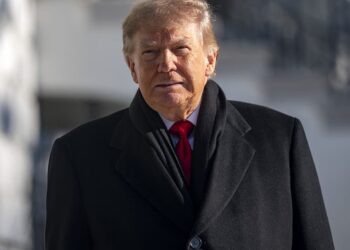
Dr. Reiner is right that the question is not whether presidents deserve medical privacy, but whether the public deserves transparency.
I reviewed every publicly released health summary from both Trump administrations after his recent physical. What struck me most was not what was disclosed, but what was omitted.
The reports repeatedly conclude that the president is in “excellent” or “exceptional” health, yet they provide little data to support those conclusions. Instead, they describe advanced imaging, extensive specialist consultations and preventive testing without explaining why those studies were performed.
Executive physicals need not mirror routine primary care, nor should every medical detail be made public. But there should be a bipartisan expectation of a standardized minimum disclosure: vital signs, medications, major diagnoses, clinically significant imaging, laboratory trends and, importantly, the reason for nonroutine testing.
The issue extends beyond any one president. Public trust is strengthened not by optimistic summaries but by standards that outlast any administration.
Luis E. Seija Boston The writer is a clinical research fellow in the division of gastroenterology at Massachusetts General Hospital.
Allow Video in the Supreme Court
To the Editor:
Re “Post-Pandemic Supreme Court Has More to Say” (front page, Aug. 18):
Adam Liptak’s article was informative about how argument procedures before the Supreme Court have changed over the years. Not mentioned, however, is that while live audio of the arguments is now available, cameras to show the proceedings to the public are still not allowed.
Wouldn’t it be nice, and useful, to finally allow the public to not only hear the arguments but see them as well?
Barry Evenchick South Orange, N.J.
The post Democrats Need a Candidate Who Inspires, and Can Win appeared first on New York Times.