When Lebanese and Israeli officials sat down in April for their first direct talks in decades, Lebanon’s leaders called it a breakthrough: a chance, finally, to reclaim some control over the country’s fate after Hezbollah had dragged it into yet another war with Israel.
But four months and seven rounds of negotiations later, there is little to show for it. The standstill is a blow to Lebanon’s president, Joseph Aoun, who took office last year with a popular mandate to wrest power from Hezbollah.
Mr. Aoun, elected by Lebanese lawmakers, pledged to restore the state’s monopoly on arms and curtail Hezbollah’s political sway. The government he formed spent much of last year making headway on that promise, working to strip Hezbollah’s influence from the country’s international airport, the commercial port in Beirut, and the banks, all used to smuggle in weapons and cash.
When Hezbollah fired on Israel in March in solidarity with Iran, setting off another all-out war, the shortcomings of the efforts to bring the group to heel were laid bare. However much the Lebanese state had chipped away at Hezbollah’s influence, the group could still drag the country into war.
Israel insists that its forces will remain in the large swath of southern Lebanon seized in this war until Hezbollah is disarmed. On Saturday, Lebanon’s National News Agency reported a series of Israeli airstrikes and demolitions overnight and into the morning in towns and villages around the south. Israeli forces have carried out demolitions and strikes nearly daily for about four months in areas they occupy.
Hezbollah has denounced the talks, saying it will not consider surrendering its weapons until Israeli forces withdraw from Lebanese territory. And while Lebanese officials say they want to eliminate Hezbollah’s military might, the government has little ability, if any, to actually do so.
Now, after the latest round of Israeli-Lebanese talks sputtered to a close this month, there is a growing consensus that diplomacy has reached a deadlock and that, despite its sweeping promises, the Lebanese state is back to where it has been for decades: stuck.
“They are at complete loggerheads,” said Paul Salem, a nonresident senior associate with the Center for Strategic and International Studies. “It’s not a dead end, but it’s in a stalemate right now.”
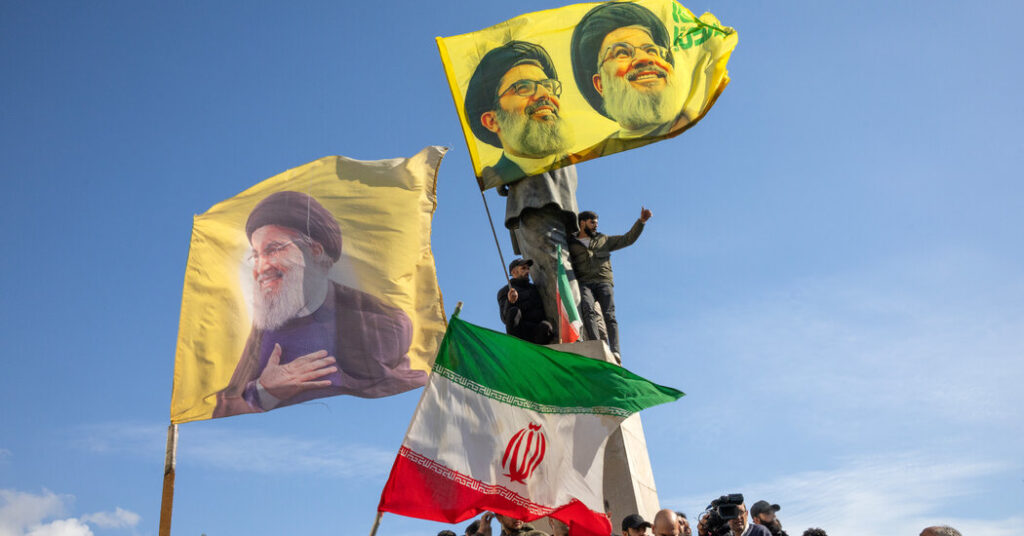
For decades, Hezbollah had an iron grip on the Lebanese state. With an arsenal far greater than that of the Lebanese Army and a loyal support base among Lebanon’s Shiite Muslim community, the Iran-backed militant group served as the ultimate arbiter of power in a country whose government has been long crippled by dysfunction, corruption and political paralysis.
But after Hezbollah’s previous war with Israel ended in a cease-fire in November 2024, the group appeared battered and the country seemed exhausted. For the first time in decades, there was a groundswell of public support for reclaiming power from Hezbollah.
In the months since all-out war resumed in March, Hezbollah and the government have each sought to demonstrate that they alone really hold power in Lebanon. Each, in its own way, has tried to show who can best end the war and roll back Israel’s new occupation.
In June, the United States and Iran signed a preliminary deal to suspend their conflict, and that also included a halt to fighting in Lebanon. It was evidence, Hezbollah argued, that only its patron, Iran, could bring the war in Lebanon to an end.
The Lebanese government has since sought to demonstrate it plays the leading role, embarking on direct talks with Israeli officials. Given the countries’ long history of animosity — neither had ever formally recognized the other’s sovereignty — analysts say the meetings themselves marked a significant step forward.
“That the talks exist, that the Lebanese state and Israeli state said we want to and will continue to talk directly to each other, that’s an important thing to have in the regional toolbox,” Mr. Salem said.
The talks led the two sides to agree in principle to a phased arrangement: Israel would withdraw from pockets of southern Lebanon as the Lebanese Army moved in to secure the areas and keep Hezbollah out of them. But the initial rollout has slowed in recent weeks, with Israel refusing to expand the program further and arguing that the Lebanese Army’s efforts have fallen short.
That has left southern Lebanon trapped in the same simmering conflict it has been stuck in for months. Israeli forces have continued to demolish buildings and infrastructure in the villages they now occupy. Hezbollah has continued to fire on Israeli forces in Lebanese territory. And hundreds of thousands of Lebanese are still displaced from their homes.
“People want to move past this chapter with so many conflicts with Israel, conflicts that are seen as serving an outside agenda and not the Lebanese’ interests,” said Mohanad Hage Ali, a senior fellow at the Carnegie Middle East Center in Beirut. “But now talks have stalled, people are waiting. There was a window of opportunity that people fear is closing.”
The post Who Has the Last Say in Lebanon? Hezbollah and the State Both Say They Do. appeared first on New York Times.