Trump administration officials have hailed it as a goal of the Make America Healthy Again movement: barring people who receive food assistance from spending that money on soda. Does it work?
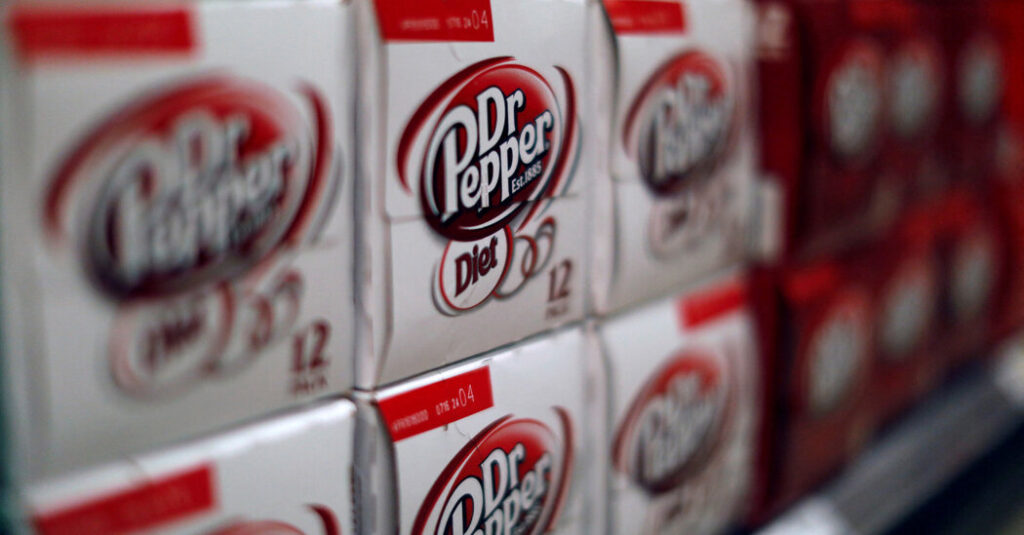
Since the start of the administration, 23 states have received permission from the Agriculture Department to restrict food stamps from being spent on soda or other sugary drinks. Eight states have soda bans in effect, another five have had their policies blocked by a court ruling, and 10 are in the process of implementing them.
Early indications show these restrictions, once in place, have modestly lowered overall purchases of soda among recipients of the Supplemental Nutrition Assistance Program (SNAP).
A working paper from the National Bureau of Economic Research analyzed the shopping history of 6,000 SNAP recipients, as reported through Nielsen consumer panels. States with soda restrictions saw about a 13 percent drop in soda purchases among SNAP users, relative to states without the restrictions, in the initial rollout. Water purchases were unaffected over the same period.
Per household, that equated to roughly 24 ounces less soda bought each month, or two standard soda cans.
Although it may seem straightforward that these restrictions would reduce soda purchases, many policy analysts believed they would not. SNAP is structured to cover about 70 percent of a household’s food needs, meaning most SNAP recipients are already paying out of pocket for a portion of their groceries. In states with soda restrictions, people could switch to using their own money for soda.
The people who were most reliant on SNAP to cover their food needs — the top quarter of recipients by this measure — dropped their total soda purchases by an estimated 40 ounces a month. Those least reliant on SNAP, who may be accustomed to paying out of pocket for more of their grocery bills, dropped their total soda purchases by 13 ounces.
David Frisvold, an economist at the University of Iowa and an author of the study, said it wasn’t clear if the results would hold over the long term.
“I think an important question is, Will it be sustained over the course of a year? Two years?” he said. “Or will traditional economic theory win out, and people will figure out ways to manage all their resources in such a way that they can purchase whatever it was they wanted?”
Fetch, a rewards app, found similar results in its data. Fetch users upload grocery and other receipts to receive coupons, allowing the company to track payment methods, including SNAP. In the company’s sample, SNAP households spent about 12 percent less on soda in the first three months of 2026 compared with the same period the year before. Water, coffee and juice purchases did not decline.
Trump Administration: Live Updates
Updated
- Trump travels to Myrtle Beach, S.C., to rally for Darline Graham at 7 p.m.
- Trump accounts get an unlikely endorsement from Gov. Gavin Newsom.
- Vance travels to his hometown, Middletown, Ohio, to speak about the economy.
The policy idea has had some bipartisan support over the years. When Jerold Mande, a nutritionist, served as an official in the Agriculture Department during the Obama administration, it tried several times, without success, to start a pilot program to test the efficacy of soda restrictions.
“If you’re trying to change the diet quality in America, not just with people on SNAP but for everyone, the federal government’s biggest lever is SNAP,” he said.
Most — but not all — of the 23 states that have received permission for soda restrictions from the Trump administration are Republican leaning.
In June, a federal judge struck down the restrictions in five states, saying the Agriculture Department had tried to change Congress’s definition of “food.” But the department’s secretary, Brooke Rollins, signaled it would work to bring the soda restrictions back. The department did not respond to requests for comment this week.
The durability of these pilot programs could be limited. All have expiration dates, and would have to be renewed by whichever party is in charge of the department when they expire.
Lisa Harnack, a professor at the University of Minnesota School of Public Health, said it would take more time to understand the policy’s effects. She pointed to the unknowns of what food or drink is ultimately being substituted in people’s diets instead of soda. And she noted that the purchase data doesn’t cover everything, such as drinks in restaurants.
“I wish it had been done in a smaller number of states with a more rigorous evaluation plan,” Professor Harnack said. “The rigor of the evaluations that states are doing is unclear.”
Hilary Seligman, a researcher at the University of California, San Francisco, said she was not surprised by the paper’s finding, but she was still skeptical of recent changes to SNAP.
“If this was happening in isolation from a public health perspective, I’d be quite positive about it,” she said. “But it’s happening with a whole host of other changes that increase stigma and increase disenrollment from the program.”
The Trump administration has tightened rules for SNAP eligibility, resulting in 5.6 million fewer enrollees compared with last year, down to 36.6 million in May.
Karylle Silva of Lake Charles, La., says the restrictions in her state, which also cover candy, have changed her shopping. Joyba Bubble Tea, which Ms. Silva says is her daughter’s favorite treat, can be bought with SNAP at Target but not at Walmart, unless she uses the Walmart app. Hostess cupcakes can be bought, but not cupcakes from a grocery store’s bakery.
“I had to abandon things in the cart after I paid, because it says I owe like $5 for something that used to be covered, and it’s not covered anymore,” she said.
The post Some States Banned the Use of Food Stamps to Buy Soda. Did It Work? appeared first on New York Times.