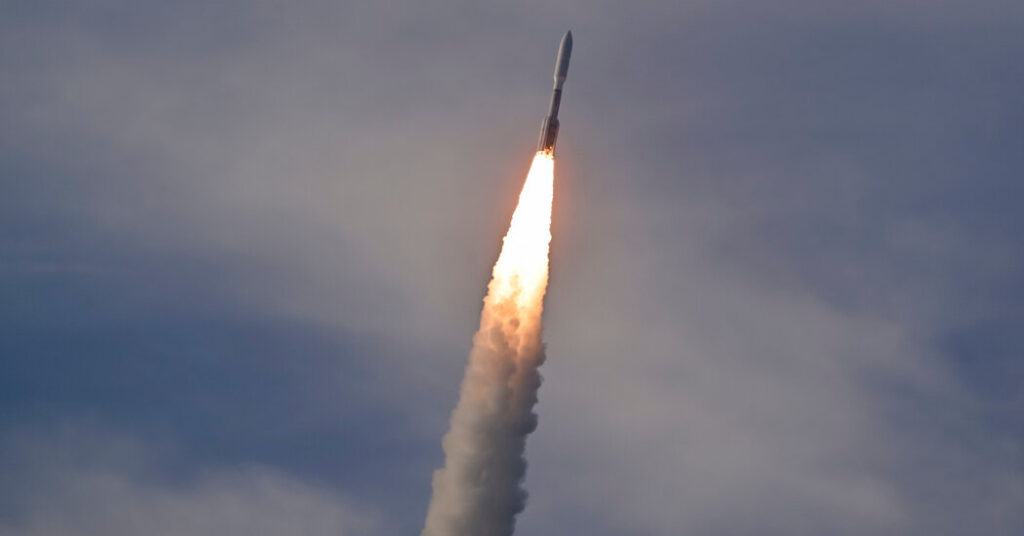
The Trump administration on Thursday released a space policy aimed at greatly increasing the number of rockets going up to space as well as the number of vehicles coming back down.
The changes to a document known as the National Space Transportation Policy aim to “reinvigorate America’s leadership in space transportation” and enable more than 1,000 rocket launches and spacecraft re-entries per year on American soil by 2030, the White House said.
In 1994, the Clinton administration was the first to issue such a policy, and it was last updated in 2013 by the Obama administration. The Trump policy sets out similar goals, but continues a trend toward seeking greater involvement of commercial companies in the endeavor.
The new policy puts greater emphasis on developing additional locations for rockets to launch from and for spacecraft to land.
It also calls for plans on how to integrate management of space traffic with air traffic control, and how to enable launches within 48 hours of high-priority civil and national security missions.
Reflecting the rise of entrepreneurial space companies like Elon Musk’s SpaceX and Jeff Bezos’ Blue Origin, the space policy also calls for more commercial involvement in efforts to reach the moon and Mars. It also puts a greater emphasis on selling American capabilities to other countries.
Phil Larson, who served as a space adviser in the Obama administration and who helped write the 2013 version of the policy, said many of the goals of the policy remain the same, including buying commercial services when practical, modernizing launch sites, streamlining regulations and encouraging private investment.
“The new policy mostly updates it for today’s scale and maturity,” Mr. Larson said. “I’d call it evolution rather than a major policy reset.”
He added that not much would necessarily change quickly. The policy notes that implementation depends on current laws and requires financing from Congress.
The post Trump Announces a New Policy for a ‘Golden Age of Space Transportation’ appeared first on New York Times.