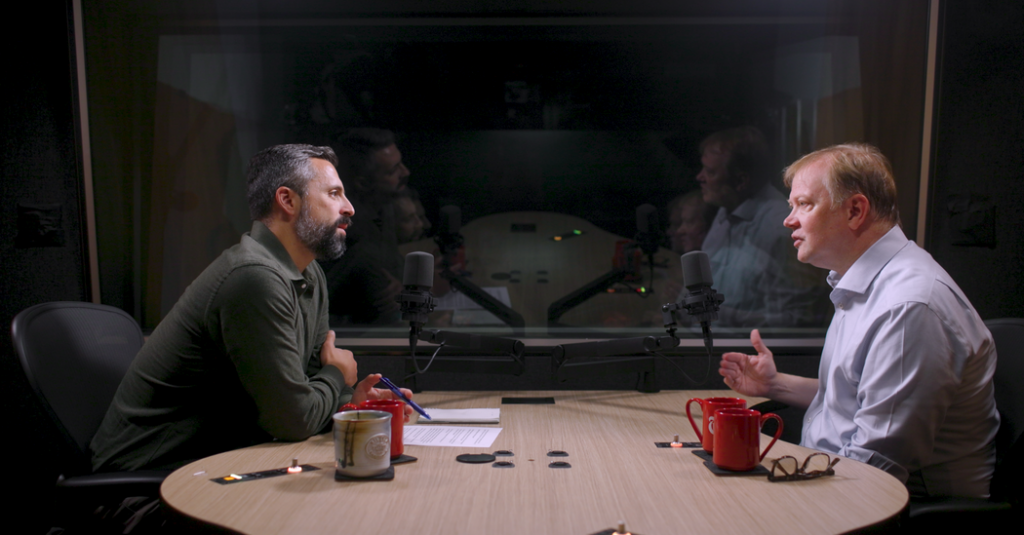
This is an edited transcript of “The Ezra Klein Show.” You can listen to the episode wherever you get your podcasts.
The biggest economic story in the world right now is China’s growing dominance across advanced manufacturing sector after advanced manufacturing sector — from electric vehicles to batteries to solar panels to software like A.I. and open models, where they’ve become a world leader.
What is happening here is very different than what we call the first China Shock, when China became a big exporter of things that were not that important to advanced economies — things that mattered maybe for particular communities, for many jobs, but weren’t the frontier of economic growth.
But now it’s different. China is very much at the frontier, and they’re dominating it, and that is going to transform geopolitics. It is going to transform the politics, many say of European countries, where China is pushing them out of manufacturing that has been the absolute cornerstone of their economies.
So I think understanding this second shock is about as essential to understanding economics and geopolitics in the coming era as literally anything is.
Brad Setser follows this about as closely as anyone on Earth. He is a senior fellow at the Council on Foreign Relations. He has served in top trade and economic roles in the Biden and Obama administrations. So I wanted to hear his perspective on this.
Ezra Klein: Brad Setser, welcome to the show.
Brad Setser: Thanks for inviting me.
You’ve been arguing that the world economy is going through a China Shock 2.0.
For people not familiar with this, what was China Shock 1.0?
In 2002, there was a big jump in China’s exports. At the time, it was mostly in relatively low-end manufactured goods: furniture, household appliances, clothing.
I think there was a sense, in the U.S., that these were not the industries of the future. But I think what China Shock 1.0 academic literature shows is, even though these weren’t the industries of the future, they were still employing a meaningful number of Americans, often in the South, often in the Midwest.
The China Shock is how that has impacted the local — not national — labor markets that had the most overlap with China. And this has a short-run negative effect on parts of the economy.
When the local factory closes down, local real estate prices turn down, and the people who sell lunches to the factory workers have fewer people to sell to. So it becomes a generalized downturn in those communities.
That was clearly underestimated. And then people have done all sorts of further studies, which correlate the areas that have the most exposure to the Chinese export wave to deaths of despair to political realignments ——
Voting for Donald Trump.
Voting for Donald Trump.
But the basic idea here is that you have a bunch of places, in the Midwest and the South, primarily, that are manufacturing towns. Their factories are outsourced to China or the goods are outcompeted by China, and basically, the community goes into sharp decline.
Correct.
And we never have a very good policy answer.
I mean, I think at the time, we didn’t even try to have a policy answer. But it is actually conceptually difficult to deal with the decline of a small town when its big industry falls away.
Let’s live in that debate for a minute. What is the argument about whether this rapidly accelerating level of trade with China is good or bad for America?
I think the overarching view at the time was that China’s integration into the global economy was more or less inevitable, and that the negotiated terms of entry into the W.T.O. provided a reasonable framework for China’s entry and full integration into the global economy — that trade was fundamentally good, that there would be shifts across industries. People would leave their jobs in import-competing parts of the economy but generally move to exporting parts of the economy or into the services sector — and that we had a fairly flexible labor market.
And by the way, integration was seen as a positive force for China’s political development. It might lead to some forms of liberalism within China. It might moderate China’s global ambitions. The commerce would tame the dragon, so to speak.
The other dimension of the argument — as I’ve heard it and remember it — is that if China wants to make cheap goods for Americans, people like low prices, and they like low inflation. Like, why would we fight this gift?
I mean, in particular, because the industries that were going to China were not the source of top, cutting-edge technology at the time and not generating a lot of high-wage jobs.
So there was, indeed, a sense that consumers would benefit, and did benefit, from cheap goods, and the adjustment would not threaten the core strengths of the American economy. I think that was the belief.
I would put a tiny asterisk around the cheap prices thing. Unambiguously, China’s explosion of exports lowered the price of manufactured goods. If you look at the overall evolution of consumer prices during this period, there’s not much of a change.
China’s integration into the world economy led to huge amounts of investment and ended up putting a lot of upward pressure on commodity prices. Oil prices really take off during this period, and that’s an offsetting change. You’ve got to always look at both sides of the ledger here.
Yeah. So when you’re going to Target or Walmart, and you’re buying clothes and toys, I mean, they really are cheaper in real terms since I was a kid. But you’re saying that what we’re not seeing there is the price of oil, the price ——
Yeah. It costs you more to fill up your car to get to Target. But once you got to Target, it was cheap.
OK. So “China Shock” — the reason we use this term is that this whole argument got re-evaluated. Which parts of it would you say panned out? Which didn’t?
I think the extent to which China would become a big export market was overestimated. China was never fully open to U.S. exports.
One of the more striking things is that, after 2004, two years after China’s W.T.O. entry, China’s imports as a share of its gross domestic product start to fall.
And then it was not expected, in a sense, that China would succeed as much as it did while retaining the core aspects of its different economic system. The sense that China would have to converge, have to become more like us — maybe politically, but certainly economically — the state would wither away, state-owned enterprises would be privatized.
You know, 20 years after China joined the W.T.O., the thinking was that it would kind of look like the U.S., or maybe look like Europe. It wouldn’t be distinctively Chinese. And that didn’t pan out.
What is “distinctively Chinese” about the Chinese economy?
That’s a hard question.
You opened the door, man. [Laughs.]
Yeah, I did. I did. One thing that is distinctly Chinese — which is not what you would normally think about in a Communist-led society — is that China actually has a rather thin system of social insurance.
It doesn’t actually collect that much tax. Personal income tax collections are, like, 1 percent of China’s G.D.P. It’s 8 percent here.
If you’re not collecting personal income tax, you’re not going to have the resources to be very generous in helping low-wage work. There’s nothing like our earned-income tax credit, where you get a subsidy — basically, money back from the government — if you don’t get paid that much. China’s taxation system relies heavily on taxes on consumption. It’s really quite regressive. It hits poor Chinese workers much more heavily.
It also does not have a unified national labor market. The so-called hukou system basically means that you’re supposed to work where you were born. You can migrate and leave, but when you migrate and leave, you give up certain social rights.
You’ve got a financial system that is fundamentally state-controlled, heavily banked. The Wall Street part of the Chinese economy exists, but it’s much smaller.
The old-fashioned put your money on deposit in a state bank is very much the dominant mode of savings. And then the state banks intermediate, so they can direct credit toward the goals of the party, toward the goals of the government — sometimes under the direction of local government, sometimes under the direction of the national government. The commanding heights of the Chinese economy are still primarily in the hands of centrally owned, state-owned enterprises.
So this is why it’s sometimes difficult to sell to China. You want to sell soybeans. Generally, you have to sell to the state oilseeds monopoly. You’re not selling to an individual soybean crusher. Selling airplanes to China, you’re selling to the big three state airlines that act as a coordinated block. Telecommunications, you’re selling to three state-owned companies whose executives are picked by the party, who take direction centrally.
And then, on top of that, when the government sets a policy direction — say we want to have a semiconductor industry. Ambitious provinces will say: Well, we should be the province that builds up China’s national champion. Here’s an ambitious guy or girl. Looks like they’ve got a good idea. Here’s a whole bunch of money. We’re going to subsidize your factory. Maybe we’re going to take equity. We’re going to make sure you get bank loans.
And a whole bunch of different firms spring up in that sector with support, and they start competing very intensely.
So it’s a mix of state-directed and intensely competitive.
I want to draw something out in that description, which I thought was great, of how their economy is different.
China has gotten a lot richer, and less of that wealth than you might have thought has gone into things like a universal health care system, a social insurance system for the elderly.
America got richer. We built Social Security, Medicare, Medicaid, welfare, earned-income tax credit, child tax credit.
China has gotten richer because it has not allowed a lot of that. And then, because you also have such power over the financial system, it has just been able to move much more of that money into subsidizing production innovation in new economic areas that it wants to dominate.
The basic retirement benefit that anyone in China gets, no matter what your residency status, is like tens of dollars a month. It’s really, really trivial. The health insurance system — people aren’t confident that, when they walk into the hospital, the costs will be covered. And frequently, there are a lot of upfront payments.
And some people also say that the one-child policy and an incredibly competitive marriage market have made it a requirement for young men to save if they want to get married.
All this has produced an economy that just saves an incredible share of its national income — over 40 percent of G.D.P. — uniquely high. That means that the state financial sector is just flush with money.
So part of it is that China has the capacity to direct investment through the state. Part of it is just that it can finance, out of its own savings, levels of investment that no other country has matched.
This is all true through China Shock 1.0. The view was maybe more of it would change as time went on, but it didn’t.
So what is China Shock 2.0? When do you date it? How do you describe it?
I date the start of China Shock 2.0 to the collapse of China’s property market in 2021. Now we all know there was an awful lot going on in 2020 — the pandemic. Xi Jinping gets concerned that there’s too much investment in property — probably rightly so — that there were empty buildings piling up.
He introduces a “three red lines” policy, which sort of restricts finance for the property sector. It succeeds too well, and the property market basically tanks.
Then, in order to offset the economic impact of this fall, Xi more or less gives the banking system guidance to lend, to finance, a new wave of manufacturing investment, and particularly manufacturing in more cutting-edge sectors — electric vehicles being the leading example.
But, in general, it’s investment in any sector where China has import dependence. And for Xi, that’s a vulnerability.
So he really directs the state’s financial sector and the party to throw money into building out sectors where China has an import dependence.
The effect is that China moves back to growing on the back of net exports. China’s domestic economy is growing 3 to 4 percent. You’re getting 1.5 to 2 percentage points of growth from net exports.
That’s a lot of statistics, but what it basically means is that China is exporting a ton of cars. China is supplying the entire world with batteries. China is now the leading exporter of tunnel-boring machines. You name the category of machinery, China’s exports are growing. It’s no longer just consumer electronics.
So China starts getting growth, a big part of its growth, from an expanding trade surplus.
Imports stop growing. This is, I think, one of the key factors around the second China Shock. Normally, you would say imports would grow with domestic demand. Chinese imports basically aren’t growing.
So China is selling ever more to the world, but it is not buying more from the world.
Exactly. And Chinese exports, particularly in the years right after the pandemic — after the currency has depreciated — start growing at two times to three times the pace of world trade.
So China’s imports of autos used to be about a million cars a year. That’s now down. It’s now under half a million cars a year.
And over the same period, China’s exports of cars have gone from a little under a million to now 10 million in the space of five years. Just a stunning shift in a range of industrial sectors, and heavily industrial sectors, that compete with Japan and compete with Europe.
And so, you sort of see bad economic performance in the manufacturing heart of Europe, in particular. A little less so in the U.S.
So I think this point about Europe versus the U.S. is really interesting. In one of your pieces about this, you wrote:
The U.S. share of global output has been remarkably constant over the last 40 years. China’s rise, though extraordinary, has statistically come at the expense of the other Group of 7 countries.
Can you talk about what that looks like? Let’s use Germany as an example.
Germany didn’t move as heavily into software platforms. They retained a more traditional manufacturing sector and focused on exports, including to China.
So Germany, after the global financial crisis, is exporting close to 3 percent of its G.D.P. to China in manufactured goods.
That reflects the fact that Germany remained a very manufacturing-centric economy. The tunnel-boring machines, the high-end sedans, a lot of fancy S.U.V.s. Also aircraft — the Airbus A320 is made in Hamburg.
All these industrial sectors tended to be industrial sectors that had a lot of overlap with China.
And then you throw in the fact that the E.V. industry just took off in China. A lot of government support. The German companies made their own efforts to make E.V.s in Europe, but those never took off globally in the way that China’s E.V. industry has, nor are they cost competitive.
So what you see is that German exports to China have fallen by about a percentage point of German G.D.P. And what was a strength — Germany benefited from selling to China right after the global financial crisis — became a weakness.
I want to focus on another dimension of this that’s kind of inside the story you’re telling, which is: China Shock 1.0 — it’s lower on the value chain of manufactured goods. It’s clothes and consumer calculators and all these things. The story that was told was: We don’t want these industries in the long run.
What happens in China Shock 2.0 is that China is starting to dominate industries on the technological frontier. You mentioned electric vehicles, you mentioned batteries. You could talk about solar panels. We could talk about A.I., where they’re basically neck and neck with us.
How did they go from low to midlevel manufacturing to the absolute frontier — in batteries, solar, etc. — so quickly?
There was certainly something in the air in China around manufacturing. The critical mass was built up, and the foundations were laid.
And I think it’s a complicated story. If you think about electric vehicles being one of the famous sectors: What do you need to make an electric vehicle? You actually need to be able to make a car. It is a smartphone mixed with a car.
So how does China learn how to make good cars? Well, a lot of foreign companies come in. So Ford and G.M. and V.W. all had to partner with, generally, Chinese state companies to produce in China. That was just the rule. And they didn’t really have much of a choice because then China had a 25 percent auto tariff for a very, very, very long time.
So if V.W. is on the other side of the tariff with a joint venture, J.V., partner, they’re going to have a big cost advantage. So G.M. also had to jump the tariff. Toyota had to jump the tariff. Everybody does the J.V.s.
And then you want your parts suppliers to come and produce high-quality parts, so they come to China. Well, guess what? Once they learn how to make parts in China, they probably are making parts at a much lower cost in China because China is relatively cheap, and you’re starting to use those parts to export to the world.
And then local competitors spring up, so China ends up having world-class automotive parts production well before its companies suddenly master E.V.s.
China liked the results of the joint venture, but they didn’t completely like the fact that, for a while, most of the Chinese auto market was being met by joint venture output. The indigenous Chinese-owned companies were not all that competitive.
There was a sense that the auto manufacturers who had a J.V. were fat and lazy because they were too happy producing through their J.V.
So there was a sense: OK, well, this sector was still a little too foreign dominated.
And then there was a correct sense: Well, we should try to take advantage of the transition to E.V.s.
So China makes it a priority. When China makes something a priority, credit is available to local firms that want to enter the E.V. market. The state banking system gets mobilized. Local governments start throwing money at it. You get a lot of small companies springing up. China supports the development of an indigenous local battery industry.
Then Tesla’s market entry is also viewed as significant. When Tesla enters, it’s not required to do a J.V., but in order to qualify for Shanghai government local support, it has to meet a lot of local content requirements, so a supply chain that serves Tesla can also serve others.
And when China sets up its consumer subsidies, in order to qualify for that subsidy, the car initially had to be made in China. The battery had to be made in China. That supported not just the Chinese battery industry but the Chinese-owned E.V. industry. And then you get the E.V.s kind of just taking off.
And so, all of a sudden, you get an explosion that has been built on a foundation from the migration of Western parts makers copying emulation and then an awful lot of industrial policy.
Something people may have heard is this argument that China has overcapacity — that this overcapacity is a crisis. This is related, maybe, to trade imbalances.
I don’t think that makes a lot of intuitive sense. Like, why is that a problem if they produce more cars than they buy?
How would you describe the overcapacity issue?
To me, the most coherent way of defining the concern about Chinese overcapacity is a set of sectors where China produces more than its domestic market can absorb. And where, globally, China is adding capacity in a sector that, in aggregate, already has more capacity than there is global demand.
So in batteries, for example. China’s ability to make batteries is a multiple of current global demand. So there’s just no scope for anyone else to enter the market.
I think the concern in a sector like autos, where there is overcapacity globally, is that there are more auto factories in Europe and in the U.S. with capacity than there is demand. So many factories are operating at low levels of capacity or being underused.
And there’s overcapacity in China. A lot of Chinese factories are not being fully used, and China is adding to its capacity. So China has the ability to make 55 million cars, which is well over half, close to two-thirds, of world demand.
And that is growing. And so, China’s expansion necessarily means the exit of capacity elsewhere, when there’s already spare capacity.
Now you can say that’s just the operation of a market: New entrants are going to displace old capacity. But it does feel different when a closed market suddenly is adding capacity to an industrial sector, where, in aggregate, there’s plenty of capacity, and they’re squeezing margins, squeezing production out of the rest of the world.
One thing I’ve heard people ask is: How is this different from America?
America rises as a manufacturing juggernaut from being a much more modest economy when the country was founded. It does, over time, displace great companies from other countries. It does lead to competition that is harder for other countries.
But I do think, economically, America’s rise — not in every respect, but broadly — is considered to have been a win-win in a lot of ways.
So what is different about the rise of America as a manufacturer — like the rise of Detroit, the rise of all these dimensions — from what China is doing?
So our story is much more one of industrial investment for our own rapidly growing internal market. And we only really became a big exporter after World War II, when the world was on its back — and that doesn’t last that long.
China’s industrial rise is much more tied to exporting. And it’s a much bigger exporter than we ever were, except for that brief period after World War II.
One argument here is simply that China is winning — they’re outcompeting the world pretty fair and square here. And if the world doesn’t like it, it needs to build better cars, build cheaper solar panels and create stronger supply chains.
All this talk of China Shocks and a China problem is just a way to whine and keep China down, and there’s no problem here. Like, it would be great to have cheap Chinese electric vehicles. It’s good for the world and the climate transition to have cheap Chinese solar panels.
How do you take that argument?
Look, if your only goal is maximizing benefits to consumers in the short run, you should certainly import Chinese E.V.s, Chinese solar. Why not? Open economics says: Buy from whoever is cheaper, and then the competition will raise everyone else up.
I think that misses a few things. One, it misses the shock that happens to our economies if traditional — even traditional but still kind of cutting-edge sectors — disappear.
China could supply, out of the capacity that it has already built, the entire European auto market — all of it, 10 million cars, no problem. That’s just giant compared to the global market.
If an industry suddenly goes away, you have all the China Shock 1.0-type effects: Communities that grew up around building cars will just kind of disappear.
Now in the China Shock 2.0, you’re not going to be moving to an export sector, because no one is exporting to China. So you’re going to move to, necessarily, a services sector. You’re going to become less focused on producing traded goods.
Now you might say: Who cares? On the other hand, in Europe, an awful lot of research and development, an awful lot of innovation, actually has emerged from their automotive sector.
So it’s not clear that these people are going to jump to a more innovative sector. They may jump to less innovative, less well-paid sectors. And in the interim, your economy is going to suffer.
And then, I think, there’s a sense that people have discovered that supply chain dependence can be weaponized. China dominates magnets, rare earths. If you want those magnets, you want those rare earths, you better not tire off China. You better say nice things about China. You better not do what Japan did and say you’re going to come to Taiwan’s defense if something were to happen. You kind of need to respect China if you want access to its supply chain.
That’s the argument that they are making. That kind of dependence scares people.
Finally, I would just say: Look, if you want to emulate China, if you admire China, you like the way China’s electric vehicle industry has developed — it did not develop just by throwing the doors open. It did not develop without industrial policy.
China’s E.V. industry developed behind some of the highest tariffs in the world at the time — 25 percent. Huge local preference. A Chinese-made battery, ideally from a Chinese company, a Chinese-made car. Could be a Tesla, but it was going to be a Tesla made in China, with 90 percent Chinese content.
And then an awful lot of local government support. There are stories of entire factories being built, not by the company but by the local government, to the specifications of the company. So there’s a story of protection and industrial policy that leads to the creation of this sector.
You throw your doors open to China, you’re going to get the cheap cars, but you’re not going to get the E.V. industry. And I think many countries are reluctant to just cede more industrial ground to China.
For a long time, the critique that you heard in American trade debates, most often with China, is that they were a currency manipulator. Then you stopped hearing that as much. I think your view is that this has actually become a bigger part of the story again.
So let’s do this in two parts: What is currency manipulation? Why does it matter?
And then: What has been the roller-coaster — or where are we on the roller-coaster — of Chinese currency manipulation?
Sometimes currency manipulation is just like a currency whose value we don’t like. Which is, I think, how the president sometimes used to use it. He hasn’t been talking as much about it.
But the more accurate way of defining it would be: a country that has an undervalued currency. You can quantify that, and so, you look for a surplus that’s bigger than you would expect, given the underlying characteristics of the economy. Factor 1.
And Factor 2 is government or quasi government intervention in the foreign currency market. So it’s not just the outcome of differences in monetary policy. There’s a government with its finger on the foreign exchange market, buying currency to hold the currency down.
China met both of those definitions, unambiguously, from 2003 to 2012. There was a political decision not to call them a manipulator. Now, during the latter part of that period, they were letting their currency appreciate, so they’re kind of correcting the undervaluation, which was part of the reason they weren’t named.
China is now back through its state banks buying a lot of foreign currency in the market — 50 billion a month, 600 billion a year.
So there’s a much clearer case that China is manipulating now than there was in the past. Trump hasn’t taken an interest in this. The Europeans, though, have. And so, I think, what you’re seeing is this shifting from being an American debate to being a global debate.
When we were preparing for this conversation, something I found myself thinking about a lot was the question of whether or not it matters if the competition is fair.
I’d say, for a long time, the narrative — that at least we were comfortable with in this — was a very procedural narrative about China betraying the principles of free trade. They are a currency manipulator that is keeping their currency artificially cheap in order to make their exports cheaper.
Or, you know, they’re doing all these industrial subsidies. And are you really supposed to do those under the World Trade Organization?
And it’s a very, sort of, liberals-who-believe-in-the-system way of thinking about the problem — that the problem is that China is cheating. And I’m not saying cheating can’t be a problem, but there are clearly quite a few places now where China is just winning — or they’ve gotten to a place where they can win.
So my question is: Is the problem that some of China’s advantages are unfair? They’re back to currency manipulation, their currency seems artificially cheap.
Or is the problem, from a national interest perspective — from an interdependence and weaponization perspective — that for Germany, Europe, the United States, it would be a mistake to just allow their industries to get wiped out? That the question here is not an abstract commitment to free trade but what creates a healthy national ecosystem?
Look, I increasingly lean toward the: We just want these kinds of industries. We don’t want full-on dependence. We don’t have to rely on arguments about the procedural violation of rules — which feel a bit dated in a world where we, ourselves, are clearly not following the most basic of the rules.
And the rules have a lot of complexity. You’re allowed to subsidize under the rules. You’re not supposed to subsidize if it’s to substitute for imports.
Well, if you subsidize a sector, and everything in that sector previously was imported, are you import substituting or are you just subsidizing that sector? Is a government-guided fund that puts money into private equity funds and venture funds to invest in chip manufacturing — is that a subsidy? Yes and no. It may not be a subsidy under the rules.
So the rules themselves are contested and not uniformly followed. And to some degree, in certain sectors, I think we care much more about outcomes than about the rules. That’s obvious in sectors of national security importance.
So a lot of the rare earths — famous sector — have very, very direct and important military applications. We probably should not, even if China played completely fairly, want to be 100 percent dependent on China for the supplies of those key materials.
And then you kind of have to work further from that. Where does the line come about? What do you care about? Where do you just care about the outcome? And where are you going to rely more on arguments around procedural fairness?
And then, I think, on the flip side, China itself clearly cared about the outcome, not the procedural fairness.
What would you say the Trump administration, across its two terms — and I realize they’ve been different in important ways — has gotten right about China? If Trump has been disruptive on how America has thought about anything, it has been China.
And then what do you think they’ve gotten wrong in either their China orientation or their China policy?
There is something a little strange about Trump’s first term, because the first term — 2017, 2018 — it’s like the U.S. political system reacted to the China Shock five to 10 years after the first China Shock happened. So the timing was maybe strange, but a lot of the policy direction, I would agree, was more or less right.
I think it was right to broadly say that the W.T.O. rules, which were thought to be constraining China, had become a constraint on ourselves. China was really good at finding ways of achieving outcomes by living on the edge of the rules.
I think the targeted first wave of tariffs was actually in sectors where it was reasonable, generally speaking, to have tariffs.
And you’re talking here in the first term.
First term, yeah. So, in the first term, the tariffs were basically on China. In the second term, the tariffs were basically on everyone. And I am much more comfortable with putting tariffs on China, particularly now, because China’s economy has shifted dramatically and has become much more export oriented, much more of a competitive threat now than it was then. So I think Trump 1.0 got that bit right.
Robert Lighthizer — the United States trade representative in Trump’s first term — was the first step in moving us from the W.T.O. consensus to a world of reciprocal interdependence, supply chain vulnerability, supply chain warfare — a world where everything is using a more militarized vocabulary, even around economic exchange.
Trump 1.0 was still pretty unilateral. There was a famous story, I think, in another newspaper, where President Macron asked: Well, maybe we should negotiate something together.
So they’re negotiating Phase 1, the deal, and President Trump was like: No, no, no, no — we’ve done the tariffs, all the benefits should go to us. This has to flow to us.
And so there was an element, in the first term, of unilateralism, which obviously becomes unilateralism on steroids over time.
Before we get to Trump 2.0, it’s worth talking about Joe Biden. Because there’s a lot of Democratic criticism of the way Trump talks about China, to some degree of Trump’s tariffs on China.
But the Biden team comes in, they largely keep the tariffs and in some cases, expand them into new areas. They begin doing more to limit the export of what they consider to be strategically important technologies, like advanced chips, to China. They put higher tariffs on E.V.s, and they do a lot of industrial policy that actually looks like the way you’re describing Chinese industrial policy.
So the Inflation Reduction Act is trying to build a domestic supply chain for things like solar panels and wind turbines, and now they’re more OK with it being in friendly countries, too. But there are a lot of buy-American standards on all of this.
And they begin talking a lot in terms of strategic technological competition. A.I. is a big thing for them and the A.I. competition with China.
How do you think about the way the Biden administration approached this and both tweaked but didn’t upend the Trump 1.0 approach?
It probably, in my view, at least, didn’t go far enough. It wasn’t just clean energy, although that was certainly a big focus. It also included semiconductors. And in semiconductors, at the time, the concern was dependence on Taiwan, which was vulnerable to pressure from China. Certainly vulnerable.
It would put the U.S. in a difficult position if China were ever to put an embargo on or attack Taiwan. And at a certain point, the U.S. just made a decision that we did not want China to have access to the world’s best — certainly not the ability to make the world’s best — chips. Too many risks associated with that.
I think that was the right decision, but it unambiguously was viewed by China as a directly hostile act. And I think if someone had done that to us, we would have viewed it as a directly hostile act.
So it put us into a world, an unambiguous world, of rivalry and competition. There is no way China is not going to try to engineer us out of their chip supply chains. That has become a national priority. And we are trying to reduce our vulnerabilities to Chinese economic coercion at the same time.
But it didn’t really go far enough in critical minerals, rare earths. I mean, there was plenty of talk about it, but there wasn’t enough action. Not enough on active pharmaceutical ingredients, where either the medicine or the key chemical precursors are almost 100 percent sourced from China.
So I think it was a step in a necessary direction. It was controversial because industrial strategy, industrial policy, for a long time, the thought was that was something other countries did. It wasn’t something that America did, and it wasn’t something we’re necessarily very good at. And in some cases — like rare earths and magnets, like active ingredients — it means finding ways to incentivize production in sectors where you know you can’t compete with China on cost.
That then brings us to Trump 2.0.
How would you rate what they have done? Where has it hit the right balance, and where has it been off?
In general, I have noted many times that I like Bob Lighthizer’s trade policy, that is, Trump’s first term, better than I like Donald Trump’s trade policy, that is, Trump’s second term.
Lighthizer was careful to only threaten things that the U.S. economy could sustain. So the tariff level was set at 25 percent, which, yeah, people didn’t like paying it, but you could afford to pay it. He didn’t cover all of trade, so there was always a little more trade you could bring into that tariff.
Trump had a theory of the case in his second term, which worked for most of the world but didn’t work for China. And the theory of the case is: Well, trade is rigged against us. We need to raise our tariffs, and you need to lower your tariffs, lower your barriers to U.S. exports, to put trade on a more fair footing. You shouldn’t, in other words, retaliate for our tariffs.
China retaliated. China said: This is coercive.
Plus, China knew they were going to be in the cross hairs. Xi did a good job of getting ready. He’d spent four years plotting this out. So China retaliates. We counter-retaliate. China retaliates some more. We retaliate again, and we push tariffs up to 145 percent.
You might think that gives us more leverage. We’ve completely cut off trade. It turned out to be the opposite. Our economy couldn’t sustain 145 percent tariffs on pretty much everything coming from China.
So the administration was in a position where they needed to negotiate a rollback in the tariffs. There was a rare-earths component, as well. But I think ——
Where China was holding back rare earths, which would cripple our manufacturing.
Yeah, so that was real. But even if China had not done that — even without the supply chain restrictions — the administration knew it needed to roll back the 145 percent tariffs.
The example that I like to give is that, in the summer of Trump’s first year, with 100-ish-plus tariffs, all the retailers who import artificial Christmas trees, which all come from China — think Christmas tree ornaments, think holidays — well, those are things that are actually typically imported during the summer.
Now if you’re paying a 150 percent tariff, you’re going to have to triple whatever your retail price or, you know, something crazy. And the Christmas tree importers weren’t sure, because they’re building up inventory ahead of a future sale, that American consumers would be willing to pay that higher price. So they just stopped importing.
And there are other places where companies were having to pay that price for a part, and that would render their ability to export utterly uncompetitive.
So it was too broad, too high, too fast. It was disrupting the U.S. economy. That was a mistake.
And I think Lighthizer, in his first term, got it closer to right: Don’t ever escalate to the point where you’re putting on tariffs that you aren’t willing to maintain. The other side will realize that you are looking for a face-saving way to pull things back. That was, I would say, Mistake 1.
Mistake 2 was the breadth of the tariffs: Not targeted reasonably by countries. Just everyone got hit with “Liberation Day” tariffs. In some cases, very, very, very high tariffs.
That alienated a bunch of countries that themselves were worried about trade with China. It kind of took away the possibility of building a broader coalition against China. That’s the first problem with these very, very broad tariffs.
The second problem with the very, very broad tariffs was that they ended up being done, to my mind, in kind of irrational ways. We were tariffing, at really high levels, Canadian aluminum. Not that this administration cares, but Canadian aluminum is made in a kind of green way: trapped hydropower in Quebec. It has been part of our aluminum industry since World War II. The bombers were built with Canadian aluminum. There is no national security threat. It is essential to our market. The primary aluminum market doesn’t clear in the U.S. without Canadian imports, which meant that prices just shot up.
And then, the final problem was, hey, aluminum is electricity distilled — incredibly energy intensive and electricity intensive. So it is competing with data centers for power.
Even with the really high tariffs, we weren’t investing more in new aluminum. So it was pure self-harm. Fully on board with limiting imports of aluminum from China, having a more self-contained North American market, but this was kind of silly.
Getting into a trade war with Brazil, when Brazil is one of the few countries where we have a trade surplus, didn’t make sense in Trump’s own terms.
And then — weirdly, because electronics got excluded, chips got excluded, because you can’t penalize data center constructions, right or wrong — the richest companies basically found ways out.
So the highest tariffs, at the end of the day, were on low-end household goods coming from Southeast Asia. So it became more of a Walmart tariff and not a strategic tariff.
I think all of these were just mistakes of design. We ended up with a tariff policy that wasn’t, in the second year of the second term, at all focused on China.
China, basically, got the same deal as everyone else — which was a huge win for them. The most important development is that China showed it can punch back.
Yeah. People worried for years about their unwinding purchases of U.S. treasuries. They didn’t do that. The sense that if this escalated, they had more dependencies that they could weaponize, has been very salient.
I mean, there are multiple places where China has leverage. Ironically, the treasury market turned out not to be one of them. It’s not just that they didn’t threaten it — it has been one of the harder places to weaponize. Partially, because China isn’t buying.
I mean, some people think they’re selling. That’s not true. They have just moved to other custodians. It gets real technical.
But at the end of the day, we actually have a counter if China sells treasuries. The Fed can always buy more treasuries, quantitative easing, than China can sell.
We showed that in 2020. And we actually showed that in 2008 and 2009, when China was selling agencies, Freddie Mac, Fannie Mae, mortgage-backed securities, and the Fed started buying them. It’s maybe not ideal, but we have an alternative.
For the rare-earth magnets that go into weapons systems, unless we have stockpiles, we don’t have alternatives. So it’s actually a more potent form of leverage.
One of the charts, as I was preparing for this, that struck me is that if you look at America’s trade deficit, the world with China doesn’t look that different than at the beginning of Trump’s term.
So in terms of what we’ve been trying to achieve with our various trade wars or trade policies, have we achieved anything? I mean, in Trump’s own conception of the world — manufacturing, trade imbalances — is there progress that they can point to?
Not much. We haven’t grown our exports to China with the deals. Our exports are actually down, relative to where they were. Certainly, down as a share of U.S. G.D.P. from before the trade war.
We have not stopped Chinese industrial policy. We have not generated a structural change in China’s economy.
We haven’t changed the fact that China has agricultural hostages that it takes whenever we threaten: You want to sell soybeans to us, you want to sell beef to us, you’ve got to not tariff us. We have leverage over you.
We haven’t changed that. And we haven’t changed China’s broad trajectory. China is a bigger exporter globally, runs a bigger global trade surplus — not just by small amounts but by enormous amounts.
It’s a more unbalanced economy now than it was when the trade war got started. We haven’t changed our trade deficit in aggregate. We have shifted final assembly for the U.S. market away from China to Vietnam, to Taiwan, to Mexico, but the components are still coming from China.
So I think the main thing you can say that Trump’s second-term trade policy unambiguously has achieved is that it has alienated a lot of allies, because it has not at all been targeted. It alienated the courts, because not a lot of thought was put into conforming to reasonable expectations of what the law allowed. And it generated a bit of revenue.
And there’s an oddness to the first part about allies, to me, because given everything that we were talking about — with the second China Shock being very focused on Europe, among others — you really could have imagined something that was more like a united set of goals between us and Europe.
We all want to protect our auto industries. We all don’t want to be dependent on Chinese chips or China taking over Taiwan, and then, you know, we have a huge chip problem.
I guess the question is: What do you think our goals should be here? What do you think the set of outcomes we are trying to generate should be? Can they be generated, or is there an inevitability to all this, given China’s size, given its manufacturing capacity?
People sometimes talk about where we’re going as having almost an inevitability to it. I’m curious if you buy that.
I do not believe in the inevitability. But I do believe the changes to avoid growing dependence on China from inputs of manufacturers and final goods are quite significant.
Look, I was part of the Biden administration at the beginning. I’m implicated in some of those decisions. And in the early days of the Biden administration, the overarching goal of the trade policy was to avoid a trade war with Europe — which was sort of where Trump was heading had he won re-election that year — and to convince Europe that whatever our traditional sources of friction, we had a common interest in thinking through how to handle China and taking real action against China. To bring our policies into harmony but by bringing European tariffs closer to U.S. tariffs, not by bringing U.S. tariffs on China down.
At the time, the Europeans were not interested. Europe said: The problem is that you guys aren’t following the W.T.O. rules. The rules are important. You got to go back to the rules.
Nothing Europe loves like a procedural argument.
People love procedure. We actually love procedural arguments, too. But the Europeans loved the notion that they were the rule-abiding, rule-creating, order-enforcing power in the system.
That has shifted. And I think the Trump administration missed the shift — didn’t explore the possibility of shift. Nor was it interested.
Because I think Trump came in, and he said, many times, that Europe is almost as bad as China. Allies, not allies — not how he thinks of the world. Xi — great leader. We should be doing deals with Xi. Bunch of European leaders, not great leaders. They’ve allowed themselves to have their hands tied by the European Union.
Real leaders like Xi, like Trump, don’t allow their hands to be tied by supranational institutions. Just kind of disdain. And so he missed an opportunity to explore whether Europe was willing to join the U.S. in some kind of economic alliance: North America plus Europe and North Atlantic Alliance.
It wouldn’t be called against China, but it would effectively be an alliance to create a bigger market outside of China, with sometimes common barriers to China that would have allied scale — would be big enough that it would easily support a competitive E.V. industry that didn’t rely on Chinese parts and a competitive magnets industry that didn’t rely on China and so forth and so on.
Where should we have gone? I think we should have moved in that direction. There are ways to do better coordination of industrial policies, too. But basically, extend our security alliances into economic alliances. Try to compete with China. Don’t give up.
Don’t accept that every E.V. in the world is going to be made in China — which is a realistic outcome right now. China can expand its E.V. production capacity and has enough spare capacity to meet all global demand, so the entire E.V. industry could be Chinese production. China is supplying 10 percent of the European auto market. There’s a future where it could supply 70 percent.
If that’s not an outcome you think is acceptable, you have to work backward from that. Because that is now a realistic possibility.
What do you think about the notion of a China Shock 3.0 that you’re beginning to see on the horizon?
We’ve been talking about how China Shock 1.0 was a kind of low-end, middle-end manufacturing. Number 2.0 has been high-end batteries and cars and things like that.
But the thing that America has had that has insulated it — that has made our stock market such a booming part of the global financial system — is, as we’ve talked about, software, finance and, more recently, of course, A.I.
And we still have real leadership in A.I., but it’s amazing how strong the Chinese open-source models are, how close they are. They’re a lot cheaper. They’re cheaper to run.
China does not have the chips we have, but they are able to pump energy into them. They’re not going to have the data center slowdown that we’re going to have. You’re not going to have local data center protests that are stopping China from building enough data centers.
So it’s not crazy, given how much more difficult it is to create the infrastructure for A.I. here, that China will pull ahead in the coming years.
I do think that’s a possibility. If you think of China Shock 3.0 as services — but services not as in haircuts but as software, A.I., the models — there is a world where China and the U.S. compete directly in a way that they didn’t compete in the big platforms.
China protected its search market because it wanted political control. But that sort of meant that China’s search engine was never really that competitive globally, which left the lion’s share of the globe using U.S. platforms, using U.S. software, using U.S. cloud. Huge businesses, incredibly profitable businesses, the businesses that have propelled the U.S. stock market to its stratospheric heights that have made U.S. stocks two-thirds of the global stock market index. So an enormously important part of the U.S. economy, and an even more important part of the stock market.
Look, A.I. is up for grabs. We don’t know if the U.S. models, if the people are willing to pay as much as the people who are spending tons of money to build all the data centers, and buy all the Nvidia chips, are willing to invest. That’s an open question.
It is quite possible that it will prove to be a competitive market, and no one will make the superprofits — that Google or Alphabet, Microsoft, Apple — generated out of the digital world we now live in. And that A.I. will either be dominated by China or prove to be competitive, and there won’t be the kind of profits that people expect.
And so, it will be disruptive — and disruptive to the parts of the U.S. economy that have generated the most high-end jobs and certainly the most profits.
So to assume that we’re going to have a lead in high-end digital services forever and that China is not going to compete, I wouldn’t agree with that.
Is what we want, or what we should want, for China to be exporting less, for it to have less of an overcapacity, as it gets called? Or is what we want for China to be more open to imports?
This bit around the fight over whether we should export chips to China: The Biden administration really clamped down on that. Trump opened up a bit, somewhat under the push from Jensen Huang of Nvidia.
And Nvidia’s argument, and the argument that I heard from Trump people around this, was: Look, we actually want China somewhat dependent on Nvidia’s chips. We have all these dependencies on China. The idea they’re somewhat dependent on us is not a bad thing.
Now even once we opened that back up, China has not been excited about Nvidia chips. They have made strides on their own, and yes, they would like the very best stuff. And there are some things we’re still holding back.
But I felt like, in there, you saw this emergent fight, which is: Do we want to be more separated? Or is it a problem that there has been more openness in one direction than the other? Like, that’s the thing we should be targeting?
How do you think about that?
I have complex, conflicted and probably incoherent thoughts. But the goal from China — and I think it’s independent of whether you give them this chip or that chip today — they may or may not achieve it — is to replicate the full chip ecosystem, to be able to make the machines, as well as make the chips, and be at the frontier.
So the risk is that you would become dependent, over time, on both Chinese models, and then the Chinese chips will displace their dependence on you. And I think that’s, in that sector, a real set of risks. So I’d be a bit cautious there.
I think, conceptually, mutual interdependence, reciprocal vulnerabilities, control over offsetting choke points are ways that competing great powers — great military powers now, great economic powers that are rivals, not allies, can coexist.
You cannot supply chain restrict me, because I can supply chain restrict you, and we can deter each other. You apply strategic and military concepts of round deterrence.
So it’s a vision that allows trade, but it’s kind of hostile trade, so to speak, where you’re always worried that interdependence is shifting toward dependence, particularly because Xi has said that the day’s goal is dependence. He wants the world to rely on Chinese supply chains.
Arguably, that’s one theory he has about how he could achieve victory in Taiwan without actually fighting: Everyone needs us so much they can’t respond.
The other vision is a vision where, OK, we’re fully split off into rival blocks. China has its E.V. ecosystem. The U.S. and Europe — our block has its own E.V. ecosystem, own battery supply chains, own battery chemical supply chains, own E.V. companies, own E.V. designs. China has its own. There’s a vast part of the world that gets to choose, but there are rival ecosystems that don’t have a ton of interdependence.
I think you can hive off some of the strategic sectors and do that trade with allies and maintain some trade with China. I mean, we’re not going to tell our farmers they can’t sell to China. We’re just not.
And there are certain products that I think we should be fine importing from China. But defining the lines is hard.
On top of that, China cannot continue to rely on the world’s demand to make up for the fact that it doesn’t generate its own demand. There’s a macroeconomic component.
China’s economy — the export side of the economy has done great. No question. Booming. Growing faster than global trade.
The domestic side of the economy — people doubt whether the domestic side of the Chinese economy is really growing faster than the domestic side of the U.S. economy. It is not doing great. There’s a lot of unemployment. There’s deflation. There are real internal problems.
An aging population.
We have an aging population, too. But China is aging a little faster.
And now there’s a looming problem of overinvestment, not just in property but in manufacturing capacity. Too many auto plants, not enough demand. Internal demand is down 20 percent for Chinese cars. So they’re forced to export because their own market is shrinking.
That’s a real problem because China’s internal economy is incredibly unbalanced. It’s the second biggest economy in the world but with the biggest domestic distortions across the board, the most unbalanced pattern of savings and investment.
There will come a time when China doesn’t have to have an expanding trade surplus to grow. So I do think that this is a problem.
And of course, it’s tied on our side to our fiscal situation. You know, we’re going to borrow insane amounts to build A.I., and we’re also borrowing 6 percent of G.D.P. to keep our consumer engine going.
There probably, eventually, are limits on our side, too.
I think that’s a good place to end. Always, our final question: What are three books you’d recommend to the audience?
The one book that most shaped my own understanding of China is actually an old book. It’s by a friend of mine, Richard McGregor, a longtime Beijing correspondent for the Financial Times, who wrote a book called “The Party.”
He really showed that you can’t understand modern China without understanding the modern Chinese Communist Party. Vivid scenes with, like, red telephones, your special party line, where you get the instructions if you’re the C.E.O. of a big company about what you should be doing.
The second book is another old book. It’s called “The Volatility Machine” by Michael Pettis.
It is a thin book. It is not an easy read. It is actually not even about China, even though Pettis is now very well known for his work on China. It’s about how to think about financial vulnerabilities in the global economy, and in emerging economies, in particular.
I think it’s a modern classic and really important for understanding not just how emerging markets can get into trouble, but how some of the financial structures that are now being used to finance the A.I. buildout could get in trouble — that kind of framework.
The third is a book that exceeded my expectations: “How to Win a Trade War” by Chad Bown and Soumaya Keynes.
Whatever side of the trade debate you’re on, you’re going to learn something. It is not a polemic. It is, I think, the best guide to a world where people are thinking about trade in terms of vulnerabilities, not just in terms of opportunities.
Brad Setser, thank you very much.
Thanks, Ezra. It’s been a pleasure to be on this show.
You can listen to this conversation by following “The Ezra Klein Show” on the NYTimes app, Apple, Spotify, Amazon Music, YouTube, iHeartRadio or wherever you get your podcasts. View a list of book recommendations from our guests here.
This episode of “The Ezra Klein Show” was produced by Rollin Hu. Fact-checking by Michelle Harris, with Kate Sinclair, Mary Marge Locker and Julie Beer. Our senior engineer is Jeff Geld, with additional mixing by Johnny Simon. Our recording engineer is Aman Sahota. Cinematography by Marina King and Kyle Kelley. Video editing by Dani Dillon and Brandon Belk-Yee. Our executive producer is Claire Gordon. The show’s production team also includes Marie Cascione, Annie Galvin, Kristin Lin, Emma Kehlbeck, Jack McCordick and Jan Kobal. Original music by Pat McCusker. Audience strategy by Shannon Busta. The director of New York Times Opinion Shows is Annie-Rose Strasser. Transcript editing by Filipa Pajevic and Marlaine Glicksman.
The Times is committed to publishing a diversity of letters to the editor. We’d like to hear what you think about this or any of our articles. Here are some tips. And here’s our email: [email protected].
Follow the New York Times Opinion section on Facebook, Instagram, TikTok, Bluesky, WhatsApp and Threads.
The post The Next China Shock Is Here appeared first on New York Times.