The Times is speaking with nominees for the 78th Emmy Awards, to be presented on Sept. 14 on NBC.
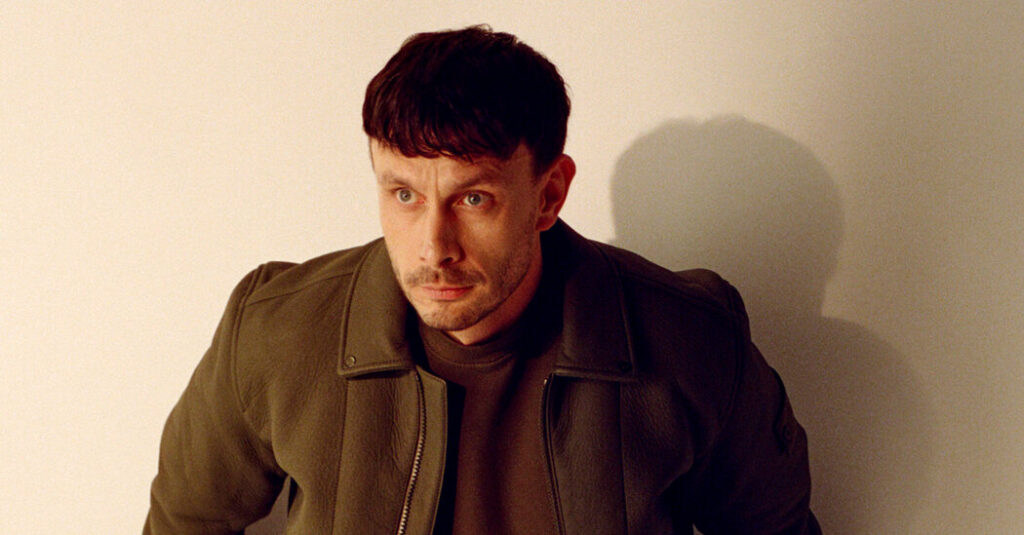
Recently, Richard Gadd stood in a New York Times photo studio, pinned in the bright glare of a spotlight being beamed at him by a photographer’s assistant. He gazed right back.
As a visual metaphor for Gadd’s career, it’s maybe a little on the nose, but fitting. With the 2024 release of “Baby Reindeer,” which he created, wrote and starred in, the 37-year-old Scotsman became enormously famous almost overnight. The series went on to win six Emmys along with numerous other accolades, and it became one of the most watched English-language shows in Netflix’s history.
“It was mad,” Gadd said of the impact of the loosely autobiographical “Reindeer.” In it, he plays a London bartender and aspiring comedian whose recovered memories of sexual assault by a male mentor dovetail with the increasingly unhinged behavior of an obsessive customer (Jessica Gunning) he meets at the pub.
“The show was No. 1 in Saudi Arabia, in Lebanon,” he continued. “There were countries that were watching it en masse where a lot of the stuff being shown wasn’t even allowed in those countries.”
Within months of its release, Gadd began shooting another show in which he is the sole writer and also a star, the HBO limited series “Half Man.” It too explores a dysfunctional dynamic between two lonely and deeply troubled people, but “Half Man,” an often volcanic portrait of male rage and reckoning, generally lands in a darker register.
It centers on two Scottish teenagers named Ruben and Niall, two not-quite stepbrothers whose twisted relationship carries into adulthood, when Gadd and the actor Jamie Bell take over the roles. Gadd’s performance has earned him another Emmy nomination for acting and invited many media think pieces on the state of modern masculinity.
In person, Gadd’s gentle, thoughtful presence stands in sharp contrast with the far-out characters he has portrayed onscreen. In an interview after the photo shoot, he discussed toxic couplings and the politics of male repression. These are edited excerpts from the conversation.
In “Half Man,” Ruben and Niall share an unhealthy psychosexual bond that goes on for years. Why can’t they quit each other?
Niall and Ruben are extreme versions of how far a toxic relationship can get. But I think everyone knows the eternal couple or pairing who are bad for each other but they cannot part. I’ve observed that in life, and I know that archetype. And I think sometimes when two brain chemistries, body chemistries, spiritual chemistries are intertwined, it becomes extremely hard to extricate.
Ruben coming into Niall’s life at a particular point, and them going through this abusive experience together — Niall needed someone there to save him. There was a debt, there was a confusion, there was an attraction. And sometimes the relationships that are hardest to shake are the ones that originated back in childhood.
You were born in 1989, which is when the main characters on the show, played as boys by Stuart Campbell and Mitchell Robertson, are already becoming young adults. Why set it then?
In the ’90s, the years I grew up in, society started to progress. The ’80s is this commonly parodied time in the U.K. when casual phobias and slurs were just tossed around like it was natural. So when I was sitting down to write “Half Man,” not only did I think it would be interesting to have this big generational gap between the two casts, I also thought, “Well, if we’re going to talk about the impact that society has in terms of its prejudices, then the ’80s is the decade to do that.”
You lost a considerable amount of weight for “Baby Reindeer” and then bulked up for “Half Man.” How did the physical aspect play into these roles for you?
It’s interesting. “Baby Reindeer” is based on my life, when I’d gone through quite a lot of physical and mental trauma, and I remember it very clearly having a big impact on my appetite or lack thereof. So I wanted to try and return to a certain degree of truth in that respect. I felt like there had to be a slightness and a vulnerability.
And then with Ruben, I went the other way. I needed to feel what it’s like to have that kind of power in the body. I’m smaller now because I didn’t like carrying that size around with me. But when I was at my biggest from playing Ruben, I remember just going down the middle row of an airplane and people putting their heads down.
I also did have that mad haircut and the beard. But it’s interesting the way society reacts to physical size. Ruben obviously does a lot of bad things — I’m not condoning his behavior — but he is deeply traumatized and vulnerable. And his way of safeguarding against the world was to present as objectively terrifying and imposing. I sometimes look at men who are walking down the street with their chests out, their big shoulders from going to the gym 24/7. They want everyone to know that they’re the alpha around here, and now I think, Well, what are you hiding?
You’ve made brutal honesty a signature in your work. Has that made you a receptacle for strangers’ secrets?
Yeah, for sure. And that’s OK because it would be very cold of me to be like, “I did this, and you don’t get to now come and do that to me.” I always have to say that I’m not a therapist, and I think sometimes people look for some sort of answer I can’t provide. But I can listen.
It can be intense, and I’ve never mastered the art of handling it. Especially at the height of “Baby Reindeer,” it was a daily occurrence at least. But I really was surprised by how many men were coming up to me and saying something that they’d never told anyone before. People are carrying a lot of pain, I realized.
There’s been a lot of coverage of the so-called manosphere in popular culture recently. How is it to have your work swept up in that conversation?
It’s interesting because I never set out with any social or political agenda. I wanted to explore male relationships, particularly male repression, but innately people think that it’s a political piece of work that’s speaking to our times. I’d never heard of the manosphere!
I’d rather people just experience the show and take what they need from it, because I think one of the mistakes that television can make is they make it so obvious what they want you to feel and think.
Without spoiling the ending of “Half Man” too much, did the fates of Ruben and Niall feel foregone?
It felt very clear as I wrote it that that’s how it was to end. With the way they both chose to live their lives, with how strained and difficult they had become, it was like two meteorites that were bound to collide in the most destructive way.
What will you do next? Would you consider acting in a project you didn’t create?
I would really love to, but I can’t because, well — I don’t want to jinx it, but I’m very excited about what’s next and looking forward to it. Oh, what do I say? I hate not answering questions, but I don’t want to get in trouble. I’ll say this: I’m working on various different writing projects, all very different in tone. That’s such a bad answer! [Laughs.] Sorry.
Cinematography by Gus Aronson.
The post Richard Gadd Had Never Heard of the Manosphere appeared first on New York Times.