Just a few years ago, Yemen’s Houthi rebels were second- or third-tier members of Iran’s “Axis of Resistance,” prompting policymakers to treat them as a subsidiary of Tehran. But while they benefit from Iranian weapons, training and know-how, the Houthis also have their own interests at heart — and behave accordingly.
This armed group that controls much of northern Yemen is in position to shape the next phase of the conflict between the United States and Iran if they attempt to renew their blockade of the Bab al-Mandab Strait. The Houthis could reignite the war in Yemen, scuttle efforts to make a deal with Iran and draw the United States even deeper into the region’s conflicts.
A key assumption going into the U.S.-Israeli attack on Iran, which began in February, was that Iran’s proxy militias had been critically weakened. Hezbollah, the militant group in Lebanon that was once Iran’s most powerful partner in the region, suffered heavy blows from Israel during the Gaza war, as did Hamas. Iran lost another key ally when Bashar al-Assad’s regime in Syria collapsed in December 2024.
The Houthis, whose military capacity had also been weakened by U.S. strikes in 2024-25, did not jump back into the fray right away when the United States and Israel began striking Iran this year, seemingly sparing them similar blows.
Perhaps they were biding their time. Because of a quirk of geography, the Houthis are able to disrupt commercial traffic in the Bab al-Mandab Strait, a choke point at the entry to the Red Sea, through which 12 percent to 15 percent of maritime trade travels. At the other end of the Red Sea lies the Suez Canal, a vital route for oil and liquefied natural gas headed to North American and European markets. With Iran effectively closing the Strait of Hormuz, the Houthis are now in an unusually powerful position.
They have come far in global influence since seizing Yemen’s capital, Sanaa, in 2014 and expelling the internationally recognized government from the city in early 2015. When the rebel forces pushed south in March of that year, in an attempt to take over territory in southern Yemen, a coalition led by Saudi Arabia and backed by the United States intervened.
The once localized war became a regional conflict and a devastating humanitarian crisis. Finally, facing a stalemate and significant international pressure, both sides agreed to a U.N.-brokered cease-fire in April 2022. By that point, the Houthis had created a de facto state in northern Yemen, while the weak Saudi-backed government nominally ruled parts of the south and west.
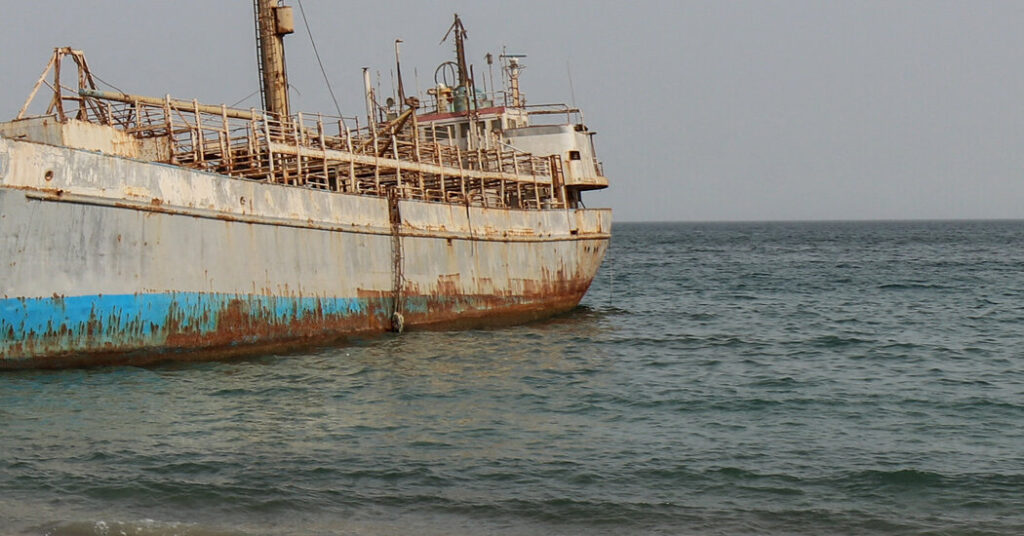
The Houthis flexed their muscles by attacking shipping vessels in the Red Sea early in the Israel-Gaza war that started in 2023. Using low-cost, low-tech equipment like one-way attack drones, missiles and unmanned surface vessels, the Houthis made the crossing more dangerous, driving up the cost of insuring commercial ships as much as twentyfold, effectively closing the strait. The only alternate route forced ships around the southern tip of the African continent, an extra 4,000 or more nautical miles, increasing shipping costs.
Last month, the Houthis resumed attacks on Red Sea shipping, striking Saudi-linked commercial oil tankers and hitting Saudi energy and transportation infrastructure. They were responding to what they claimed were Saudi airstrikes on Sanaa Airport’s runway on July 13, seemingly in an effort to prevent an incoming Iranian flight from landing. For now, commercial ships continue to transit the Red Sea, although tanker traffic has declined substantially over the past month. Houthi attacks have also continued on ships the group claims are Saudi-aligned, and an attack on a cargo ship on Aug. 12 included the first reported fatalities of this latest round of attacks.
In recent days, the Houthis have claimed attacks on a ship in the Red Sea port of Mokha, which is held by forces allied with the internationally recognized government of Yemen, and on airports and oil refinery infrastructure in Saudi Arabia.
With the effective closure of Hormuz, the Red Sea-Suez route has become even more important. Most notably, Saudi Arabia had sought to avoid Hormuz by routing crude oil via a pipeline to the Red Sea port of Yanbu on its western coast. The new Houthi attacks have disrupted that option. The near closure of both Hormuz and the Suez routes could compound problems for global trade, pushing the cost of oil and inflation even higher.
Now the Houthis are positioned to step up their involvement in an already raging regional conflagration, complicating efforts to end it. Some may assume that this move is at the behest of Iran, but the reality is likely more complicated.
Highly attuned to their own interests and pragmatic in the international arena, the Houthis have proved savvy at choosing when to enter or escalate conflicts. When they attacked shipping in the Red Sea in 2023-25, for example, they said it was to pressure Israel to de-escalate its operations in Gaza. The strikes also bolstered their legitimacy in the territory they control in northern Yemen, diverting attention from their governance failures at a time when their popularity had eroded.
This time, the Houthis appear to see an opening to gain leverage in negotiations with Saudi Arabia to reach a political settlement in the Yemeni war — or an opportunity to resume attacks against the internationally backed government.
The previous round of Houthi attacks, in 2023-25, had a significant but ultimately manageable effect on the global economy. Estimates suggested that the ensuing shipping disruptions would have a small impact on inflation. The economic effects of closing the Bab al-Mandab Strait at the same time as Hormuz are likely to be more dire.
While the United States looks to wind down the war with Iran, the Houthis are threatening to resume their war in Yemen, which would likely draw in Saudi Arabia, menace the global oil trade and keep the region unstable.
It will be difficult to de-escalate regional tensions without addressing the Houthis’ threat directly, rather than assuming it can be resolved by dealing with their supposed boss, Iran. At the same time, no one should assume that a deal with Iran will bind what the Houthis do next. The international community should confront them as a pragmatic and dangerous actor making decisions in their own self-interest.
Alexandra Stark is a political scientist at RAND and the author of the book “The Yemen Model.”
The Times is committed to publishing a diversity of letters to the editor. We’d like to hear what you think about this or any of our articles. Here are some tips. And here’s our email: [email protected].
Follow the New York Times Opinion section on Facebook, Instagram, TikTok, Bluesky, WhatsApp and Threads.
The post Never Underestimate the Houthis appeared first on New York Times.