On Wednesday, President Donald Trump said that the data-center industry needs “a little public relations help.” That’s an understatement. Politicians in both parties are distancing themselves from an increasingly unpopular building boom faster than a sycophantic chatbot can flatter its user. The industry will have to do more than talk its way around legitimate concerns about power, noise and location if it wants to weather the democratic storm. It will have to strike a better bargain with the communities hosting the buildout.
The politics of the issue have whiplashed. Pennsylvania Gov. Josh Shapiro (D), who had been eagerly courting industry investment in his state, this week imposed strict conditions on data-center development that include local approval and new payment requirements.
The backlash is in full swing on the Republican side as well: In Wisconsin, gubernatorial nominee Tom Tiffany is attacking his Democratic opponent as “Data Center David Crowley.” Texas Gov. Greg Abbott has ordered a pause in approvals for hundreds of projects, citing concerns about power consumption. In Michigan, GOP Senate candidate Mike Rogers is now endorsing a one-year moratorium for the state.
The National Republican Senatorial Committee this week sent a memo to artificial-intelligence companies warning that data centers could cost the party a Senate seat in Ohio, where Democrat Sherrod Brown has made them an issue against Republican Sen. Jon Husted. The committee called data centers an “anchor hanging around Husted’s neck.”
The politicians are following voters. A Gallup poll this spring found that 71 percent of Americans opposed construction of an AI data center in their area, including 48 percent who were strongly opposed. Polling from Heatmap News suggests a huge upsurge in opposition over the past year.
Not all stated concerns about data centers have merit. Some activists insist that data centers guzzle vast quantities of water, yet the facilities’ overall consumption is modest. U.S. data centers are projected to use about 39 billion gallons in 2028 for cooling — far less than the hundreds of billions of gallons used annually to irrigate golf courses. And technology is doing its thing: New closed-loop cooling systems can operate without consuming additional water after they are filled, making data centers viable even in water-scarce areas.
But voter sentiment also reflects real issues. Data centers do guzzle lots of electricity. (And closed-loop cooling systems use more power than evaporative ones.) Some estimates put data center power consumption as high as 15 percent of total U.S. capacity by 2030. Servicing these needs will require serious investments in generation and the grid. Americans are understandably worried about seeing these costs show up on their electric bills.
That problem, too, is solvable. Trump’s Ratepayer Protection Pledge, signed by major technology companies in March and since expanded to utilities and data-center developers, commits the industry to build, bring or buy the new power it needs. (Amazon, founded by Post owner Jeff Bezos, was a signatory.)
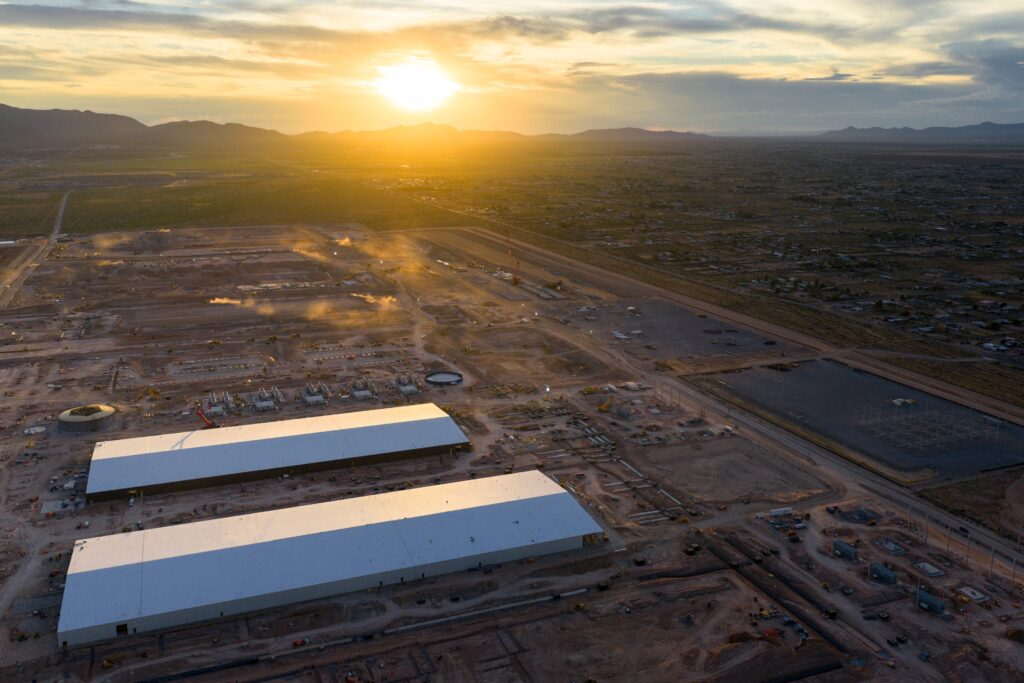
Other legitimate complaints — noise and unsightly warehouses built too close to homes — are fundamentally questions about where the infrastructure is built. Data centers are an important national resource, but their negative impacts are local. Developers can negotiate candidly with local governments over how to minimize those impacts and compensate those affected.
They can also make the benefits plain. Virginia’s Loudoun County offers the most dramatic example: Taxes on data-center equipment are expected to bring in about $1.3 billion next year, roughly 40 percent of county revenue. The municipality has built beautiful new schools, parks and recreation centers while allowing officials to cut residential property-tax rates by about 30 percent over the past decade. Data centers employ relatively few people once completed, but the national buildout is creating well-paid work for electricians and Americans in other skilled trades.
That even Loudoun County residents are starting to complain about the bargain they’ve struck speaks to Trump’s point about a PR problem. Opposition to data centers also reflects broader anxieties, and it would help if AI leaders stopped talking nonsense about how their inventions will imminently replace workers — nonsense that appeals to a certain kind of investor but terrifies the public.
Progress on artificial intelligence won’t make humans obsolete, but it can make them wealthier and more productive. Data centers need a better plan for negotiating with local governments, but the frothy debate about the economics of AI also needs a reality check.
The post How data centers can stanch the political bleeding appeared first on Washington Post.