In today’s edition … Why the democratic-socialist win in Florida is different … You give your opinion on license plate cameras … but first …
Darline Graham’s ‘oops’ moment and the pitfalls of acknowledging ignorance
It was deeply uncomfortable.
During a debate Tuesday night between Sen. Darline Graham, the sister of the late Sen. Lindsey Graham, and Rep. Ralph Norman, Graham claimed ignorance when asked about the national security significance of Taiwan and the South China Sea.
“I’m just going to be honest here,” Darline Graham said. “I’m not that informed on national security.”
Some in the audience booed. Gasps were audible. You can hear them here.
The moment is cringeworthy, not least because Graham is already a sitting senator, her brother was known as a foreign-policy-focused lawmaker, and the question was about one of the biggest geopolitical issues facing the nation right now.
But it is also telling, as it highlights the pitfalls of elevating candidates with no political experience primarily because they are descendants or relatives of other elected officials.
I wrote about this topic last year, when it seemed like nearly every race had a political nepo baby asking voters for their support. But South Carolina’s U.S. Senate race may offer the clearest example of voters being asked to support someone almost entirely because of who they are related to.
Graham certainly has a lot going for her. She is backed by many high-profile Republicans, including President Donald Trump. And she finished first in the initial primary vote ahead of next week’s runoff.
But real questions remain about whether running as an incumbent actually helps right now, when the political establishment on both sides of the aisle is viewed skeptically.
Norman, who has been in elected office since 2009 and already ran for governor this year, has seized on that skepticism to cast himself as the outsider by highlighting his relative lack of establishment endorsements.
“Mainstream Washington, I am not their candidate; you are,” Norman said to Graham on the debate stage. In an interview with the Associated Press, Norman said that “the Washington elite” is powering Graham’s campaign. And Norman’s supporters have cast Graham as a member of the “swamp” that Trump has pledged to “drain” ever since he entered political life a decade ago.
I asked Graham for an interview yesterday. Her campaign did not respond.
She reportedly told reporters after the debate that South Carolinians are more “worried about their pocketbooks more than they’re worried about the South China Sea, quite honestly.”
Graham is not the first lawmaker to struggle with the Taiwan question. Rep. Alexandria Ocasio-Cortez, speaking at the Munich Security Conference this year, awkwardly stumbled through a nonanswer when asked about committing troops to protect the island. But this moment could be particularly damaging for Graham because it feeds an already prevalent subcurrent in the contest: that the senator is not ready for the Senate.
Political history is littered with eye-popping quotes from candidates that show their ignorance, and those slip-ups hurt each campaign.
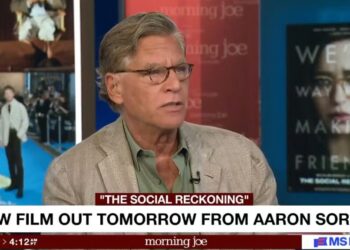
Libertarian Gary Johnson, while running for president in 2016, looked blank on MSNBC’s “Morning Joe” when asked what he would do about Aleppo, the port city that had been at the heart of Syria’s civil war.
“What is Aleppo?” he asked.
In 2011, Herman Cain, the pizza executive turned Republican presidential candidate, embraced his ignorance on foreign policy by telling an interviewer that he would simply say, “I don’t know,” if asked a “gotcha” question.
“When they ask me who is the president of Ubeki-beki-beki-beki-stan-stan, I’m going to say, you know, ‘I don’t know. Do you know?’” Cain said. The comment was so viral that Hamid Karzai, then the president of Afghanistan, later brought up Cain’s comment during a meeting with then-Secretary of State Hillary Clinton.
(For the record: Asking for someone’s position on an issue is never a gotcha question.)
Also in 2011, then-Texas Gov. Rick Perry proposed eliminating three government agencies. “It’s three agencies of government when I get there that are gone — Commerce, Education and the um, what’s the third one there? Let’s see. Oh five — Commerce, Education and the um, um,” Perry said. After a long, uncomfortable struggle, Perry admitted that he couldn’t think of the third one.
“I can’t. Sorry,” he said. “Oops.”
Want this in your inbox?
Start your day with The Washington Post’s flagship political newsletter. Sign up here.
Our picks
- Trump wants a ballroom in Ireland. One man is having a ball fighting it, from Terrence McCoy
- Why one highway exploded this summer — and why many more are at risk, from Todd Frankel
- Trump shows off his new helipad, brags about construction projects, from Dan Diamond
- L.A. officer who recorded colleagues’ racist remarks won’t face felony charges, from Hannah Knowles
What we’re watching
I’ll admit it: I was surprised by the Senate primary results in Florida on Tuesday night.
Rep. Angie Nixon was a mammoth underdog in the race, in part because of the sheer scale of Alex Vindman’s financial advantage. Consider this: Vindman raised a staggering $16 million since January. At the rate Nixon was raising money, she would have had to run for Senate for over nine years to match Vindman’s haul.
But her win proved that money and national support are not nearly as important as doing the work on the ground.
I spoke with Nixon yesterday, and what stuck out was her belief that basic campaigning — along with Vindman’s lack thereof — was enough to score her win.
“I know people think that I’m this overnight success story, but I’m not. I’ve been doing the work,” she said. Nixon has been a Democratic organizer for decades and unseated an incumbent to join the Florida House in 2020. “Also, I am a really good campaigner, and I am very strategic. I mean, I’m going to honk my horn a little bit,” she added.
Steve Schale, a longtime Democratic operative in Florida, was blunt in his assessment of Vindman’s campaign and noted that he only recently moved to the state.
“He was more of a national figure than he was a state figure,” Schale said. “She ran a better race and had more excitement on the ground.”
Nixon, a democratic socialist who said she joined the Democratic Socialists of America “a few weeks ago,” was cautious when linking her upset win with the spate of left-wing candidates defeating establishment figures in primaries this year. She said while she supports democratic-socialist values such as universal child care and universal health care, she was also careful to distance herself from total alignment with the group.
“There is no organization that I’m a part of that I am 100 percent, completely in lockstep with, even the Democratic Party, which I’ve been a member of my entire adult life,” she said. “It’s not about people’s labels for me; it’s about people’s needs.”
The uniqueness of Nixon’s affiliation with the democratic-socialist group, along with Vindman’s campaign missteps, may explain something I explored with colleagues Clara Ence Morse and Teo Armus: The coalition Nixon built to win largely defies the traditional voting bloc for left-wing candidates who have won primaries this year.
Where other democratic socialists have struggled with low-income and Black voters, Nixon’s win was powered by voters in Florida’s lowest-income and least-college-educated counties, as well as the ones with the most Black voters, according to a Washington Post analysis of election and demographic data.
You can read our full report on what made Nixon’s win different here.
In your local paper
Arkansas Advocate: A May acid spill in Arkansas wiped out the fish population of a nearby stream. State regulators later found that the chemical plant where the spill occurred operated without a permit.
Maryland Matters: A federal appeals court Tuesday maintained an injunction that barred Department of Homeland Security officers from operating “at or near” churches and houses of worship in 33 states and the District of Columbia.
For your planning
Polling is, well, everywhere right now. And it is difficult, even for someone who has covered politics for nearly two decades, to sift through which polls to care about and which to ignore.
Enter: Post polling director Scott Clement’s new newsletter, The Pollwatcher.
The newsletter, Scott says, “will go beyond the headlines to explore what polls reveal about the big issues shaping people’s lives. I’ll sort through polls and scientific studies to highlight the most interesting and reliable findings, including overlooked results and surprising trends.”
I can’t recommend Scott’s insights enough. Every day I find myself asking Scott questions about a poll, or whether I should care about this number or that — and it’s exciting that our readers can now access those insights. He is truly an expert at cutting through the noise to really dig into what people are thinking and why.
You can sign up here.
From you
You all have mixed feelings about license plate cameras and how vandals are destroying them as anger over their use rises.
“We’ve had years of really awful car burglaries and car thefts until our police department installed a number of these cameras on the major thoroughfares of our City,” wrote Ken Cleaveland, a reader in San Francisco. “As a result, auto thefts and burglaries are way down. The argument against the use of these cameras as a violation of someone’s privacy seems very shallow to me. If one is driving out in the public, you don’t have a right of privacy in my humble opinion.”
Doris B. Mabrey acknowledged “mixed feelings.”
“My first reaction is that they’re good for law enforcement. However, after hearing how some law enforcement personnel have misused them, I’ve had to do some re-thinking,” Mabrey wrote, referring to The Post’s great reporting on the topic. “I’d like to see safeguards put in place to reduce the likelihood of misuse. In general, I think they’re probably a good tool.”
And Bruce Chandler dug into where they are used around his home in Maryland and found they are mostly in parking lots of large stores.
“I don’t know if these are county owned or rented/authorized by the hardware stores. I suspect the latter, as a way to help them identify shoplifters. I have no problem with use such as this,” Chandler concluded.
Send a reply
Trump said yesterday that he plans to meet with North Korean leader Kim Jong Un later this year. My colleague Cleve R. Wootson Jr. has more on that. But I want to know whether you think Trump should meet with the North Korean. Is there a benefit to the president meeting with dictators such as Kim? Or is the United States giving such leaders validation by meeting with them? Let me and your fellow Early Brief readers know at [email protected].
Thanks for reading. You can follow me on X at @merica.
The post Darline Graham’s ‘oops’ moment and the pitfalls of acknowledging ignorance appeared first on Washington Post.