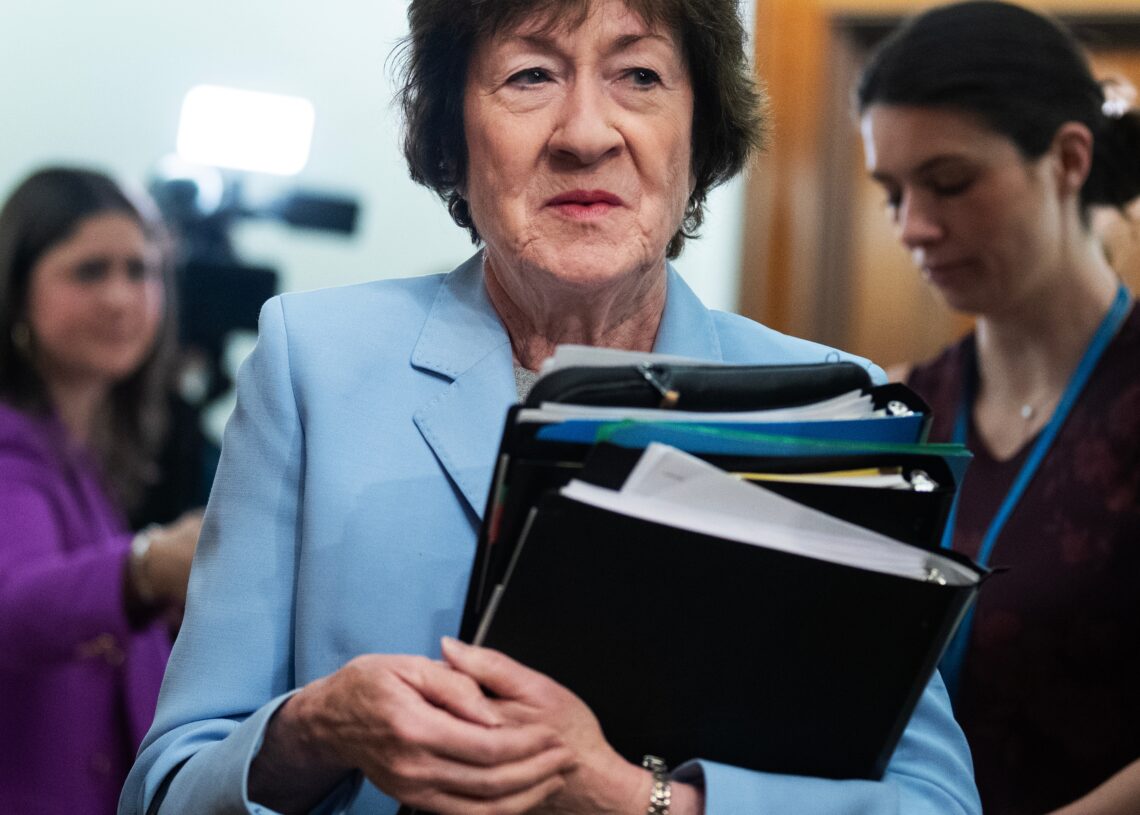
Planned Parenthood’s political action committee Monday announced new ads attacking Sen. Susan Collins of Maine, the first of a campaign totaling more than $600,000 to oppose the vulnerable Republican incumbent.
The ad buy is the largest investment from Planned Parenthood Votes across any state this cycle, according to Federal Election Commission records. Planned Parenthood Votes will use the campaign to hammer Collins on her vote to confirm Supreme Court Justice Brett M. Kavanaugh, one of the three justices nominated by President Donald Trump who helped form the majority that would later overturn Roe v. Wade.
One YouTube ad from the group features a Maine woman, identified only by her first name, Sarah, who said she voted for Collins and regrets it.
“I can’t take my vote back, but I will not make the same mistake twice,” Sarah says in the ad. “I’m done hoping Susan Collins will do the right thing.”
In a statement Monday, Collins spokesperson Blake Kernen tried to undercut Planned Parenthood’s efforts. Kernen tied the group to former Democratic Senate nominee Graham Platner, whom it had endorsed before his scandal-tainted campaign ended, and to Troy Jackson, Collins’s new opponent, who has a history of opposing abortion.
“The Planned Parenthood Action Fund cares more about electing Democrats than any issue,” Kernen said.
The Maine ad buy is part of Planned Parenthood Votes’ $47 million campaign this year, the second-highest amount Planned Parenthood Votes has ever spent on elections. The investment is just below the record $50 million it spent on the 2022 midterms, held a little over four months after Roe fell.
In 2018 in Maine, the Planned Parenthood Action Fund, another political arm of the organization, made another six-figure ad buy against Collins, running ads to urge her not to vote for Kavanaugh.
Catch up quickly every weekday morning with a rundown of the 7 most important and interesting stories. Sign up for The 7 newsletter.
The post Planned Parenthood to spend more than $600,000 against Susan Collins in Maine appeared first on Washington Post.