Navigating New York City’s economy can feel like a gauntlet of minor indignities. Selling ice cream, for some reason, requires two different permits. Want to quit your gym? You may have to send a certified letter by mail. Oh, and before you haul your belongings to that storage unit, you’d better read the fine print real carefully to see how much of a tease that teaser rate is.
Zohran Mamdani is sweating this kind of small stuff. His administration is targeting the fees, scams, and bureaucratic headaches that make day-to-day life in New York slightly more annoying. They’re going after rule-breaking parking lots and dentists, cracking down on convoluted cancellation policies, and cutting through the city’s silliest red tape. New York has a reputation for being a home of petty scams — guys hustling Times Square tourists, businesses upcharging customers who don’t know better. Residents are accustomed to working some angles in order to make city life work for them.
Mamdani’s actions, on their own, will not solve New York City’s affordability crisis and, in some cases, may amount to little more than politically satisfying whack-a-mole. But his wager is that if you relentlessly whack enough moles, it adds up and earns goodwill to take bigger swings that aren’t such gimmes.
“If government can do the things that materially improve the lives of New Yorkers, we can be trusted to do more,” says Julie Su, New York City deputy mayor for economic justice.
It’s pocketbook pothole politics.
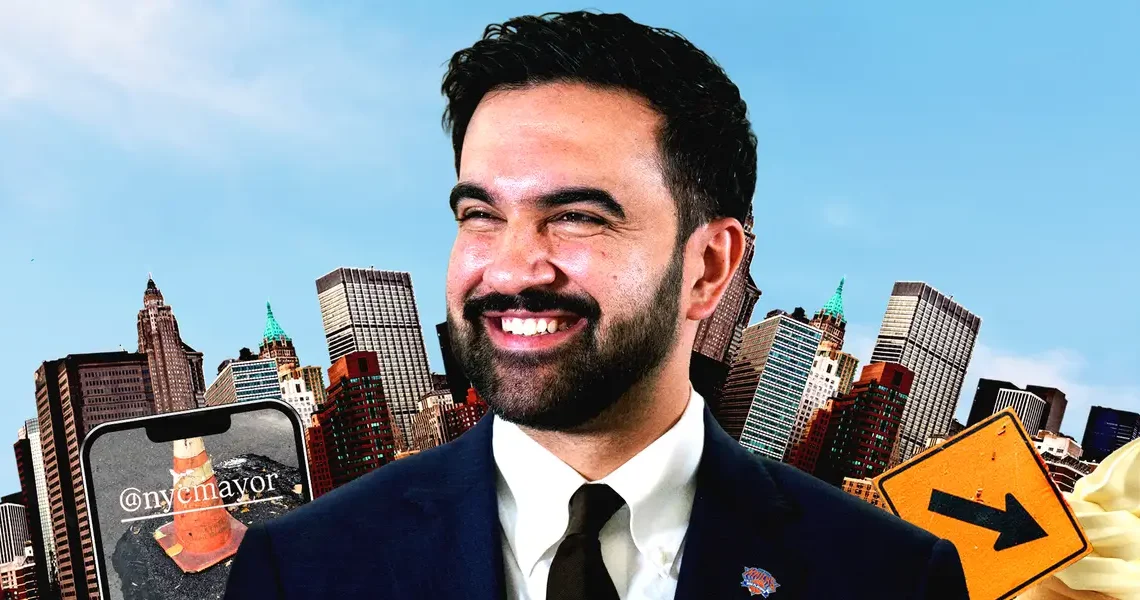
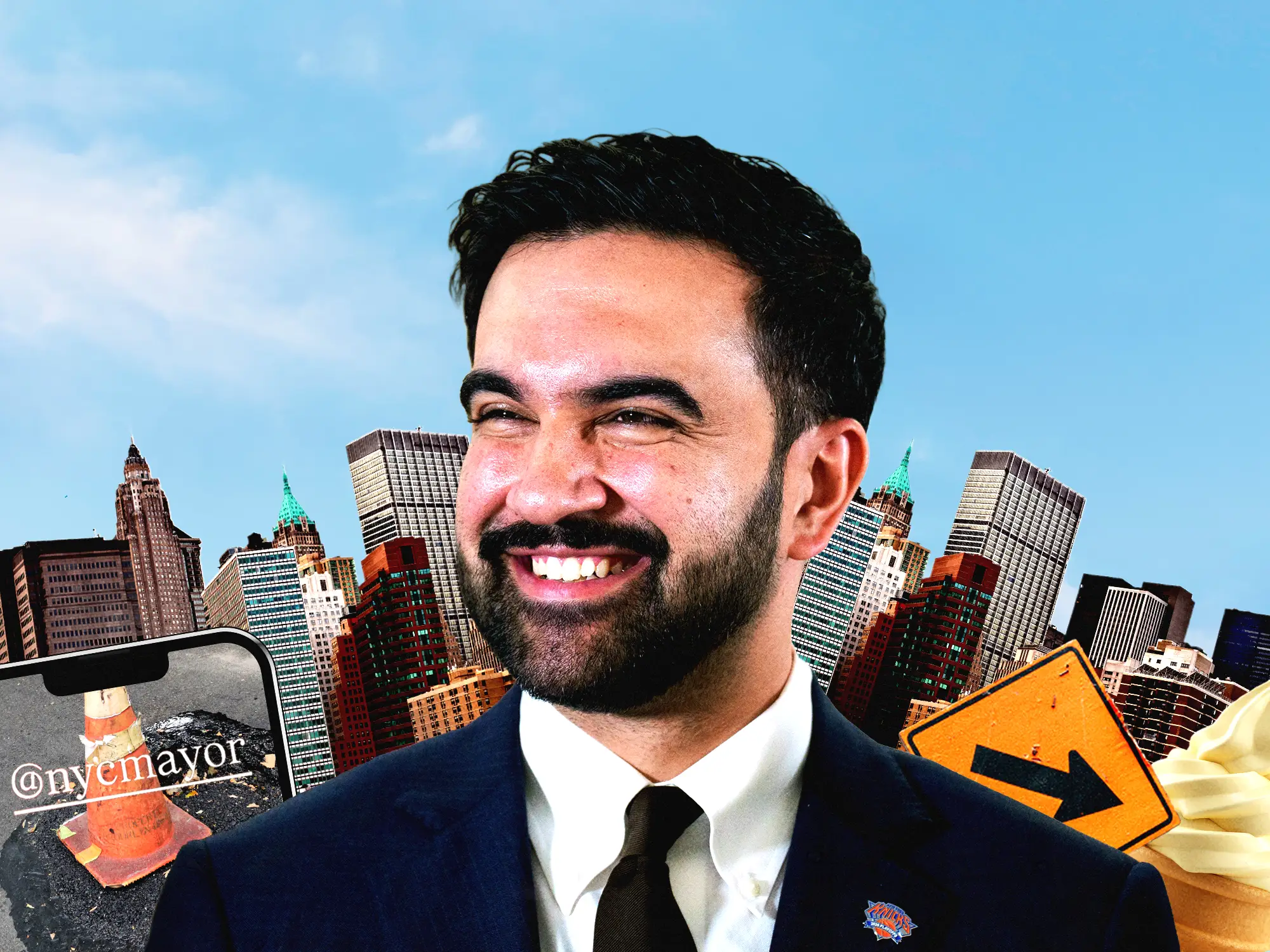
A thing has started to happen where New Yorkers post videos of problems they notice around the city on social media and tag the mayor — hey, look, here’s a pothole, there’s a blocked sewer drain. In some cases, hours after asking him to do something about it, the issue gets fixed. While it’s not always clear whether the call-outs are directly driving the patches, the trend reflects the atmosphere City Hall is fostering: There’s no problem too small to fix.
This is part of the death by a thousand cuts that New Yorkers feel.
Mamdani won the election on big promises around issues such as housing and childcare, but almost immediately after taking office, his administration began making a conspicuous fuss about more modest irritants, too. In July, the mayor announced a finalized “click-to-cancel” rule that will take effect this fall. It requires businesses to make it as easy for people to quit a subscription as it was for them to sign up. His office also rolled out a proposed rule that would ban hidden “junk fees” on rental housing, event tickets, and other products and services, an issue he said he planned to tackle in the opening days of his administration.
The Department of Consumer and Worker Protection, under commissioner Sam Levine, has filed lawsuits against self-storage companies, dental providers, and solar companies over sketchy business practices such as bait-and-switch pricing and deceptive loans. It’s cracked down on deceptive tipping practices by delivery apps and has secured restitution for freelancers at a local production company over late payment. The DCWP has sent tens of thousands of notices to businesses over noncompliance with New York City laws.
“This is part of the death by a thousand cuts that New Yorkers feel,” Su says. “We have the broader agenda of bringing down prices in big ways — cost of housing, the cost of childcare, the cost of groceries — but we also have to make sure that we increase what people are able to keep in their pockets.”
Mamdani has also directed agencies to scrub away some of City Hall’s own nuisances — duplicate permits, needless fines, and administrative mazes that can make running a small business a logistical nightmare. His administration announced 50 such proposed reforms this summer.
“Sometimes, government has a role to play in making it easier for businesses who want to do the right thing to do that,” Su says.
The theory of delivering on tangible, everyday victories to win over skeptics and concretely better working people’s lives isn’t floating down from nowhere. Mamdani is implementing a modern version of “sewer socialism,” a 20th-century movement that originated in Milwaukee. It prioritized pragmatic reforms like — as the name suggests — fixing the sewer system. (The mayor prefers less ideologically charged rhetoric like “pothole politics.”)
These are the types of issues that people want their mayor to take on but also believe he can take on, says Eric Phillips, who served as former Mayor Bill de Blasio’s press secretary. While mayors may want to tackle “more ideological, grandiose global policy,” he says, constituents expect City Hall to get the streets plowed and make sure restaurant kitchens are clean. They think regulators should go after sketchy used car dealers, tax preparers, and landlords.
“The reality is that people want smaller, faster solutions to fees and annoying costs that feel much more real to their finances than the downstream effects of global trade or the economy,” he says. “This City Hall seems to understand that smaller-scale everyday stuff like this isn’t trivial or low-brow.”
The hope is that all of this will have a cumulative effect. The click-to-cancel rule, for example, could save New Yorkers $21.5 million to $162.5 million a year, according to an estimate from progressive think tank the Roosevelt Institute. Banning hotel fees could lead to an estimated $46.4 million to $67.4 million back in people’s pockets annually.
“This is not small potatoes,” says Carolyn Carter, a senior attorney at the National Consumer Law Center. “Junk fees and making it difficult to cancel are ways that companies use to set up a long-term drain on consumers’ pocketbooks.”
Some of Mamdani’s efforts are aimed at tackling what’s been dubbed the “annoyance economy,” the little administrative hurdles consumers and businesses face that cost them money, energy, and time. He’s holding “rental ripoff” hearings for tenants to voice complaints about their landlords and is working to require realtors to disclose when they’re enhancing housing listings with AI.
Theater is part of the job.
“There are ways in which corporations are squeezing more and more out of people,” says Brad Lipton, the director of the corporate power and financial regulation program at the Roosevelt Institute. “On top of all of that, there are also things that drive people crazy and just make you feel like you can never get ahead.”
This approach is politically savvy, too. It makes people feel like City Hall is on their side, and predatory businesses are a convenient villain. It helps Mamdani ground his image in something palpable. Is some of it performative? Sure. But performance is part of the point.
“Theater is part of the job,” Phillips says. “It sends the message that City Hall cares about you when someone is ripping you off.”
There are, of course, potential drawbacks to how the Mamdani administration is going about tackling these small-scale scams and hassles.
For one thing, these types of actions can feel pretty minuscule in the grand scheme of the economy. It may be easier to cancel your Netflix account, but that only helps so much when your wife had to quit her job to stay home with the kids because you couldn’t afford childcare.
“These are tip-of-the-iceberg type things, and we should also be focused on the bigger structural problems with our economy,” Lipton says.
There’s also a risk of going too far on consumer protection to the point that it hurts more than it helps. Rob Walsh, who served as commissioner of the New York City Department of Small Business Services under former Mayor Mike Bloomberg, tells me that while it’s important to go after the “bad guys,” enforcers don’t want to be so aggressive that they create a pain point for small businesses. There can also be instances where agencies’ incentives are out of whack.
“You have a lot of regulatory agencies that don’t like to admit it, but their budget framework is based on the number of fines that they deliver to small businesses,” Walsh says.
He sees Levine as the most aggressive consumer affairs commissioner since Mark Green worked under Mayor David Dinkins in the early 1990s. Green, a Ralph Nader protégé, waged battles big and small. He undertook a public crusade against R.J. Reynolds’ use of the Joe Camel cartoon to market cigarettes and dispatched undercover agents to city salad bars and delis to catch them improperly weighing food to overcharge customers. He also launched “Tuesday Night Out,” an effort to boost midweek business by offering discounts on restaurants, entertainment, and parking. His admirers saw him as a government watchdog making himself useful — his critics accused him of using theatrical tactics and bullying businesses. Sound familiar?
Using City Hall to hunt down everyday rip-offs is not a Mamdani invention. What’s different is the extent to which his administration is explicitly trying to weave this work into a broader theory of economic governance. As mayor, he can’t control interest rates or national labor policy or corporate consolidation or, in most instances, taxes. Consumer protection is one place where the mayor has a lever within reach.
The city is clearly trying not just to protect city residents, but to achieve national policy ends through the city.
Cities regulate consumer-facing businesses all the time, says David Schleicher, a professor of property and urban law at Yale, but what is somewhat unusual is New York attempting to tackle practices associated with the digital economy and big companies such as DoorDash and Amazon.
“The city is clearly trying not just to protect city residents, but to achieve national policy ends through the city,” he says.
New York City may not quite have the scale to achieve the “California effect,” where the state is so large that when it changes its rules, companies often find it easier to adjust their products and services for everyone. But given the intense focus on the city, and Mamdani in particular, the administration can shape the national conversation. And if Mamdani can clean things up here, perhaps it’s possible anywhere.
At the heart of these measures is a broader point that’s not obviously tied to stopping your dentist from sticking you with a high-interest loan while you’re in the chair. Mamdani is trying to prove that government can work.
“We have a very important role to play in demonstrating what is possible when government delivers for real people, when government prioritizes those who’ve been vulnerable, and when government delivers with excellence,” Su, the deputy mayor, says.
It’s too soon to know how this will all shake out, and no one will care that the tourists are saving $30 on hotel fees if their rent continues to rise astronomically. Pocketbook pothole politics only gets Mamdani so far. The real test is whether fixing enough small things convinces New Yorkers that his government can fix some big ones, too.
Emily Stewart is a senior correspondent at Business Insider, writing about business and the economy.
Read the original article on Business Insider
The post Mamdani is going to town on the annoyance economy appeared first on Business Insider.