This story appeared in Today, Explained, a daily newsletter that helps you understand the most compelling news and stories of the day. Subscribe here.
Hi readers, it’s me again! Caitlin will be back on Wednesday. Now, for today’s news: President Donald Trump, South Korea, and the state of the US’s military alliances.
Remember Trump’s first-term “love letters” with North Korean dictator Kim Jong Un? Trump was so fond of them that he took them with him when he left the presidency in 2021 (the National Archives did not approve). Now, it seems like the two leaders are taking up where they left off.
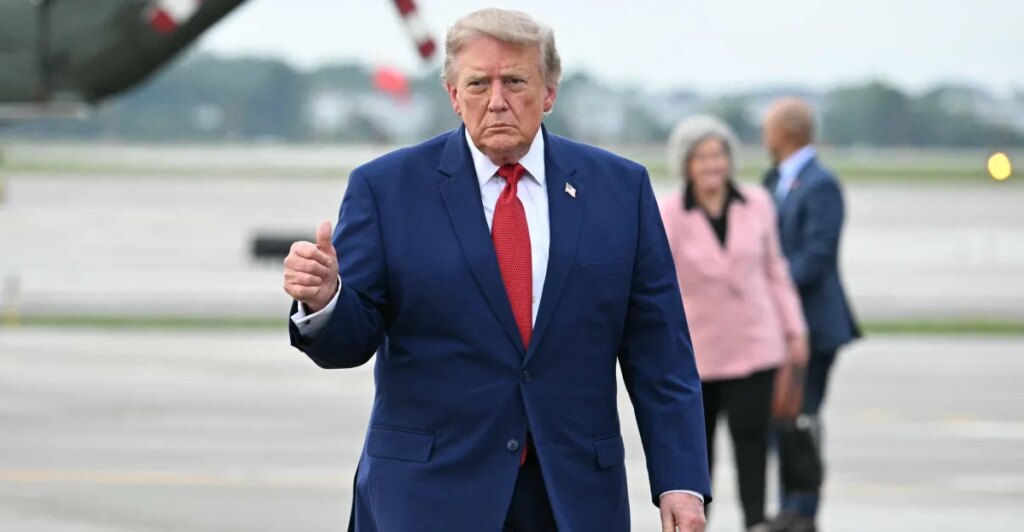
Over the weekend, Trump announced in a social media post that he would “substantially reduce” scheduled joint military exercises between the US and South Korea, which get underway today. The reason? His “very good relationship with Kim Jong Un, of North Korea.”
But there may have been another reason. Trump also wrote that “While somewhat unrelated (?), I recently asked the President of South Korea if they would like to join us in the Denuclearization of the Islamic Republic of Iran, and they said, “No thanks!””
The US-South Korea exercises “are not only costly, with much of these costs paid for by the United States of America (as usual!),” Trump wrote, “but send a signal that is totally inappropriate and hostile, to a Country that, as long as Donald J. Trump has been President, has been unthreatening and respectful.”
That last part — “unthreatening and respectful” — is not exactly true; in 2017, Kim called Trump “a mentally deranged US dotard” whom North Korea would “tame…with fire.” But in the present day, Trump’s announcement is a boon to the North Korean leader, who has denounced the military exercises.
It’s also just the latest incident in the historically close US-South Korea relationship (the two countries have held military exercises annually for more than 70 years). Earlier this year, Trump lashed out with new tariffs, accusing South Korea of “not living up to its Deal,” referring to a 2025 agreement on trade and security between the two countries that South Korea’s legislature had not yet approved.
Go a little deeper
The US has more permanent troops in South Korea than it does almost anywhere else in the world, behind only its deployments in Japan and Germany. Under Trump, though, those once-durable commitments have started to look a lot shakier.
Europe — and Germany in particular — has borne the brunt of Trump’s second-term harassment: In May, Trump announced his intent to remove 5,000 US troops from Germany and threatened to go “a lot further”; the Pentagon has said that withdrawal will take place within 12 months. The US currently has more than 38,000 troops stationed in Germany.
Trump has made similar threats about US troops stationed in Italy and Spain, and even suggested removing all US troops from Europe.
Most of these threats have been triggered by Trump’s unhappiness with European defense spending, which he’s eternally trying to boost.
But in his second term, the threats have grown much more tightly tied to Trump’s personal ambitions and grievances. Trump’s Germany announcement followed a clash with German Chancellor Friedrich Merz over the US war with Iran, which Trump has tried — unsuccessfully — to drag US allies into. Spain, in particular, has also drawn Trump’s ire for vocally opposing the war.
Last month, he also tied the US troop presence in Europe to his insistence that the US be allowed to take over Greenland, which belongs to Denmark, a US ally and founding NATO member.
One link for later
➨ A low-tech way to save coral reefs. My colleague Benji Jones visited the island nation of Palau, in the western Pacific Ocean, to learn about a new approach to reef restoration. Scientists there are testing species of coral specifically for heat resistance to find better options for replanting reefs — all using some plastic picnic coolers and a bit of hot water.
Before you go…
- Did you know…that the Vera C. Rubin Observatory in the Chilean Andes has the largest digital camera ever made? It captured its “first light” last year in staggering high-definition.
- Today’s trivia: What was the title of Iran’s ruler until 1979? (You can find this and other brain puzzles in Vox’s daily crossword. Look for the answer in tomorrow’s edition.)
- Friday’s trivia: On Friday, we asked you which US president responded to inflation by ordering wage and price freezes. That was President Richard Nixon.
The post The Trump-Kim Jong Un bromance comes roaring back appeared first on Vox.