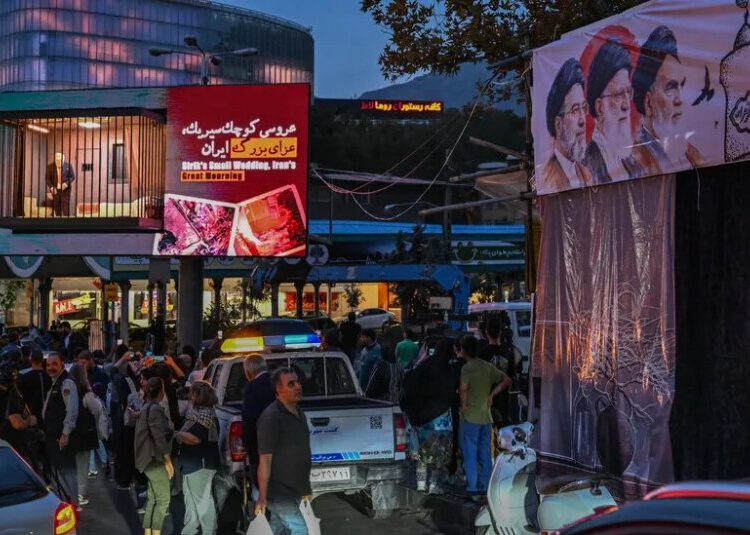
As America’s war with Iran enters its sixth month, a durable verdict has taken hold among commentators: The Trump administration has failed strategically, but the United States military has performed superbly.
Former U.S. diplomat Alan Eyre recently called American strikes “tactically efficient” but strategically insufficient. International law scholar Michael Schmitt wrote that American “tactical and operational success” has not produced the desired strategic outcome. Regional analysts Yoel Guzansky and Jesse Weinberg called the campaign “undeniably impressive” on tactical and operational grounds.
These assessments differ, but they reach the same underlying judgment. That judgment is incomplete. Tactical performance is about more than whether a weapon hits its target. It includes how forces are employed, coordinated and protected in individual missions. Those missions, taken together, must also accomplish larger military objectives. In Iran, the record falls short at both levels.
The Trump administration chose this war, launched it without congressional authorization, has repeatedly changed its definition of success and has failed to define an achievable political end. It owns the strategic failure. But bad strategy does not absolve military leaders of responsibility for how military force has been employed.
Senior military leaders must advise whether the administration’s objectives can be achieved through force, design and adapt the campaign, protect and supply the forces doing the fighting and tell civilian leaders when an approach cannot succeed. We do not know what advice commanders provided to civilian leadership in private, but we can evaluate the campaign they planned and conducted.
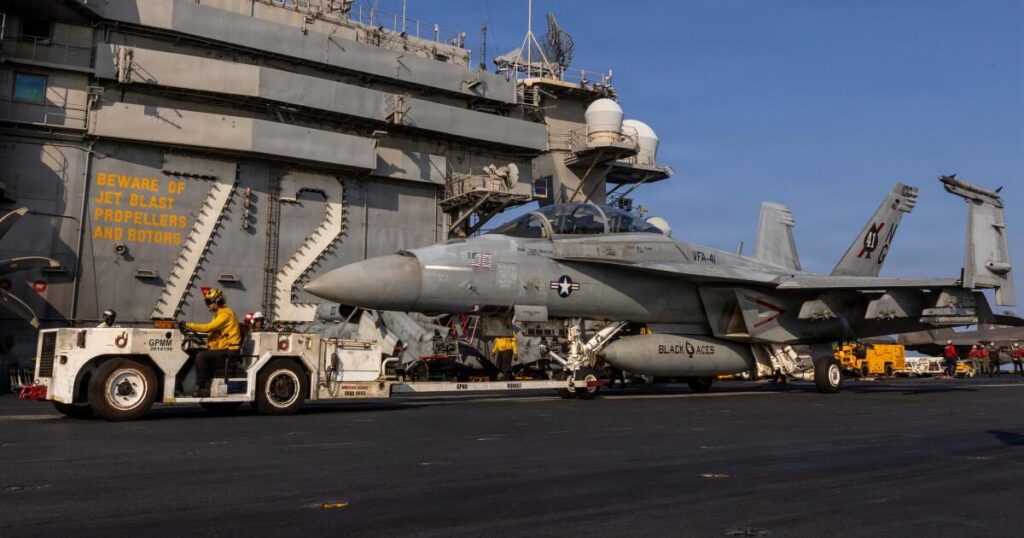
American forces have accomplished some extraordinary things. They destroyed much of Iran’s conventional navy, operated extensively inside Iranian airspace and struck thousands of targets with remarkable precision. That performance deserves credit.
But Iran did not need to defeat the U.S. conventionally. It needed to preserve enough combat power to keep imposing costs. After five months of American attacks, Iran remains capable of striking U.S. forces and disrupting global commerce.
Iran has largely refused to fight on America’s terms. It has dispersed and hidden its missiles and drones, attacked U.S. bases and the logistics networks that support American power, and used mines and shore-based weapons to threaten commercial shipping.
U.S. military doctrine identifies protection and sustainment as fundamental functions: protecting forces and the bases, equipment and communications they rely on, while ensuring they have the weapons and supplies to continue fighting. The campaign has fallen far short in both.
At Shuaiba port in Kuwait, an Iranian drone struck a tactical operations center lacking overhead protection or a counter-drone system, killing six American soldiers. CBS News reported that ground leaders used the site despite a recommendation against it and that requests for additional defenses went unfilled.
A Washington Post investigation found that by mid-April, Iranian strikes had damaged or destroyed at least 228 structures or pieces of equipment across 15 American military sites, including warehouses, fuel depots, aircraft, radar and air-defense equipment. Damage at the U.S. 5th Fleet headquarters in Bahrain was so extensive that the headquarters staff relocated to Florida.
The U.S. has used “virtually all” of its ATACMS and Precision Strike Missiles — long-range Army weapons — along with nearly half of its Tomahawk cruise missiles, 65% of its Patriot air-defense interceptors and at least 38% of its THAAD ballistic missile interceptors. The U.S. cannot replace these weapons as quickly as it is using them. Those shortages have constrained military options in Iran while weakening its ability to fight elsewhere.
The U.S. Navy identifies sea control — preserving freedom to use vital waters while limiting an adversary’s use — as one of its seven “irreplaceable missions.” In the Strait of Hormuz, destroying much of Iran’s conventional navy was a genuine tactical success. But those warships were not Iran’s principal means of contesting the strait. Its surviving fast boats, mines, shore-based missiles and drones continue to threaten shipping, and commercial traffic remains severely constrained. The result is Iranian sea denial, not U.S. sea control.
The war was not simply a series of tactical successes that failed to add up to an effective campaign. Some tactical missions were disasters in their own right. On the war’s first day, an American missile struck a girls’ school in Minab, killing at least 157 people, including 123 children, according to an Associated Press reconstruction. A preliminary military investigation reportedly found that planners had relied on outdated targeting data. CNN later reported that senior commanders had bypassed database warnings in their rush to generate targets. The missile probably struck precisely where it was aimed. That precision did not make the mission a tactical success.
The tactical record includes extraordinary successes and catastrophic failures. The operational record is worse. The campaign has left U.S. forces vulnerable, has depleted critical weapons faster than they can be replaced and has failed to establish control of vital waters. A vastly weaker adversary has absorbed extraordinary punishment, fought around our technological advantages and left the United States without an acceptable military path to victory. Iran did not overpower the American military. It exposed the limits of how the American military prefers to fight.
When analysts and commentators repeatedly praise the military’s tactical and operational performance while attributing the war’s failure to civilian strategy, they give military leaders a pass on the harder task of fundamentally rethinking how the force fights. Iran is then treated as a resourcing problem, allowing the Pentagon and defense contractors to ask Congress for more of the same — more interceptors, more long-range weapons and more money to execute an approach that has been exposed as inadequate.
Americans have spent decades treating criticism of military performance as criticism of those who served. That can make an assessment like this feel disloyal even when the evidence requires it. The Americans who have flown missions, defended bases and endured months at sea deserve admiration for their skill, courage and endurance.
A military that prides itself on critical self-assessment owes them more than praise. It owes them an honest judgment of whether it planned the campaign effectively, protected and supplied its forces, and accomplished its assigned missions. Honoring those who fought does not demand that we call the campaign brilliant. It requires confronting its failures before more Americans are asked to fight the same way.
Jon Duffy is a retired naval officer. He writes about leadership and democracy.
The post The Iran war has exposed the limits of the U.S. military appeared first on Los Angeles Times.