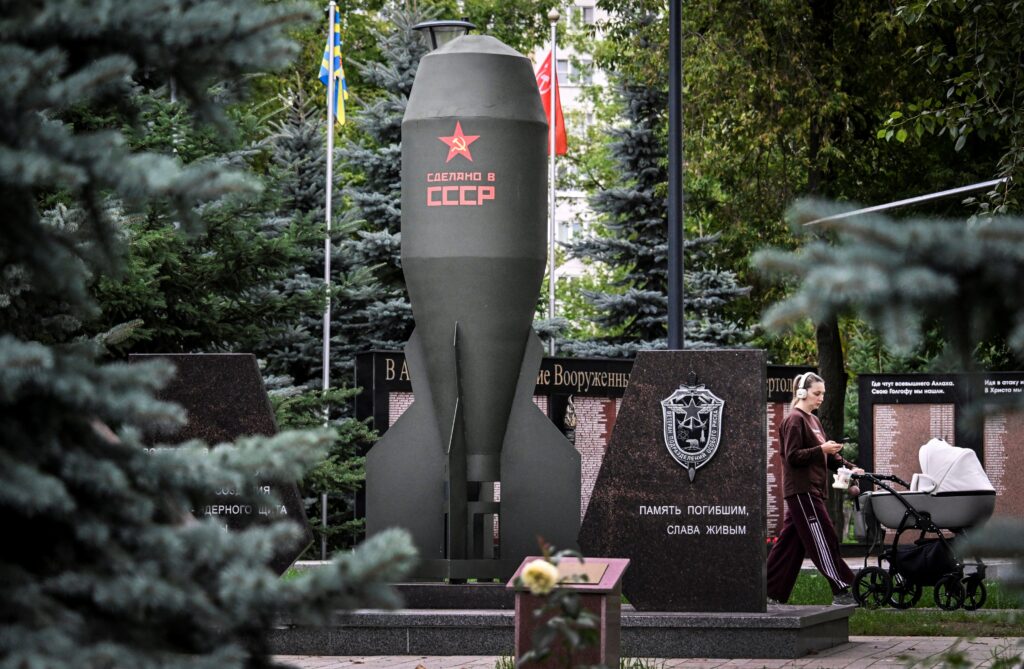
The world is sleepwalking into a new nuclear arms race.
As arms-control treaties hashed out over decades lapse, countries that formerly rejected possessing nuclear weapons are starting to reconsider. The Doomsday Clock is set at 85 seconds to midnight, the closest it’s ever been to the symbolic hour of the apocalypse.
The United States and Russia, which control 86 percent of the world’s nuclear arsenal, are without an arms-limitation treaty for the first time since 1972. The New Strategic Arms Reduction Treaty, signed by President Barack Obama in 2010 and extended under President Joe Biden in 2021, expired in February. President Donald Trump said he wants a better deal.
Bilateral arms control feels obsolete in a multipolar world. China, with more than 600 warheads, continues to rapidly expand its stockpile and refuses to join talks with the U.S. and Russia.
North Korea has an estimated 50 assembled warheads and enough fissile material for up to 90, but there have been no nuclear negotiations with Pyongyang since talks broke down in 2019.
Growing concerns about the credibility of America’s security guarantee have led South Korea and Japan to begin openly considering what was once unthinkable: building their own nuclear weapons. Polls this year show that nearly 70 percent of South Koreans now support their country building a bomb.
Japan officially adheres to the “Three Non-Nuclear Principles,” meaning not possessing, producing or permitting nuclear weapons on its soil. But Japanese Prime Minister Sanae Takaichi has started hedging. And Defense Minister Shinjiro Koizumi broke a taboo in July when he pushed for more open debate about the subject as part of stepped up defense spending.
Some foreign policy realists — known as nuclear optimists — argue that allowing more countries to develop their own weapons may produce a more stable world. After all, the Cold War never produced a nuclear war. Similarly, India’s and Pakistan’s possession of nuclear weapons has probably stopped their bitter border clashes from escalating into full-scale conflict.
In that same vein, the realist thinking goes, allowing Japan and South Korea to develop their own bombs would help create parity and balance with China and North Korea. That could let the U.S. reduce its military footprint in Asia.
But proliferation creates more instability, not less. The more people who have the ability to push a launch button, the greater the danger of a mistake or miscalculation.
A ballistic missile launched from North Korea or China could take up to 30 minutes to hit D.C. But the same missile could wipe out Seoul or Tokyo in less than 15. That compressed time frame raises the risks of a hair-trigger response.
Sweeping disarmament talks appear extremely unlikely. Better to aim for smaller confidence-building measures to reduce the risk of Armageddon.
Ideally, to avoid misunderstandings, members of the nuclear club would voluntarily notify each other in advance of tests, ballistic missile launches and major military exercises. They would also be transparent about their nuclear stocks and allow inspections by international authorities.
A small but vital step would be establishing military-to-military contacts — hotlines — between all the nuclear nations. That includes China. Diplomatic spats over trade and technology should not be allowed to disrupt open lines of communication.
Alas, that would mean acknowledging North Korea as a de facto nuclear state. This does not require formally accepting its weapons program or giving up on disarmament. It’s just a nod to reality.
Forty years ago this October, President Ronald Reagan and Soviet leader Mikhail Gorbachev came tantalizingly close to agreeing to eliminate all nuclear weapons. That window has long closed. But incremental steps can wind back the Doomsday Clock.
The post The old global nuclear order is dead. What comes next? appeared first on Washington Post.