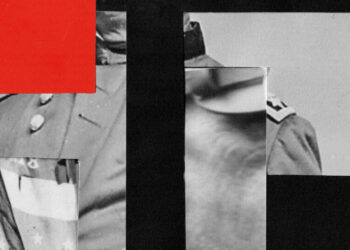
Russia says Artem Murdid is a killer who followed orders from Ukrainian intelligence to plant bombs in his Ukrainian city, Melitopol, after Russian troops captured it.
Mr. Murdid says he did nothing wrong. He also says that after he was arrested in March 2023, pro-Russian guards repeatedly beat him, shocked him with electric charges and forced him to watch his mother be subjected to the same.
In a letter detailing what he says happened, Mr. Murdid, 32, wrote that the guards also threatened to throw his mother and girlfriend into a trench “where they’ll be raped, while you watch all of this.” He said the guards then threatened to shoot him and leave him along a road for dogs to eat. The Russian authorities did not respond to a request for comment on Mr. Murdid’s claims.
Eventually, he wrote, he signed confession papers that were put in front of him, without reading them. So did his mother, Hanna Murdid, 52, and his girlfriend, Hanna Voshkoder, 29. He was given a life sentence, his mother 22 years in prison and his girlfriend 20 years. They were all accused of being part of a terrorist cell.
“A lot of people break. I know quite a few people who have been through Russian prisons in recent years,” said Yaroslav Bevza, a close friend of the Murdid family who fled Melitopol after the Russians invaded Ukraine in February 2022. “People would confess to killing Kennedy.”
The sentences given to Mr. Murdid, his mother and his girlfriend are on the extreme end of what human rights experts and Ukrainian government officials describe as a black hole for Ukrainian civilians in Russian custody, which they say number in the thousands.
A legal appeal by the three Ukrainians is scheduled to be heard on Monday by a court in Moscow that has repeatedly rubber-stamped convictions for other Ukrainians convicted of war-related crimes. While the three were vocally pro-Ukrainian while living under occupation, they say they had nothing to do with any bombings.
Unlike with prisoners of war, no official mechanism exists to return Ukrainian civilians arrested by Russia. The fate of these Ukrainians, whom Ukraine describes as “civilian hostages,” is likely to be one of the thorniest issues to resolve in any talks to end the war.
About 2,600 Ukrainian civilians have been verified as being in Russian custody on accusations connected to the war, according to the Media Initiative for Human Rights in Ukraine, a group that investigates war crimes and other human rights violations caused by the war. The actual number could be much higher, Ukrainian officials said.
Some of the civilians were picked up for singing pro-Ukrainian songs, posting pro-Ukrainian thoughts on social media or transferring money to Ukrainian bank accounts. Others, like Mr. Murdid, have been charged with terrorism, accused of maiming or killing Russians.
The human-rights organization investigating these cases says that almost 900 of the Ukrainians have been charged with or convicted of crimes. The rest are in limbo. Many have not been heard from in years.
Russian trials of Ukrainians arrested in occupied territory violate international human rights law because Russia does not have legal sovereignty over occupied Ukrainian land or the people living there.
Mr. Murdid is one of a dozen Ukrainian civilians arrested by Russia who have been sentenced to life in prison on war-related charges, according to available records.
He was convicted of planting four homemade bombs in Melitopol. The last of them, Russia says, killed a pro-Russian Ukrainian who had coordinated the transportation of Russian mercenaries and soldiers to the front line.
Years before the occupation, Mr. Murdid served a compulsory year in the Ukrainian Army after earning his university degree. He then took a job at a bank, working his way up to being in charge of monitoring cash transfers. He liked science fiction and cars.
His mother worked almost her entire life at a state-run company called Hydromash that produced large hydraulic lifts, eventually becoming the second in charge. She and her son lived in an apartment in Melitopol, which is famed for its cherries and fish. It is the second-largest city in the southeastern region of Zaporizhzhia, near the Sea of Azov, and remains under Russian Army control.
Ms. Voshkoder, a former sales assistant at a drugstore, started dating Mr. Murdid in the months before the invasion. She was raising a daughter. Her partner had died of a stroke at 24.
Before he fled Melitopol, Mr. Bevza, the close friend of the Murdid family, bought a load of groceries for Ms. Murdid — potatoes, onions, pasta and cooking oil — because she had recently broken her leg, he said. Russian soldiers soon overran the city.
Mr. Bevza, who ran the Hydromash factory alongside Ms. Murdid, said that he repeatedly tried to persuade her to leave but that she refused because her parents still lived there. A close friend said he also tried to talk Mr. Murdid into fleeing. But he, too, said he needed to stay because of his mother and grandparents.
Once the occupation began, the Murdids would blast Ukrainian songs while driving through Melitopol — practically a middle finger to the Russians, Mr. Bevza said.
In an interview, the close friend of Mr. Murdid said the new pro-Russian administration tried unsuccessfully to recruit Mr. Murdid to the police, given his experience as a soldier and as a guard. The friend, who left Melitopol, spoke on the condition of anonymity because his mother still lived there and at least one man in their friend group had decided to join the police and collaborate with the Russians.
Early in the occupation, Mr. Murdid exchanged text messages with his close friend every few days.
“Is everything the same, nothing new?” the friend asked Mr. Murdid on June 19, 2022, in a message seen by The New York Times.
“Everything is calm in Baghdad,” Mr. Murdid joked back.
Russia says that Mr. Murdid first started working with a Ukrainian intelligence agent named Oleh that same month.
Weeks later, the Russians say, Mr. Murdid placed his first bomb. He was arrested shortly after the Russian collaborator who had coordinated transportation of fighters to the front line was killed in a car bomb. Mr. Murdid’s girlfriend and mother were arrested shortly after that. His girlfriend’s daughter is now being raised by relatives.
Mr. Murdid’s account of torture while in Russian custody is impossible to verify. But it is consistent with dozens of accounts from Ukrainian prisoners of war and civilians who have been released by Russia. Some civilians have died in custody, including a Ukrainian journalist whose body showed evidence of torture and missing organs.
After he, his mother and his girlfriend were sentenced last year, they were allowed to send letters to relatives and receive care packages.
In his letters, copies of which were viewed by The Times, Mr. Murdid said he missed his family and dreamed of going to a beach or a sauna. He told his grandmother that she needed to stop spoiling him with things like a seafood cocktail, which had too much oil. He asked if she could send a Napoleon cake to his girlfriend for her 29th birthday.
In a letter in April, Mr. Murdid said international organizations were powerless to help him. He worried that his mother and girlfriend were scared and that he could not help.
“That feeling of helplessness is crushing,” he wrote.
If their appeal fails as expected, Mr. Murdid, his mother and his girlfriend are likely to be sent to different prisons deep inside Russia.
Ms. Murdid injured her arm at the same time that she broke her leg, but both injuries have become worse in detention. She can no longer use her arm, and she has difficulty walking. She said in a letter to her parents that she worried she might be sent to a penal colony in Siberia, where polar bears roam.
“Keeping my chin up,” Ms. Murdid wrote on July 7. She told her parents she missed them. “A big hello to everyone from me, hugging, kissing, loving, believing, hoping, waiting. And God forbid I ever see a polar bear!”
Her mother, Kateryna Murdid, 74, said in a telephone interview from Melitopol that she and her husband were too frail to travel to Moscow for the appeal.
She said that they had pinned any remaining hopes on a prisoner exchange.
“People are always talking about a big exchange,” she said. “You keep thinking, ‘Maybe something good will happen.’ But in the end, it doesn’t. Yes, hope dies last. All we can do is hope.”
Alina Lobzina contributed reporting.
The post How a Ukrainian Bank Worker Came to Face Life in a Russian Prison appeared first on New York Times.