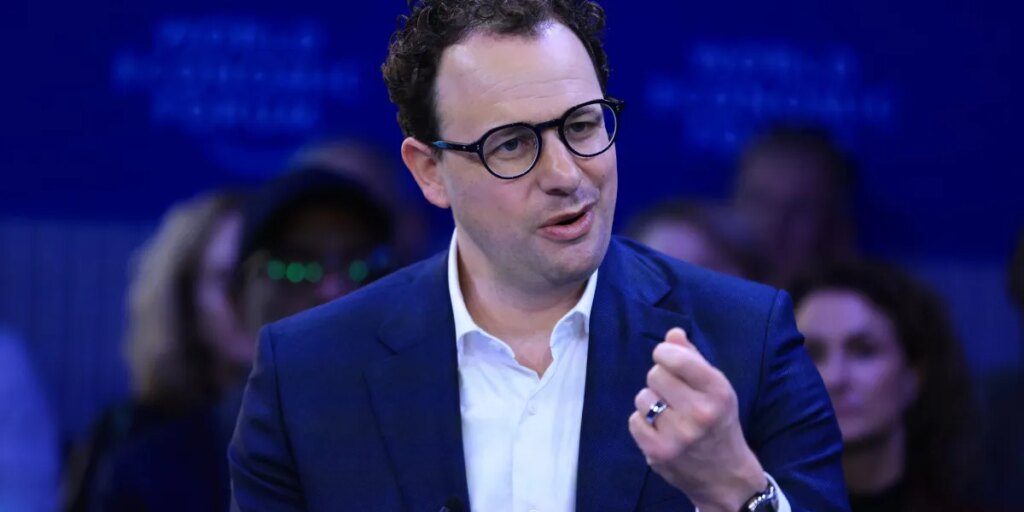
Anthropic cofounder and CEO Dario Amodei pushed back on the notion that he’s responsible for the public’s overall sense of doom around AI, but acknowledged there are trust issues.
In a lengthy post on X on Saturday, which is unusual as he generally stays away from social media, he first addressed AI regulation, describing a false choice between those who argue it leads to regulatory capture and concentration of power versus those who think widely distributing AI, including via open models, is the best way to keep the technology in check.
Amodei pointed out that institutions like the court system can decentralize power, while noting Anthropic has been in favor of policies that slow down frontier AI companies and also give smaller rivals an advantage.
Still, he conceded that AI is structurally a technology that tends to concentrate power. But that’s not because of regulation. Instead, he attributed it to AI scaling laws, referring to how a model’s performance improves as resources used to build it increase. Open-weight models are a bit better but merely shift the concentration of power to those with the most computing capacity and chips.
“By contrast I think the right ‘rules of the road’ can simultaneously (a) address AI’s cyber/bio/alignment risks, (b) institutionally constrain the power of the frontier AI companies, and (c) leave room for open-weights models while also addressing the specific risks that they bring,” Amodei wrote, adding that he supports creation of a FINRA-like entity and the Trump administration’s stance on AI testing.
Then he tackled his rhetoric about AI and denied that he has been overly negative, pointing to essays he’s written that equally present the technology’s risks and benefits. Social media clips, however, often characterize his statements as excessively gloomy to get clicks, Amodei added.
To be sure, the Anthropic CEO famously predicted AI could wipe out 50% of white-collar jobs. But more recently, he toned down the warning and called AI a multiplier of output, not a destroyer of jobs. OpenAI CEO Sam Altman has similarly pivoted his messaging, as both companies head for IPOs.
In his X post, Amodei agreed that the public has a negative view of AI, which he considers a big problem, but didn’t place the blame on himself or any other individual AI executive.
“I think it is fundamentally a crisis of trust. I think that ordinary people don’t trust companies, governments, or the tech industry and always suspect that we are cooking up some new way to screw them over,” he explained.
Such distrust has been around for decades, and a marketing campaign won’t undo it, Amodei said, cautioning that an ad that says AI will cure cancer would likely be dismissed as deceptive.
“The thing that will work is actually curing cancer,” he added. “I think by far the most accurate criticism of AI companies including Anthropic is that we haven’t yet delivered on our big promises to benefit the world.”
For its part, Anthropic is trying to improve trust by producing such results, namely by doing more in the fields of biology and medicine, according to Amodei.
There are “early glimmers” of what could be incredible results, he teased. But until there are actual accomplishments, he vowed to avoid making empty promises and instead honestly address AI risks in the meantime.
“Honesty is the right thing on the merits, and in terms of public credibility and trust it is no worse than, and may in fact be better than, an approach that ignores or distracts from risks which people instinctively understand are real,” Amodei concluded.
The post Dario Amodei admits AI suffers from a crisis of trust, saying people worry companies or governments are ‘cooking up some new way to screw them over’ appeared first on Fortune.