Humberto Reyes, leaving for work, was saying goodbye to his wife when the earth began to tremble.
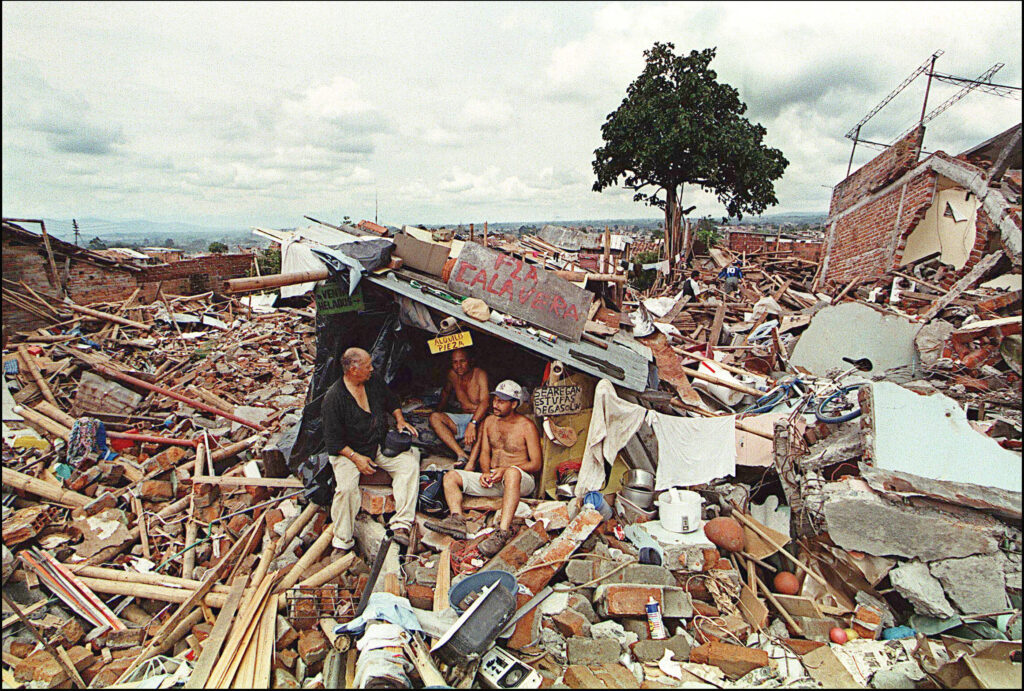
The shaking Monday morning thrust the 70-year-old university professor immediately back to 1999, when a 6.2-magnitude earthquake brought down 60 percent of the buildings in Armenia, Colombia, killing nearly a thousand people.
But he also remembered the drills this city in Colombia’s coffee-growing region has rehearsed at least twice a year since. His wife dropped beside the bed, in hopes it would create a survivable space should the building collapse. He braced himself against the refrigerator.
Outside, they listened for ambulances. They barely heard any. This time, Reyes thought, something was different.
The 7.4-magnitude earthquake that struck Colombia’s Pacific coast on Monday morning toppled buildings across western Colombia, killing at least 285 people and injuring thousands. The numbers continue to climb as responders dig through the rubble.
But in Armenia, a city of 300,000 roughly 43 miles from the epicenter, there were no active rescues. No buildings collapsed. No one died.
The nearby cities of Pereira and Manizales, by comparison, suffered scores of deaths. Cali, more than twice as far from the epicenter as Armenia, reported at least 95.
“La Ciudad Milagro,” Colombians are calling it — the Miracle City. But it wasn’t a miracle, according to the engineers and officials who helped lead the city’s response to the 1999 earthquake. It was the result of careful planning and reconstruction after that disaster forced the city’s rebirth.
“We’ve been preparing ourselves. We’ve been strengthening our relief and rescue systems,” Mayor James Padilla told a local news channel. “All these drills carried out in recent years are what have made Armenia into an earthquake-resistant city.”
It wasn’t only drills. The catastrophic damage 27 years ago gave the city an opportunity to build back stronger.
“The earthquake took all the oldest, badly built structures and knocked them down,” said structural engineer Omar Cardona, Colombia’s most prominent specialist in seismic risk.
“Armenia no longer has the old buildings the other cities still had,” he said. “And that is a bill earthquakes always come to collect.”
To manage reconstruction, Colombia created a $1 billion fund to rebuild the coffee belt. The Fund for the Reconstruction of the Coffee Axis, or FOREC, divided Armenia into 15 zones by damage and geography, and handed each to a nongovernmental organization — planners and social workers, advised by engineers and seismologists — to assess damage, design reconstruction projects and then draw down the budget. Everardo Murillo, the fund’s executive director, called it “slow planning for fast execution.”
According to Jahir Rodríguez, who was Armenia’s planning secretary and headed its disaster office in 1999, three things the city did during reconstruction proved helpful on Monday. It was one of the first Colombian cities to conduct what is known as a microzonification, mapping soil response block by block to guide planning. It banned new construction on loose soil, which can amplify shaking. And it followed strict, up-to-date building norms.
FOREC wasn’t perfect, Cardona said. The fund behaved “like a manager parachuted in from outside,” he said — it built houses and rewrote plans, but didn’t strengthen the local institutions meant to maintain them.
Colombia’s national seismic code, last updated in 2010, is written to prevent building collapse and protect life. A minor tremor should do no harm to a building. A violent one may cause structural damage, but shouldn’t topple it.
But the challenge in Colombia hasn’t been the quality of the regulations, analysts said, it’s whether they are enforced, particularly against informal construction.
Engineers cut corners “sometimes with the complicity of the public administration that signs off on the work,” Rodríguez said. In Pereira on Tuesday, the day after this week’s earthquake, he examined the ruins of a one-year-old building. Everyone had taken it for brick, he said. It turned out to be plaster.
About 70 percent of construction in Bogotá is informal, Cardona said. He has created an illustrated manual to teach master builders what engineers have known for decades: how to construct safe one- and two-story houses without degrees in structural engineering.
People are going to build, he said. He wants them to build better. Both FOREC and Cardona have won the U.N. Office for Disaster Risk Reduction’s Sasakawa Award for contributions to the field.
Surviving an earthquake “isn’t a problem of luck,” said Reyes, the professor.
“It’s a problem of engineering, of science,” he said. “There is a way to make buildings uncollapsible, however horrifically hard the earthquake is.”
The post How to beat an earthquake: The Colombian city where no one died appeared first on Washington Post.